case study


Social media marketing helps e-commerce brands reach and engage customers through targeted content and ads. It drives traffic, builds community, and encourages repeat purchases by showcasing products in relatable ways. Combining consistent posting with data insights allows online stores to grow their audience and sales effectively over time.
Do you know more than 4.6 billion people worldwide are on social media? That means more than half the population of the earth. No wonder, with an audience size like this, social media becomes a powerhouse for e-commerce marketing. Proper utilisation of online platforms can instantly push your online sales and brand awareness.
An e-commerce social media management agency utilises many strategies that engage customers. It encourages them to visit and shop at your online store. The strategy incorporated includes developing engaging content, user-generated content, targeted advertisements, influencer collaboration, and digital media analytics.
This helps in tracking performance. By implementing these strategies, e-commerce businesses can build a solid online presence, foster customer loyalty, and achieve sales goals.

Social media marketing is the process of promoting a product or service on online platforms such as Instagram, YouTube, X (formerly Twitter), LinkedIn, etc. It involves creating and sharing engaging content with a larger audience.
The objectives behind this are to generate customer engagement and run ads to hit any set marketing and branding goals. Online platform marketing can also help you raise awareness and generate leads to drive sales.
A social media marketing strategy in e-commerce is a planned approach to promoting an online store through platforms like Instagram, Facebook, TikTok, Pinterest, and YouTube. It helps businesses connect with their target audience, increase brand awareness, drive website traffic, and generate more sales.
An effective strategy involves choosing the right platforms, creating engaging content, posting consistently, running targeted ad campaigns, and analyzing performance to improve results over time. When combined with a strong E-commerce SEO Strategy, social media marketing can help ecommerce brands improve online visibility and attract high-intent customers from multiple digital channels.
For ecommerce businesses, social media is more than just posting product images. It is a powerful marketing channel used to build customer relationships, encourage engagement, showcase products, and create a loyal customer base. Many brands also work with a social media management agency in India to create data-driven campaigns that improve reach, engagement, and conversions.
Social media is one of the most effective channels for e-commerce growth because it helps businesses reach targeted audiences, build brand trust, and drive qualified traffic to online stores. By combining engaging content, influencer collaborations, social commerce features, and paid advertising, brands can increase product visibility, improve customer engagement, and generate more sales. A well-planned social media strategy also provides valuable customer insights, making it easier to optimise campaigns, strengthen customer relationships, and achieve sustainable e-commerce growth.

Social media marketing plays a crucial role in facilitating e-commerce. It provides a platform for businesses to connect with their customers, build brand awareness, and drive traffic to their online stores. Here are some key benefits of using online platforms for e-commerce.
Not all businesses have the time and kind of budget needed to perform such tasks. Then, they hire a digital marketing and advertising agency to help and manage. Hiring such a creative agency can streamline your online processes. Not only will they handle social media, but they will also let you focus on other essential tasks.
Social media marketing isn’t an easy task to perform. Numerous approaches are used for better optimisation and appeal to the right consumer. However, many businesses hire a social media management agency in India.
These agencies can manage your online presence on digital platforms. They also help to mitigate any problems that may arise, such as negative feedback or PR crises. Here are some common strategies used to boost online marketing. Even a digital marketing and advertising agency like ours uses these tactics.
Setting specific goals is a very important step before diving into online marketing. It will help you stay focused and monitor the success of your efforts. Here are some of the reasons why online marketing is used.
For example, if you want to raise brand awareness, you’ll set targets for more followers or an engagement rate you want to achieve. If you’re going to drive sales, you can work towards sending traffic to your product pages and monitoring conversion rates. Or you can hire a social media marketing agency.
One paramount aspect of online media marketing is understanding your target audience. Who are your best customers? What are their interests, behaviours, and preferences? This knowledge will help you create relevant content and tailor marketing messages to their needs.
Knowing your audience requires some homework, such as market research, customer surveys, and analysis of online markets. You can gain better insights into your loyal customers with the information gathered.
This is really important. Not all social media platforms are the same and not all work for an e-commerce business. It depends on which one fits the intended use and where some of the respective postings can most likely be found. Here are some of the most common social media platforms and their key demographics.
Creating engaging content is the key to successful social media marketing. Your content should be relevant, valuable, and interesting to your target audience. It should also align with your brand’s voice and values. A social media marketing agency can handle all of this work for you.
They can leverage various types of content that attract consumers, such as appealing visual content (high-quality images, videos, and infographics), informative blog posts, user-generated content, and short-captivating stories.
With UGC, the strength of e-commerce businesses has been boosted. Hence, every time a user generates content, be it a photo, video, or review of a company’s products, it has the potential to be a very powerful form of marketing. UGC works very well because it builds trust and authenticity. Potential customers see actual users using and endorsing a company’s products.
You can urge customers to share their experience with the products on social media by having contests or offering incentives related to the product, including tagging the brand name in their posts. With UGC, run contests across your social media to build credibility and attract new customers to your business. Like photo contests, Make You LOL descriptions, Giveaways, sweepstakes, etc.
You can also invest in pay-per-click (PPC) advertising to reach a larger audience, generate qualified traffic, and accelerate e-commerce growth. Working with a paid marketing agency alongside a social media management agency in India allows businesses to create highly targeted campaigns that maximise return on ad spend (ROAS) and conversions. Popular paid social advertising options include Facebook Ads, Instagram Ads, LinkedIn Ads, X (formerly Twitter) Ads, Pinterest Ads, and other platform-specific campaigns. By targeting the right audience with data-driven advertising strategies, businesses can increase brand awareness, drive more website visits, and turn potential customers into loyal buyers.
In simple terms, influencer marketing is a strategy used by e-commerce businesses. Influencers are those recognised on social media as having a considerably large following that can help you market your products to an even larger market. Connecting with influencers can increase traffic flow and build a credible brand.
Therefore, only influencers with values perfectly aligned with your own should be chosen for collaboration. Your influencers are only valuable if they have an active audience, and in a perfect world, this active audience should also overlap with your active audience. You could work with them as a freebie collaboration, sponsored content, or co-marketing campaign.
Consistently monitoring your social media marketing efforts measures success. Many digital platforms offer analytics and insights that help you track your engagement rates, reach, and conversions. Such data analytics will help in decision-making regarding reasons for any change in marketing strategy. A social media marketing agency can help you to reframe any of it for an improved result.
Providing excellent customer service is essential for building trust, increasing customer satisfaction, and encouraging long-term loyalty. Social media gives businesses a direct channel to answer questions, resolve concerns, and engage with customers in real time. Quick, professional, and personalised responses demonstrate that your brand values its audience, helping strengthen relationships and improve your online reputation.
Partnering with a digital marketing agency can help you deliver a consistent customer experience across every social platform. From managing customer interactions and responding to enquiries promptly to creating helpful content and monitoring brand conversations, a digital marketing agency ensures your business stays responsive and customer-focused. This proactive approach not only enhances customer satisfaction but also drives higher engagement, positive reviews, and repeat business.
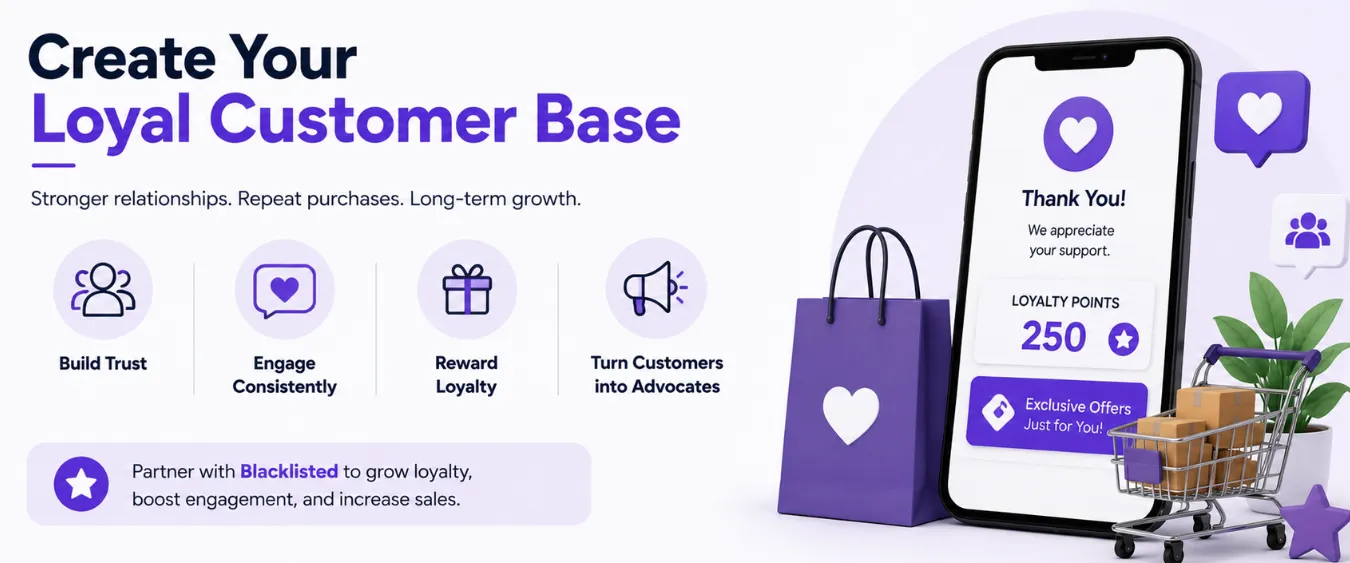
Building a loyal customer base is the core objective of any e-commerce business. However, in this content-driven world, Blacklisted can help you to make a significant difference. You can access a wealth of expertise and resources designed to optimise your online presence by partnering with us. Whether you’re looking to boost brand awareness, increase website traffic, or drive sales, we can equip you with the strategic insights and practical support needed to achieve your goals.
Choosing the right social media platform is important for the success of any ecommerce business. Different platforms help brands reach different audiences, promote products effectively, and increase online sales. The best social media platforms for ecommerce depend on your products, target audience, and marketing goals.
| Instagram for E-Commerce | Facebook for Online Stores | YouTube for Brand Trust & Product Education |
|---|---|---|
| Helps ecommerce brands showcase products through high-quality visual content. | Helps ecommerce businesses reach a large and diverse audience. | Product reviews and tutorials help build customer trust. |
| Features like Reels, Stories, and Instagram Shops improve engagement and product discovery. | Facebook Shops make it easier to showcase and sell products online. | Demonstration videos make products easier for customers to understand. |
| Product tags simplify the shopping experience and encourage purchases. | Advanced audience targeting improves ad performance and conversions. | Comparison videos help customers make informed buying decisions. |
| Trending Instagram hashtags like #InstagramMarketing and #ShopOnline increase content visibility and reach. | Facebook Marketplace helps increase product visibility and drive traffic. | Long-form videos improve engagement, watch time, and audience retention. |
| Helps businesses attract potential customers and improve conversions. | Supports customer interaction through comments, groups, and Messenger. | YouTube SEO helps ecommerce brands improve online visibility and discoverability. |
| Supports long-term brand awareness and customer engagement. | Paid advertising helps generate leads, increase sales, and build brand awareness. | Supports overall social media marketing and complements an E-commerce SEO strategy. |
Creating a strong social media strategy helps ecommerce businesses attract customers, increase engagement, and improve conversions. A successful strategy focuses on clear goals, audience targeting, consistent content creation, and performance tracking. For businesses selling through Amazon, Flipkart, Meesho, Etsy, or other online marketplaces, partnering with an e-Commerce Marketplace Service Provider can further strengthen social media efforts by optimising product visibility, managing marketplace campaigns, and driving qualified traffic that leads to higher sales and long-term business growth.
| Social Media Strategy | How It Helps Your E-commerce Business |
|---|---|
| Define Your Business Goals | Set measurable objectives such as increasing website traffic, boosting sales, improving brand awareness, growing followers, or strengthening customer loyalty to guide your social media strategy. |
| Understand Your Target Audience | Research customer demographics, interests, buying behaviour, and preferred platforms to create relevant content that resonates with the right audience. |
| Choose the Right Social Media Platforms | Focus on the platforms where your ideal customers are most active to maximise engagement, product visibility, and marketing ROI. |
| Create High-Quality Content | Publish engaging videos, product photos, tutorials, customer testimonials, educational posts, and behind-the-scenes content to attract and retain customers. |
| Maintain a Consistent Posting Schedule | Use a content calendar to publish consistently, improve audience engagement, and keep your brand visible across multiple social media platforms. |
| Use Paid Advertising | Run targeted Facebook, Instagram, LinkedIn, Pinterest, or other social media ads to reach qualified audiences, increase conversions, and maximise return on ad spend. |
| Track and Improve Performance | Monitor KPIs such as engagement, click-through rate, conversions, reach, and follower growth to optimise campaigns and improve long-term marketing results. |
Many ecommerce businesses fail to get the desired results from social media because of avoidable marketing mistakes. Understanding these mistakes can help brands improve engagement, customer trust, and online sales.
Constantly posting sales-focused content can reduce audience interest. Ecommerce brands should balance promotional posts with educational, entertaining, and engaging content to keep followers interested.
Not responding to comments, messages, or reviews can negatively affect customer trust. Active communication helps businesses build stronger relationships and improve customer satisfaction.
Social media is highly visual, especially for ecommerce brands. Poor-quality images and videos can reduce engagement and make products appear less trustworthy.
Using different brand styles, messaging, or tones across platforms can confuse customers. Consistent branding improves brand recognition and builds trust.
Short-form videos and reels often generate higher engagement than static posts. Ignoring video content can limit visibility and reduce audience reach.
Poor audience targeting can waste advertising budgets and reduce conversions. Ecommerce businesses should regularly analyze customer behavior and optimize campaigns for the right audience.
Without tracking performance metrics, businesses may continue ineffective marketing strategies. Monitoring analytics helps identify what content and campaigns drive the best results.
Avoiding these common social media marketing mistakes can help ecommerce brands improve online visibility, customer engagement, and long-term business growth.
Social media marketing is a powerful growth channel for ecommerce businesses looking to increase brand awareness, attract qualified customers, and drive more online sales. By creating valuable content, engaging with your audience, leveraging paid advertising, partnering with influencers, and tracking performance, businesses can build stronger customer relationships and achieve sustainable growth. When combined with a well-planned E-commerce SEO strategy and marketplace optimisation, social media becomes an essential part of a successful digital marketing strategy.
At Blacklisted Agency, we help ecommerce brands grow through data-driven social media marketing, SEO, paid marketing, and marketplace optimisation. Our team develops customised strategies that improve online visibility, increase engagement, and generate measurable business results. Whether you’re launching a new online store or scaling an established ecommerce business, we help you turn social media into a reliable source of traffic, leads, and long-term revenue.
As social commerce continues to evolve, businesses that consistently create helpful content, optimise for customer intent, and adapt to changing digital trends will be better positioned to outperform competitors and achieve lasting ecommerce success.

We are your go-to source for everything digital. We cover marketing tips, design trends, new tech, and how to build your brand. Every post has useful information to keep you updated and ready to tackle the digital world. It’s not just articles; it’s a way to learn, grow, and connect with others navigating the same digital journey.