case study

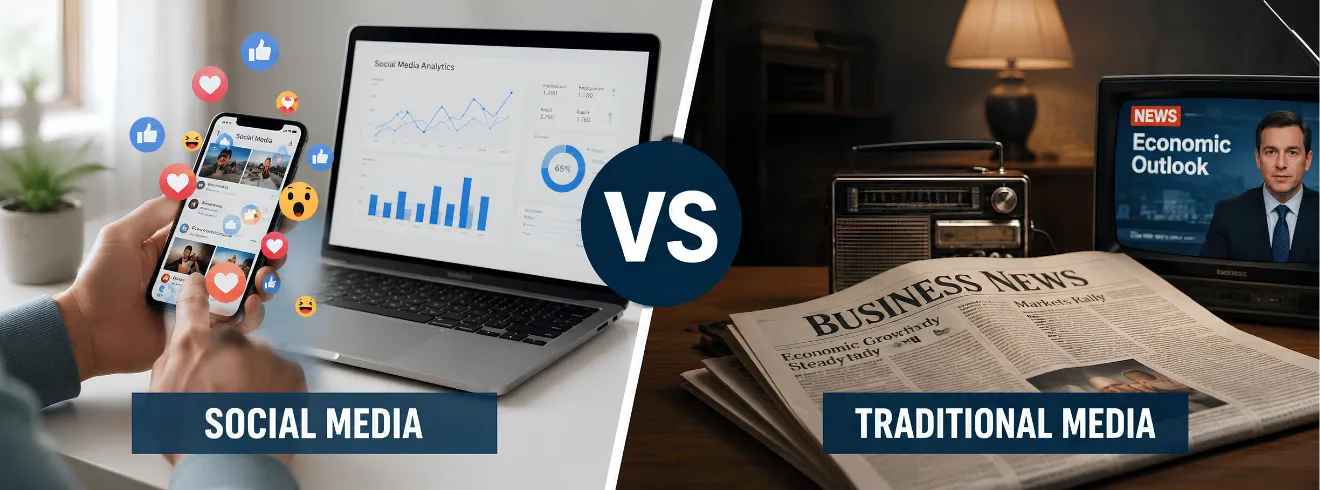
Social media offers real-time interaction and targeted reach, while traditional media provides broad exposure and established credibility. Each has strengths depending on goals, audience, and budget. Combining both thoughtfully can maximise impact, but understanding their differences helps businesses choose the right approach for effective communication without unnecessary complexity.
Traditional media sounds kind of old because it is. Have you ever come across stacks of newspapers piled up on the porch? Picture your grandfather reading them. Or, the endless array of magazines you used to make interesting cut-outs from in your childhood? Yes, that’s what comes to mind when we think about traditional media: the old classics.
Then enter social media: Facebook, Instagram, the endless clicking—a bottomless pit of information overload, cute cat videos, and carefully curated highlight reels. So, which one is better?

Both social media and traditional media are powerful tools for connection and communication. Let’s take a brief overview of the two:
On the other hand, social media content strikes like a lightning bolt. Breaking news hits X (formerly Twitter) in the blink of an eye, and a juicy celebrity scandal unfolds live on Instagram Stories using hashtags like Instagram trending hashtags 2026. It’s all happening in real time, a constant stream of updates that keeps you glued to your phone.
Traditional media is slow, and there’s no denying it. News stories take time to be researched, edited, verified, formatted, printed, or filmed – a process that can take hours, even days. By the time that earth-shattering headline hits your morning paper, it might already feel a little stale.
On the other hand, social media content strikes like a lightning bolt. Breaking news hits X (formerly Twitter) in the blink of an eye, and a juicy celebrity scandal unfolds live on Instagram Stories. It’s all happening in real time, a constant stream of updates that keeps you glued to your phone.
Traditional media is a one-way street. You sit there, passively absorbing information like a sponge. You watch the anchor on TV and read the newspaper article, and that’s pretty much it. There’s not much room for discussion, debate, or expressing your outrage (or amusement) at the latest political blunder.
Social media, on the other hand, gives everyone a voice — even you! There’s always room for exciting discussions, sharing your thoughts through comments and DMs, and connecting with people who share your interests from the other side of the globe. For brands, this two-way engagement is gold. Every comment, share, and reaction is a signal — a real-time window into what your audience thinks and feels.
This is exactly where partnering with a social media marketing agency like Blacklisted Agency makes all the difference. Managing engagement isn’t just about replying to comments — it’s about building a community, crafting content that sparks conversations, and turning passive scrollers into loyal brand advocates. A dedicated agency ensures your brand stays active, responsive, and relevant across every platform, so no opportunity for connection goes missed.
Traditional media simply casts a large net intending to capture whoever happens to be passing by. A local news broadcast may broadcast the latest news about your town, but it also broadcasts the news to people who don’t have the slightest interest in it.
Social media, on the other hand, allows you to throw an exceptionally targeted fishing line. You can segment your audience in the most specific ways possible based on their age, gender, occupation, hobbies, location, or even their favourite dog breed (because everyone loves dog videos, right?). This targeted approach ensures that your message reaches the people who are most likely to care about it, maximising your impact and minimising wasted exposure.
Traditional media can be expensive. Printing newspaper ads or buying TV slots can cost a small fortune, especially for smaller businesses or individuals.
Social media provides an affordable way to reach target clients. You can set up a profile for yourself or a brand, search for people, and communicate with them without paying big bucks. You can also launch some basic ad campaigns with little to no charge. Sure, some advanced features might require a paid subscription, but compared to the hefty price tags of traditional media, it’s a bargain.
Newspapers, magazines and reputable news channels assume the role of truth-tellers in society. The facts presented in news stories are always verified before they are published.
Journalists always corroborate facts from different sources to prevent fake news from circulating. This editorial oversight is necessary in the current social media generation full of fake news with unconfirmed sources and clickbait content.
Traditional media editors curate the news, presenting a selection of stories they deem important or newsworthy. While this might seem restrictive compared to the vast ocean of social media, it can actually be beneficial. Editors act as filters, weeding out irrelevant or misleading information and ensuring a focus on quality content.

Now we know the major advantages and disadvantages of both mediums. So, why not mix things up and explore both? Utilising both forms of media can be greatly enhanced with the expertise of a digital Marketing agency. Here are some tips to find a healthy balance in this ever-evolving media landscape:
Social media is always buzzing with the latest gossip and keeping you updated on the hottest trends. Traditional media exists, offering in-depth analysis, reliable sources, and a historical perspective. The conclusion is that both types of media are important. You need traditional and social media in your life. After all, we need a little balance, even in our media consumption.

We are your go-to source for everything digital. We cover marketing tips, design trends, new tech, and how to build your brand. Every post has useful information to keep you updated and ready to tackle the digital world. It’s not just articles; it’s a way to learn, grow, and connect with others navigating the same digital journey.