case study


To track AI traffic, brands need to look beyond basic website visits. GA4 filters, referral sources, AI citations, branded searches, and landing page behaviour all reveal how tools like ChatGPT and Perplexity influence discovery. Strong AI traffic analytics turns hidden visibility into clearer, smarter growth decisions.
landing pages, engagement, and conversions from AI platforms such as ChatGPT, Perplexity, Gemini, and other AI-powered search tools. As AI search changes how users discover websites, understanding where these visitors come from can help you measure AI visibility and identify which content drives meaningful traffic. This guide explains how to track AI traffic in GA4, which metrics to monitor, and how to turn AI search data into actionable SEO and marketing decisions. Use these steps to start measuring your AI traffic and uncover opportunities to grow visibility, engagement, and leads.
AI traffic is website traffic that comes from AI-powered platforms, search experiences, recommendations, and citations, including ChatGPT, Perplexity, Gemini, Claude, and Google Search AI. It can involve platforms such as ChatGPT, Perplexity, Gemini, Claude, Google Search AI, Microsoft Copilot, and AI-powered browser search tools.
AI traffic and visibility can come from:
As AI-driven search evolves, businesses are increasingly focusing on Google Search AI and other AI-powered discovery platforms to understand how users find and evaluate brands online.
The challenge is that not every AI interaction creates a measurable website visit. Some platforms can send identifiable referral traffic, while other AI-influenced journeys may appear later as direct traffic, branded search, or another source in analytics. That makes it important to track both AI traffic and AI visibility when measuring how AI search influences website performance.
This is traffic you can see in GA4 when platforms pass referral data. For example, a user clicks your cited link from ChatGPT or Perplexity and lands on your website.
This happens when your brand appears in an AI answer, but the user does not click immediately. They may search your brand later, return directly, or compare you with competitors. This one is harder to track.
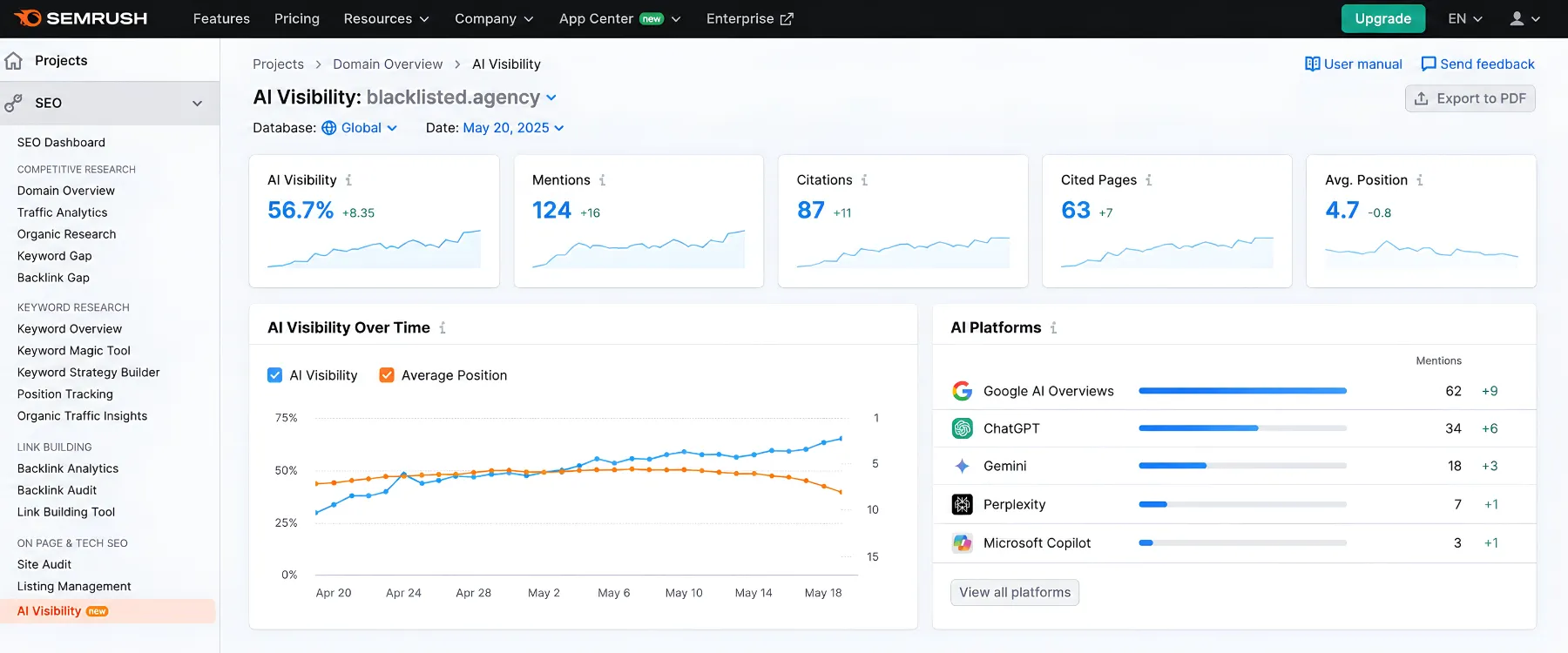
Strong AI traffic analytics should track both sides. You need to see visits, but you also need to understand brand exposure across AI platforms. It helps you understand whether your content is being surfaced, cited, or ignored by AI systems.
AI traffic analytics matter because it shows how often users discover your website through AI-powered search experiences. This includes direct referral visits from AI tools (measurable AI traffic) and indirect visibility when your brand is cited, mentioned, or used as a source without an immediate click (influential AI visibility).
Before AI inclusion, search traffic was easier to understand. A user searched on a search engine, clicked your website link, and landed on your website. It was simple. Now, the journey is not that easy.
The modern AI user may first ask ChatGPT for recommendations, read a Google AI overview, compare options on Perplexity, and visit your website later through branded search or direct navigation. As much as it is seamless for the user, it is a nightmare for businesses to keep track of.
That is why expert AI traffic analytics has become important. It helps you understand not only who visited your website, but also where AI may be influencing awareness before the visit happens.
AI search can influence both clicks and trust. AI visibility can shape buyer journeys even when visits happen later through branded search or direct traffic. This is why brands cannot depend only on old reporting habits. If you do not measure AI discovery, you may miss early signs of demand, content influence, and authority growth. As a result, you may risk losing brand visibility, no matter how good your content is.
For businesses working with an SEO agency in India, this shift is relatively easier to keep track of.
| Comparison | AI Traffic | Organic Search Traffic |
|---|---|---|
| Source | Comes from AI-powered platforms and AI-generated responses, recommendations, and citations. | Comes primarily from traditional search engine results such as Google and Bing. |
| Examples | ChatGPT, Perplexity, Gemini, Claude, Microsoft Copilot, and Google Search AI. | Google Search, Bing, and other traditional search engines. |
| User Journey | Users may discover a brand through an AI answer, citation, or recommendation before visiting the website. | Users generally search a query, view organic results, and click a website listing. |
| Attribution | Can be difficult to attribute because AI-influenced users may later return through direct traffic or branded searches. | Usually easier to measure through organic clicks, impressions, rankings, and search queries. |
| Key Metrics | AI referrals, sessions, landing pages, conversions, AI mentions, citations, and branded search growth. | Impressions, clicks, CTR, rankings, organic sessions, landing pages, and conversions. |
| Main Visibility Signal | Brand mentions, citations, recommendations, and appearances in AI-generated answers. | Search rankings, organic impressions, SERP visibility, and clicks. |
If it is not clear by now, here is a simple answer: businesses should track AI traffic because AI visibility is already changing how users research, compare, and choose brands. The branding funnel has become tricky to track, and the earlier you measure it, the faster you can adapt your content strategy.
Referral traffic from AI search engines has grown sharply in some industries; for example, many of our clients have regained their ranking with the help of our AI-powered digital marketing solutions. As platforms like ChatGPT and Gemini increasingly influence how users discover and compare information, businesses can also explore our ChatGPT vs Gemini comparison to understand how these AI platforms differ. Others whose SEO strategies still lack clear visibility into AI traffic likely encounter a blind spot. It makes them oblivious to knowing which pages are the driving influence.
It is quite frustrating when you have strong informational content that receives fewer clicks because AI summaries answer the query directly and steal away your visibility. Hence, it is imperative to track AI traffic as it helps you answer practical questions, such as:
This is where AI traffic analytics becomes a strategic layer, not just a reporting habit. It helps connect visibility, content quality, user behaviour, and conversions.
Recognise the importance of partnering with agencies, as for any brand investing in digital marketing services in India, this is a major boost. AI platforms are becoming discovery engines. If you are not tracking them, you are not seeing the full search picture.
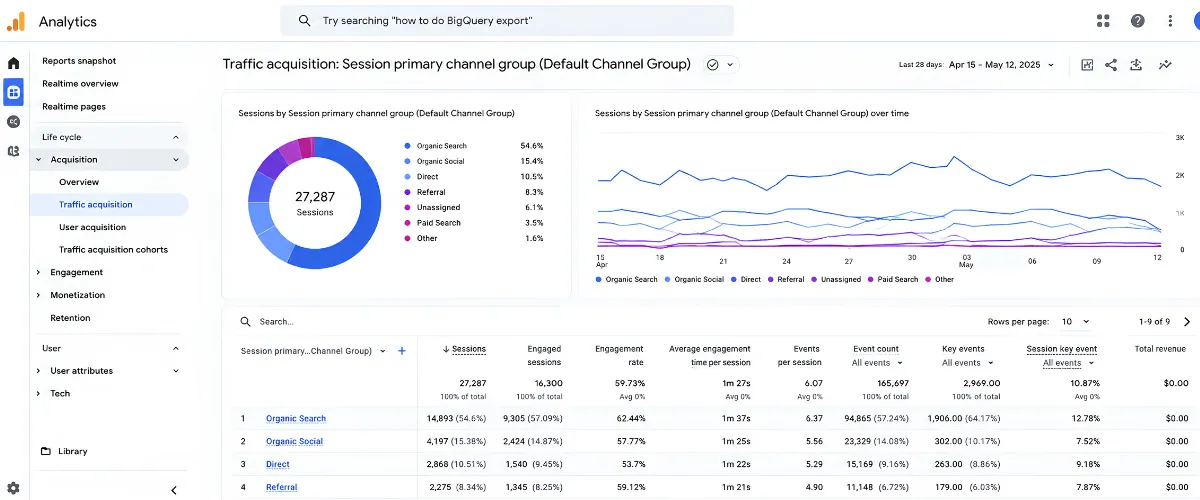
GA4 is Google Analytics 4, which is the default analytics platform of Google. You can track AI traffic in GA4 by creating custom reports, using source/medium filters, and grouping AI platforms into a dedicated traffic channel. This gives you a clearer view of AI-driven visits and performance.
| Step | What to Do | What It Helps You Track |
|---|---|---|
| Step 1 Create a Traffic Acquisition Report |
Go to Reports > Library in GA4, create a new detail report, and select Traffic Acquisition. | Creates a reusable report for analysing AI and other traffic sources over time. |
| Step 2 Add Session Source/Medium |
Add Session source/medium as a visible column in the Traffic Acquisition report. | Shows whether visits are coming from ChatGPT, Perplexity, Gemini, Claude, Copilot, and other AI platforms. |
| Step 3 Apply an AI Platform Filter |
Use a regex filter to group known AI traffic sources into one view. | Helps identify and compare traffic referred by major AI platforms. |
| Step 4 Add Landing Page Data |
Add Landing page + query string to the report after applying the AI traffic filter. | Shows which website pages receive AI-driven visits and which content attracts users. |
| Step 5 Save the Report |
Save the report as AI Search Traffic or AI Referral Traffic. | Makes monthly AI traffic monitoring easier and helps identify changes and trends over time. |
GA4 gives you a useful view of measurable AI referrals, but it does not show the complete impact of AI search on your website. To understand how AI platforms influence discovery, visibility, and user behaviour, combine GA4 data with Search Console and broader AI search analysis.
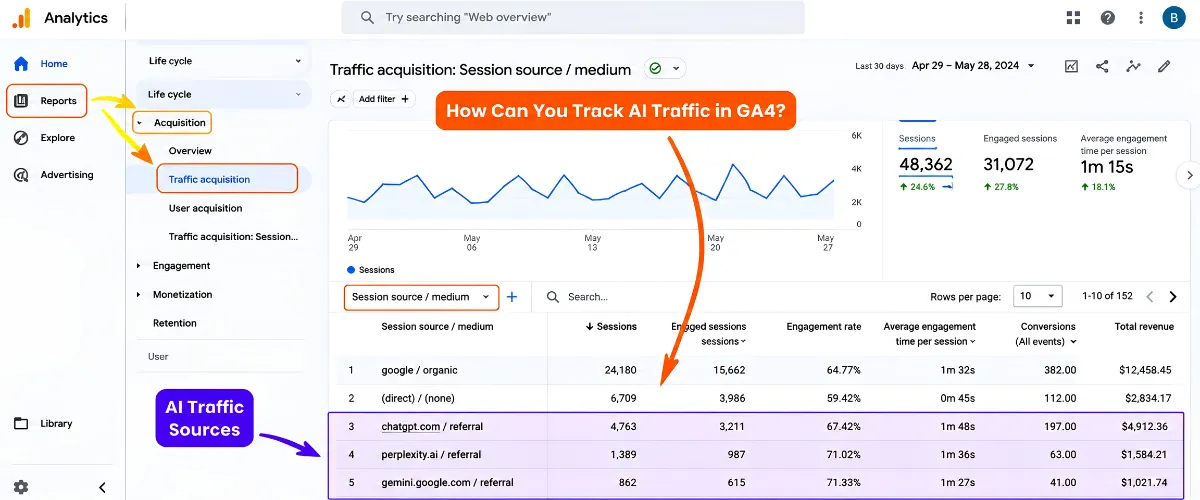
It is important to note that GA4 does not always label AI traffic perfectly. Some platforms pass referral data, while others may appear under direct or referral traffic. GA4 can show known referrers, but AI tools do not always pass consistent referral data. Still, GA4 gives you a strong starting point.
We can help you build a more sure-shot AI traffic analytics to help you understand how AI searches influence users before they click. Better AI traffic analytics means looking beyond sessions and tracking visibility, engagement, conversions, and brand mentions together.
A smart reporting dashboard should not only show visits. It should show whether AI users are valuable. You can measure AI search visibility by checking where your brand appears across AI-generated answers, citations, summaries, and competitor comparisons.
Track these metrics:
For example, a business may ask:
These prompts reveal whether AI platforms understand your brand’s positioning. They also show whether your website has enough authority, clarity, and structured content.
As a trusted SEO agency in India, Blacklisted does not only focus on rankings. We also monitor how AI tools describe your brand, services, and expertise.
We recommend pairing your GA4 findings with Search Console trends. GA4 shows what users do after arriving, while Search Console helps explain what changed before the click.
That combination makes the reporting stronger. For example, if impressions rise but clicks fall, AI Overviews may be answering some queries directly. If branded search rises, AI exposure may be influencing awareness.
AI bots need to crawl your pages easily. If your website is slow, broken, or overloaded with heavy scripts, your content becomes harder to access.
Focus on:
For example:
This approach also supports voice search, AI extraction, and user readability.
Users prefer AI overviews because they give direct answers right at the beginning. Start each section of your content with a short answer. Then expand with examples, context, and steps.
This helps AI systems pick up your content and extract useful information. It also helps readers get the answer to their query quickly.
Use structured data to help both search engines and AI systems understand your content. Use schema markup because it helps crawlers understand page content and can support AI citations.
Helpful schema types include:
AI search rewards brands that appear trustworthy across multiple surfaces. Hence, AI systems look at the wider web. Brand mentions, expert quotes, reviews, awards, and editorial references can all support authority.
Build authority through:
The best digital marketing services in India include more than basic posting and keyword tracking. Our core team at Blacklisted understands the importance of strong brand authority and curates result-driven strategies.
Like traditional search engines, AI platforms also prefer updated information. Audit your content regularly for outdated statistics, old images, and stale examples, which can weaken your content. Regular optimisation supports both rankings and AI citations of your website.
Update key pages with:
The biggest mistake is treating AI traffic like traditional referral traffic. As you know by now, AI traffic includes direct visits, indirect influence, hidden attributions, and brand mentions, which are difficult to track.
Avoid these common mistakes:
This is why AI traffic analytics needs a broader view. You need GA4, Search Console, AI platform checks, content audits, and conversion analysis working together. All of which can be sorted by partnering with us.
A brand using professional digital marketing services in India should expect this level of clarity. The goal is not to chase AI trends. The goal is to understand where attention is coming from and how to turn it into demand.
At Blacklisted, we help brands build this system with clarity. As a leading SEO agency in India, we create strategies that integrate organic search, AI discovery, and measurable growth. If your website is already getting traffic, now is the time to understand how much of your next opportunity is coming from AI. Connect with us to get started.

We are your go-to source for everything digital. We cover marketing tips, design trends, new tech, and how to build your brand. Every post has useful information to keep you updated and ready to tackle the digital world. It’s not just articles; it’s a way to learn, grow, and connect with others navigating the same digital journey.