case study


Google Search looks very different in 2026. It can summarise complex topics, compare options, answer follow-up questions, and accept more than a short line of keywords. Google Search AI is the broad term for these AI-powered experiences inside Search. It includes AI overviews, AI mode, multimodal inputs and newer agent-based features.
Google Search AI is changing the way people find information online. Instead of showing only a list of webpages, Google can now understand more detailed questions, summarise information, compare options, and help users explore a topic through follow-up questions.
In 2026, Google Search AI includes features such as AI Overviews, AI Mode, multimodal search, and newer agent-based experiences. These features are designed to understand the context behind a search and provide a more useful response, while still connecting users to relevant websites and sources.
For businesses, this change is important because Google Search AI is also changing how websites can gain visibility in search. In this guide, we’ll explain how Google Search AI works, how it compares with ChatGPT and Gemini, and what businesses should know about Google Search AI for SEO.
Google Search AI is not a single app or tool. It is a broad term for the AI-powered features Google has built into Search, including AI Overviews, AI Mode, multimodal search, and newer agent-based experiences.
Instead of simply matching a search query with webpages, these features can understand the context of a question, explore related information, and generate a response based on multiple sources. Users can also access links to the webpages used to support the answer.
The easiest way to understand the main experiences is
Google Search is also becoming more flexible in the types of information users can provide. Depending on the feature and availability, users can search using text, images, files, videos, and other contextual inputs.
For research-heavy queries, AI Mode in Google Search can therefore go beyond a traditional list of links and help users explore a topic through a more conversational search experience. As these search experiences evolve, businesses can also track AI traffic to understand whether AI-powered discovery is bringing visitors to their websites and how those users engage with their content. This also makes comparisons between AI platforms increasingly relevant, particularly when looking at ChatGPT vs Gemini and how they differ from Google Search AI.
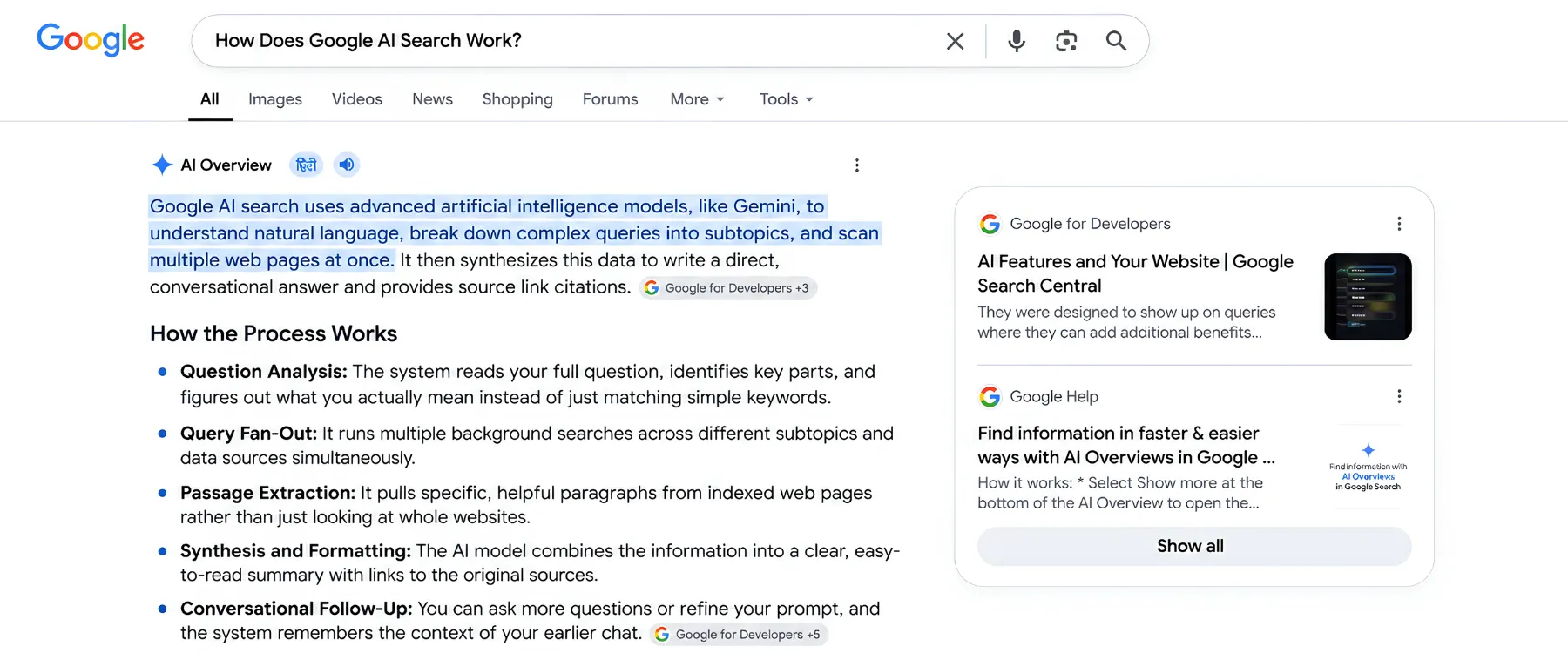
When a query requires deeper exploration, AI mode in Google search can break the request into related searches, evaluate information from different sources, and build a response around the broader intent. But what is SERP, and where does this information appear? SERP stands for Search Engine Results Page—the page displayed after a user enters a query on Google. Today, a SERP can include organic listings, paid ads, AI-generated responses, images, videos, maps, and other search features.
A simplified version of the process looks like this:
This approach allows Google to handle more complex searches without requiring users to enter several separate queries. Instead of treating each search as an isolated request, the system can connect related information to help answer the broader question.
Getting better results from Google Search AI often comes down to how clearly you frame your search. Instead of relying on short keywords, give Google enough context to understand what you actually need.
Add details such as your budget, location, industry, experience level, or specific requirements. For example, instead of searching for “best CRM,” you could ask for the best CRM for a 10-person sales team within a specific budget.
When you are choosing between products, services, or strategies, ask Google Search AI to compare them based on the factors that matter to you, such as price, features, suitability, or location.
You don’t have to start a new search every time. Ask follow-up questions to refine the information, change your criteria, explore an alternative, or go deeper into one part of the answer.
AI-generated responses can sometimes contain inaccurate or incomplete information. For important decisions, open the supporting webpages and verify key claims rather than relying only on the generated response.
For more conversational searches, these habits also overlap with voice search SEO, where users often ask complete questions instead of entering short keyword phrases.
| Feature | Google Search AI | ChatGPT | Gemini |
|---|---|---|---|
| Primary purpose | AI-powered search and web discovery | General-purpose AI assistant | General-purpose AI assistant |
| Best for | Finding and exploring information from the web | Research, writing, analysis and task assistance | Research, writing and Google-related tasks |
| Search experience | Built directly into Google Search | Conversational AI experience with web search capabilities | Conversational AI experience with Google Search integration |
| Web information | Strong focus on Google Search results and web sources | Can search the web when the feature is available | Can use Google Search and other Google services |
| Follow-up questions | Yes | Yes | Yes |
| Research style | Search-first | Conversation and task-first | Conversation and Google ecosystem-focused |
| Source links | Links to supporting webpages can appear with results | Sources can be provided when web search is used | Sources can be provided depending on the experience |
| Best choice when | You want AI-assisted web discovery | You want to research and continue working on a task | You want an AI assistant closely connected to Google services |
The main difference is how each experience is designed to help you. Google Search AI is built around discovering information through Search, while ChatGPT and Gemini are broader AI assistants that can support tasks beyond finding information. If you’re specifically comparing the two AI assistants, see our guide to ChatGPT vs Gemini.
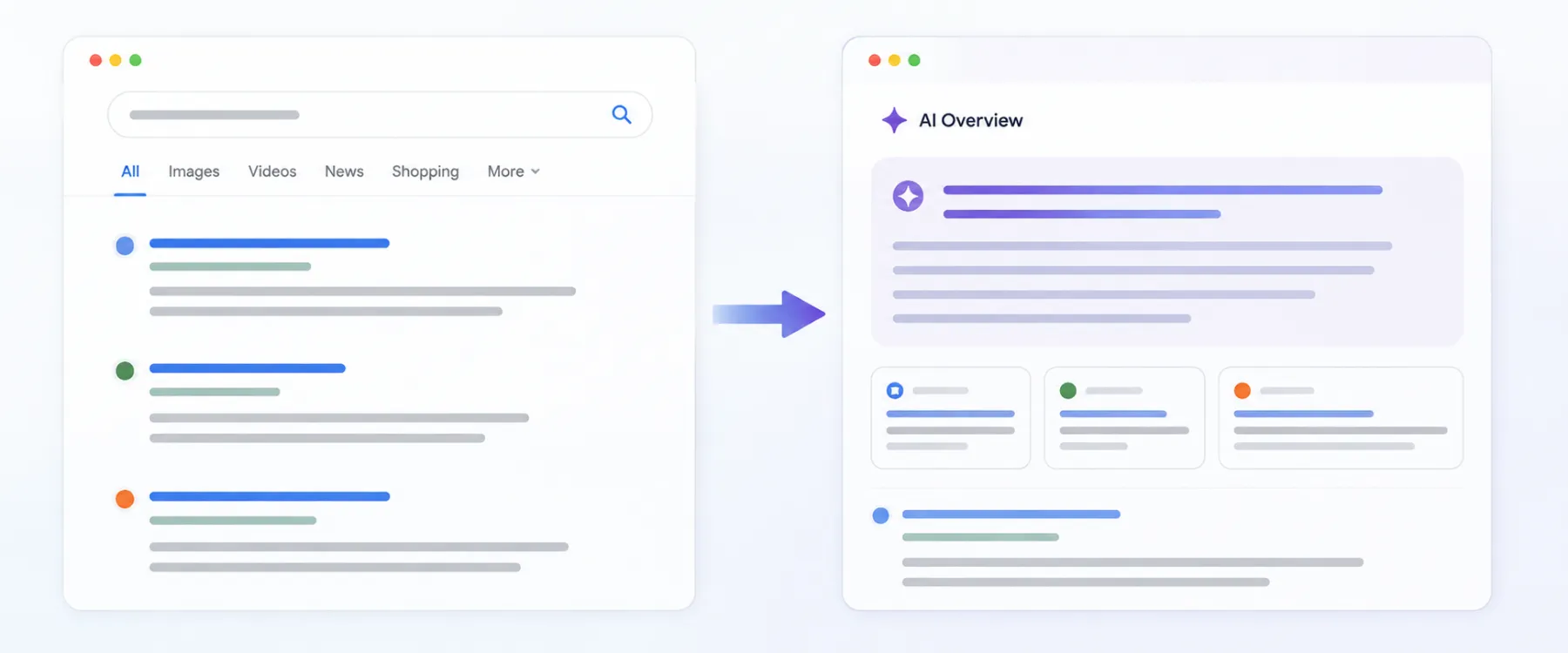
Google says established SEO guidance still applies to AI Overviews and AI Mode. There is no separate AI-only schema or special file that guarantees inclusion.
A page still needs to be crawlable, indexed, and eligible to appear in Search with a snippet.
That makes Google Search AI for SEO less about finding a new trick and more about strengthening the fundamentals. If you want to improve your visibility in AI-powered search, learn how to Optimise Content for Google AI Overviews with practical SEO strategies.
As search becomes more AI-driven, HEO (Hybrid Engine Optimisation) can complement traditional SEO by focusing on visibility across both conventional search engines and AI-powered discovery experiences. The goal is not to replace SEO, but to build on its fundamentals so content can remain useful and discoverable across changing search journeys.
These points closely follow Google’s own recommendations for websites seeking visibility in AI Overviews and AI Mode. Third-party research on AI Overviews has also found supporting links from pages outside familiar first-page rankings. The practical lesson is to focus on usefulness and topical relevance, not one position alone.
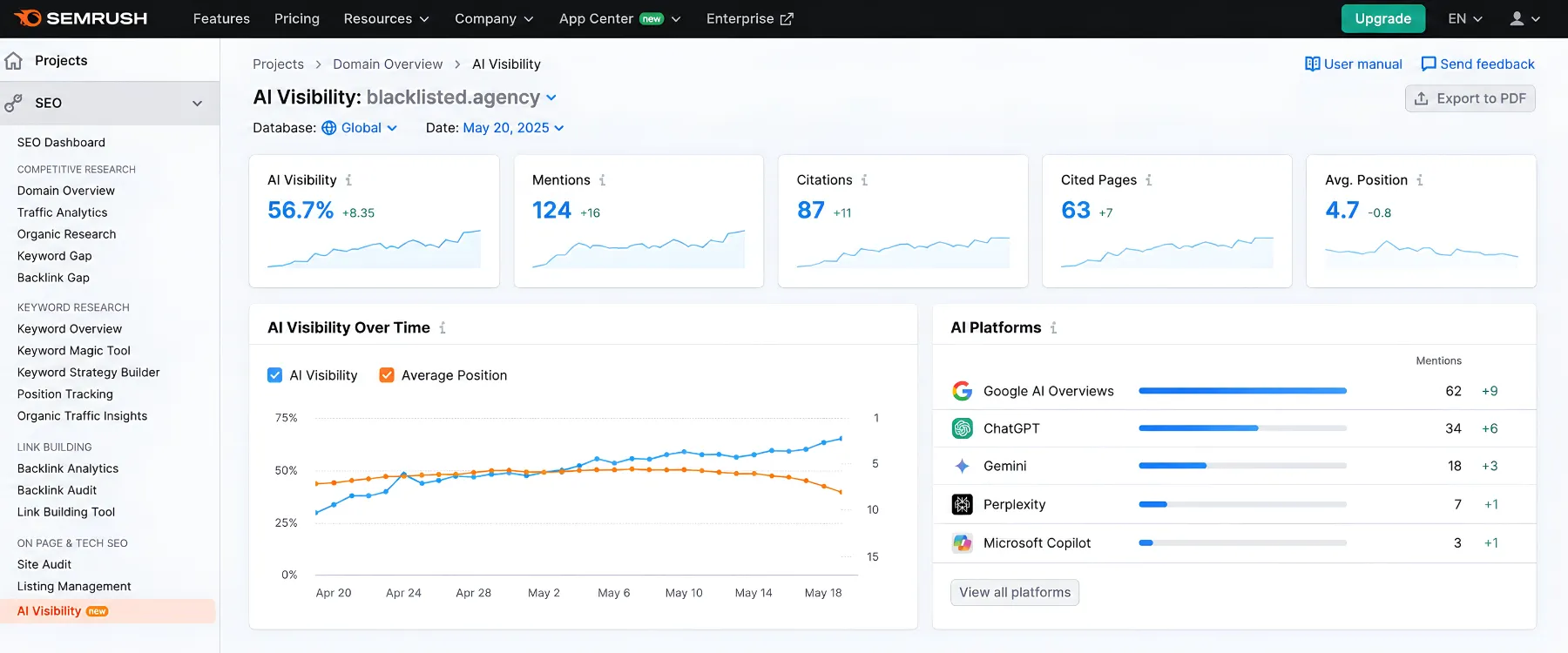
Google Search is becoming more complex, and businesses now need to think beyond traditional rankings. Visibility can depend on how well a website is structured, how clearly its content answers search intent, and how easily its information can be understood across AI-powered search experiences.
This is where an experienced SEO agency can help. Instead of chasing every new AI feature, the focus should remain on strong technical SEO, useful content, topical relevance, internal linking, first-hand expertise, and measurable search visibility.
At Blacklisted, we are already adapting our SEO strategy around this shift. Our approach combines technical SEO, content optimisation, AI search visibility, internal linking, and brand authority to help businesses stay discoverable as search behaviour evolves.
The goal is not to optimise for one AI feature. It is to build a stronger search presence that can perform across traditional Google results and emerging AI-powered experiences.
Google Search AI is changing how people discover, compare, and understand information online. With AI Overviews, AI Mode, and other AI-powered search experiences becoming part of Google Search, businesses need to think beyond traditional rankings and focus on creating content that is useful, trustworthy, easy to understand, and technically accessible.
This does not mean SEO is becoming less important. Instead, Google Search AI for SEO makes strong fundamentals even more valuable. Websites that provide clear answers, demonstrate real expertise, maintain strong technical SEO, and build relevant topical authority are better positioned to remain visible as search continues to evolve.
At Blacklisted, we are adapting our SEO strategies to this changing search landscape by combining technical SEO, content optimisation, AI search visibility, and brand authority. As a creative agency, we also understand that search visibility works alongside a strong brand, helping businesses build a consistent digital presence that people can discover, trust, and remember.
The goal is simple: help businesses stay discoverable wherever their customers are searching.

We are your go-to source for everything digital. We cover marketing tips, design trends, new tech, and how to build your brand. Every post has useful information to keep you updated and ready to tackle the digital world. It’s not just articles; it’s a way to learn, grow, and connect with others navigating the same digital journey.