case study

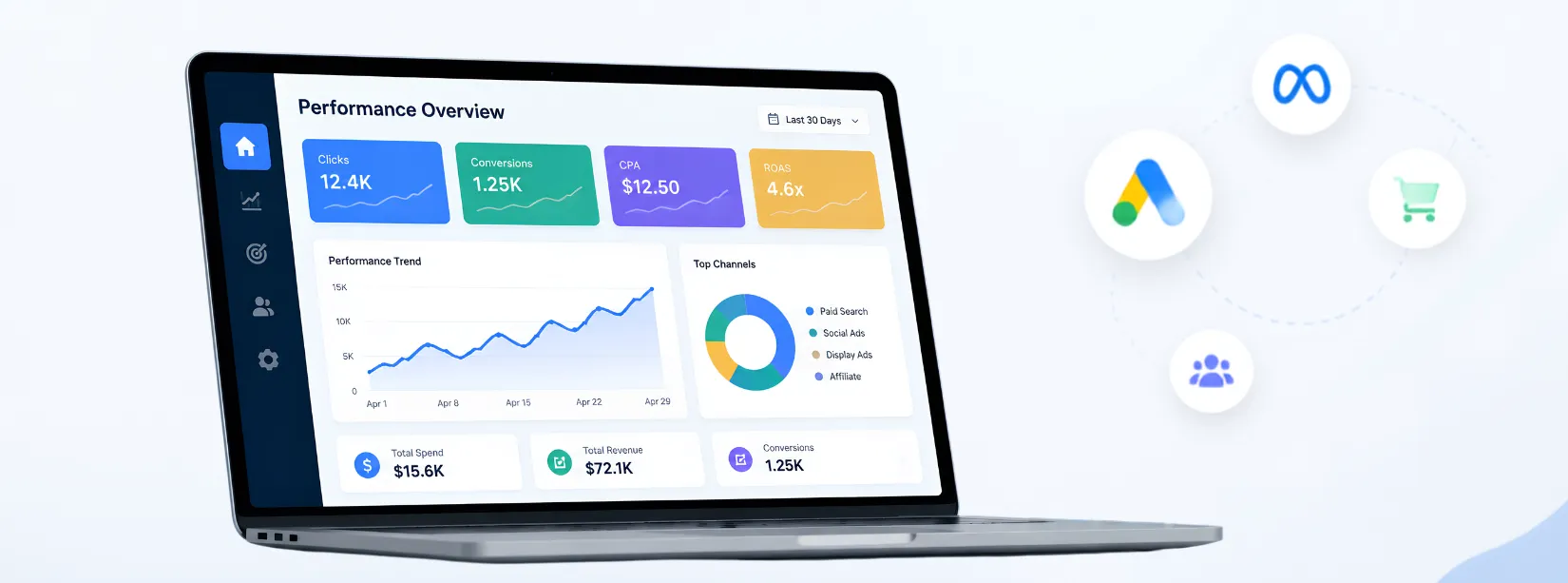
Performance marketing lets businesses pay only for measurable results like clicks or sales. This focus on accountability helps optimise budgets and improve campaign effectiveness. By using data-driven tactics across various channels, companies can reach their goals more efficiently while reducing wasted spend and gaining clearer insights into what works.
In today’s competitive digital landscape, businesses need marketing strategies that deliver measurable results rather than relying on guesswork. With increasing advertising costs and growing competition, brands are looking for ways to maximise their marketing budget while generating quality leads, sales, and conversions. This is where performance marketing has become a game-changer for businesses of all sizes.
The importance of performance marketing lies in its ability to provide accountability, transparency, and data-driven decision-making. By focusing on measurable outcomes, businesses can track campaign success, optimise performance, and achieve better returns on their marketing investment. In this guide, we’ll explore why performance marketing matters, its key benefits, and how businesses can use it to drive sustainable growth.
Performance marketing is a form of digital marketing that empowers you to pay only when a specific action has been completed-for example, a click, lead, or sale. Unlike other advertising methods, performance marketing puts you in the driver’s seat, ensuring the campaigns run optimally to gain maximum efficiency.
It combines creativity with analytics, which makes it the strategic approach for businesses seeking results-based strategies. A paid marketing agency in India can help you create campaigns that reflect your target audience while ensuring that every rupee works hard for you.
Performance marketing follows a data-driven process that focuses on measurable outcomes and continuous optimisation. By tracking campaign performance at every stage, businesses can improve results, reduce wasted ad spend, and maximise their return on investment. The following table outlines how performance marketing typically works.
| Step | Stage | What Happens |
|---|---|---|
| 1 | Goal Setting | Define specific objectives such as lead generation, sales, website traffic, or customer acquisition. |
| 2 | Audience Targeting | Identify and target the most relevant audience based on demographics, interests, and online behaviour. |
| 3 | Campaign Launch | Run advertisements across channels such as Google Ads, social media platforms, affiliate networks, and display advertising. |
| 4 | Performance Tracking | Monitor clicks, impressions, leads, conversions, and other key performance indicators (KPIs). |
| 5 | Optimisation | Analyse campaign data and make adjustments to targeting, ad creatives, bidding strategies, and budgets. |
| 6 | Scaling | Increase investment in high-performing campaigns to maximise ROI and support long-term business growth. |

Performance marketing offers an entire network where everything is measurable, everything is optimisable, and every penny spent is attached to tangible results. Here are some good reasons why every business, regardless of size, should adopt performance marketing:
Performance marketing enables you to spend your budget on measurable actions. You pay for results instead of traditional campaigns, where one pays for exposure such as clicks, conversions, and sales. This approach maximises budget efficiency and eliminates unnecessary spending.
One of the most excellent perks of performance marketing is its ability to track every step of your campaign. From the very first ad click to the final purchase, you have complete visibility into how your audience interacts with your ads. This level of insight allows you to pinpoint what’s working and what’s not so that you can fine-tune your strategies for even better results.
Whether you’re launching a new product or retargeting existing customers, performance marketing allows you to zero in on your audience. A paid marketing agency can leverage tools like Google Ads or Facebook Ads to serve personalised ads to users most likely to convert.
Performance marketing is designed to offer businesses clear, measurable outcomes, making it a preferred choice over traditional advertising. Here’s how it can benefit your brand:
With performance marketing, you know exactly where your money is going. Advanced analytics tools allow you to track the effectiveness of every campaign, enabling quick adjustments for better performance.
Got a winning campaign? Scale it up! Performance marketing lets businesses increase spending on well-performing ads and retract underperforming ones, giving you the flexibility to adapt to changing market conditions.
From search ads and display ads to influencer collaborations, performance marketing offers a range of formats to suit your brand’s needs. For example, a paid marketing agency in India might combine Google Shopping Ads with Instagram Stories to maximise impact.
No more months spent waiting for results. Performance marketing allows real-time campaign tweaks that guarantee optimal outcomes.
Performance marketing provides valuable information about your target market’s preferences, behaviour patterns, and purchase habits. These insights can help you shape future campaigns and product strategies.
Performance marketing relies on measurable data to evaluate campaign success and identify opportunities for improvement. By monitoring key performance metrics, businesses can make informed decisions, optimise marketing strategies, and maximise return on investment. The following metrics are commonly used to measure the effectiveness of performance marketing campaigns.
| Metric | Description |
|---|---|
| CTR | Click-through rate, measuring the percentage of users who click on an advertisement after seeing it. |
| CPC | Cost per click, indicating the amount paid each time a user clicks on an advertisement. |
| CPA | Cost per acquisition, showing the average cost required to gain a customer or conversion. |
| CPL | Cost per lead, measuring how much it costs to generate a qualified lead. |
| ROAS | Return on ad spend, evaluating the revenue generated for every dollar spent on advertising. |
| Conversion Rate | The percentage of users who complete a desired action, such as making a purchase or submitting a form. |
Performance marketing can be implemented across various digital channels, allowing businesses to reach their target audience and achieve specific marketing goals. Each channel offers unique advantages, making it important to choose the right platforms based on your objectives, audience, and budget.
| Channel | Purpose |
|---|---|
| Google Ads | Search and Shopping campaigns to attract high-intent customers. |
| Meta Ads | Facebook and Instagram advertising for audience engagement and conversions. |
| LinkedIn Ads | B2B lead generation and professional audience targeting. |
| Affiliate Marketing | Partner-driven sales through affiliates who promote products or services. |
| Native Advertising | Contextual promotion that blends naturally with platform content. |
While both performance marketing and traditional marketing aim to promote products and services, they differ significantly in how results are measured, campaigns are optimised, and budgets are allocated. The following comparison highlights the key differences between these two marketing approaches.
| Aspect | Performance Marketing | Traditional Marketing |
|---|---|---|
| Payment Model | Pay-per-action (click, lead, sale) | Fixed cost for ad placement |
| Measurability | Highly measurable | Limited tracking |
| Flexibility | Real-time adjustments possible | Static once launched |
| Targeting | Precise audience targeting | Broad targeting |
| ROI Potential | Higher, as campaigns are optimised based on performance | Less predictable returns |
For example, while a billboard ad can create awareness, a Facebook ad designed by a creative agency in India can drive direct sales and provide accurate performance reports.
Performance marketing is more than just a buzzword—it’s an essential tool for businesses seeking measurable results. You can achieve impressive growth by focusing on data, targeting the right audience, and optimising campaigns in real time.
Whether you’re working with a paid marketing or creative agency, expert guidance can help you overcome challenges and unlock your full potential. Start leveraging performance marketing today and watch your business reach new heights!
Performance marketing has become a crucial growth driver for modern businesses because it focuses on measurable results, optimized spending, and continuous improvement. Unlike traditional marketing, it allows brands to track every click, lead, and conversion, ensuring that every rupee invested contributes directly to business outcomes.
With data-driven strategies, real-time optimization, and targeted campaigns, businesses can scale faster while reducing unnecessary ad spend. Whether it’s paid ads, social media campaigns, or search marketing, performance marketing ensures accountability and better ROI at every stage of the funnel.
At Blacklisted Agency, we believe performance marketing is not just about running ads—it’s about building smart, scalable systems that consistently generate high-quality leads and revenue for brands. By combining creativity with analytics, we help businesses turn marketing efforts into predictable growth engines.

We are your go-to source for everything digital. We cover marketing tips, design trends, new tech, and how to build your brand. Every post has useful information to keep you updated and ready to tackle the digital world. It’s not just articles; it’s a way to learn, grow, and connect with others navigating the same digital journey.