case study

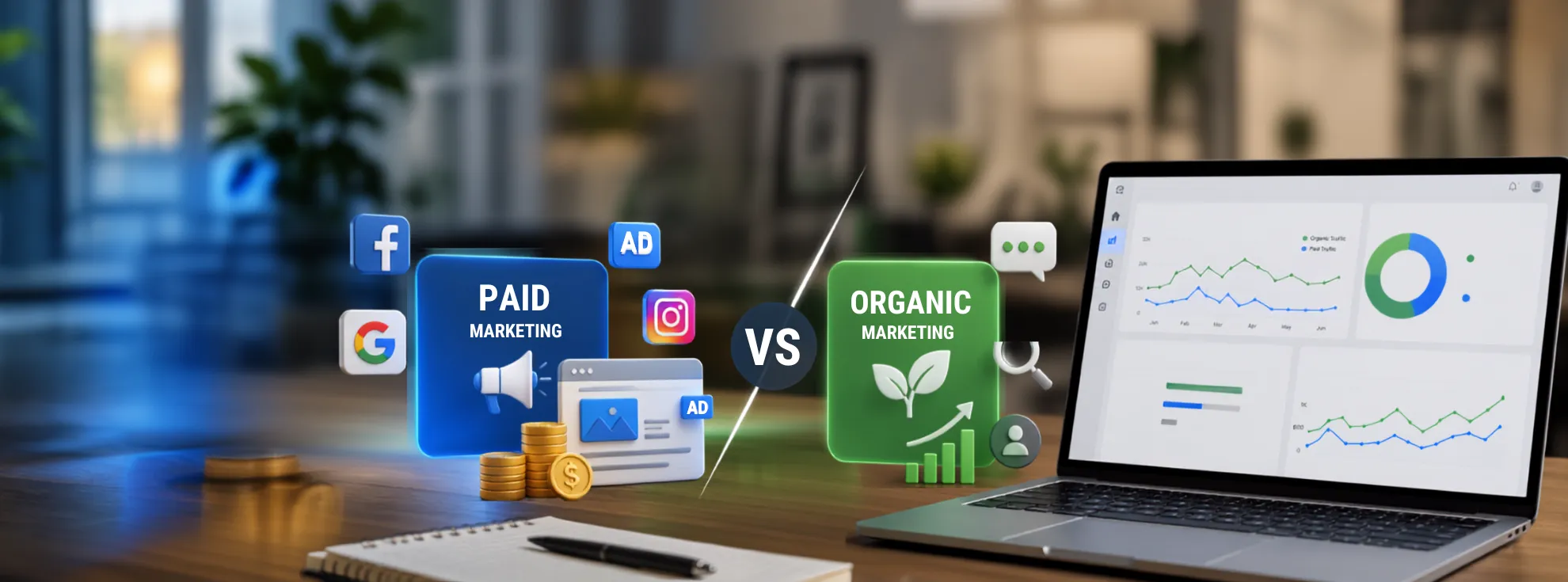
Paid marketing delivers quick, targeted results through ads, while organic marketing focuses on building lasting relationships via content and engagement. Both have unique strengths—paid offers speed and control, organic builds trust and sustainability. Using them together helps businesses balance immediate impact with long-term growth.
Choosing between paid marketing and organic marketing can be challenging for businesses trying to grow online. While paid campaigns deliver quick visibility and targeted traffic, organic marketing focuses on building long-term trust, authority, and sustainable growth.
The right strategy depends on your goals, budget, audience, and growth stage. Understanding the difference between paid and organic marketing helps you invest smarter and create a balanced digital marketing approach.
Want to know which strategy works best for your business? Explore the key differences, benefits, and use cases of paid vs organic marketing to build a marketing plan that drives real results.

Paid marketing is an online advertising strategy where businesses pay to promote their products, services, or brand across digital platforms. It helps companies reach their target audience faster by displaying ads on search engines, social media platforms, websites, and other digital channels.
Unlike organic marketing, which relies on SEO, content, and long-term audience building, paid marketing provides immediate visibility and allows businesses to target potential customers based on keywords, interests, location, demographics, and online behaviour.
A paid marketing agency helps businesses create and optimize performance-driven campaigns through channels like Google Ads, Meta Ads, LinkedIn Ads, and other paid platforms. These agencies use audience research, competitor analysis, ad testing, and performance tracking to improve campaign results and maximize return on investment (ROI).
For businesses looking to generate quick traffic, increase leads, and scale online growth, paid marketing offers a measurable way to connect with high-intent customers. However, achieving consistent results requires the right strategy, optimized ad campaigns, and continuous performance improvements.
For example, when launching a new product, paid marketing could be highly effective as it will guarantee visibility from day one.

Organic marketing is a digital marketing approach that focuses on attracting and engaging audiences naturally without paying for advertisements. It involves creating valuable content, improving online visibility, and building long-term relationships with customers through channels like SEO, blogs, social media, email marketing, and community engagement.
Unlike paid marketing, organic marketing does not require an advertising budget to generate traffic. Instead, it relies on consistent content creation, audience understanding, and strategic optimization to build trust and credibility over time.
A strong organic marketing strategy helps businesses improve search rankings, increase brand awareness, and attract potential customers who are actively looking for relevant information. By focusing on valuable content and user experience, businesses can create sustainable growth and generate consistent results.
For companies aiming to build long-term online success, organic marketing provides a cost-effective way to strengthen brand authority, improve customer relationships, and drive continuous website traffic.
For instance, partnering with an SEO agency can help you improve search rankings, increase online visibility, and achieve sustainable organic growth over time.
Understanding the core differences can help determine which strategy aligns with your business goals.
| Factors | Paid Marketing | Organic Marketing |
|---|---|---|
| Cost | Requires continuous advertising investment to run campaigns. | Does not require ad spend but needs consistent time and effort. |
| Results | Delivers faster visibility, traffic, and leads. | Builds long-term traffic, trust, and brand authority. |
| Traffic Source | Comes from paid ads on platforms like Google Ads and social media. | Comes from SEO, content marketing, social media, and referrals. |
| Time to See Results | Can generate results immediately after launching campaigns. | Requires time to build rankings, visibility, and audience trust. |
| Best For | Businesses looking for quick leads, sales, and targeted reach. | Businesses focused on sustainable growth and long-term brand presence. |
| Control | Offers precise control over audience targeting and budget. | Depends on content quality, SEO efforts, and audience engagement. |

When executed strategically, paid marketing can be a game-changer. Here’s why:
For example, running a Facebook ad for a limited-time offer ensures you reach your target audience fast.

Organic marketing fosters trust and builds a loyal audience. Here’s how:
For example, an informative blog or engaging Instagram post can attract users who become loyal followers.
Both paid and organic marketing are essential for your business, and selecting the right approach depends entirely on your specific goals.
In many cases, a combination of both strategies delivers the best results. For example, using paid ads to boost traffic while building organic content can maximise reach and impact.
Both paid marketing and organic marketing play an important role in building a successful online presence. While paid marketing helps businesses achieve quick visibility, targeted traffic, and immediate results, organic marketing focuses on long-term growth, brand authority, and sustainable customer relationships.
The right approach depends on your business goals, budget, and target audience. A balanced strategy that combines both methods can help businesses maximize reach, generate quality leads, and improve overall marketing performance.
With the right digital marketing services, businesses can create data-driven campaigns, optimize their online presence, and choose the best mix of paid and organic strategies to achieve consistent growth. Partnering with an experienced digital marketing agency can help you build a strong foundation, attract the right audience, and achieve measurable results in a competitive digital landscape.

We are your go-to source for everything digital. We cover marketing tips, design trends, new tech, and how to build your brand. Every post has useful information to keep you updated and ready to tackle the digital world. It’s not just articles; it’s a way to learn, grow, and connect with others navigating the same digital journey.