case study


Dwell time measures how long visitors stay on a page from search results. Longer dwell time indicates engagement, reduces pogo sticking, and signals content relevance, helping businesses improve rankings and conversions with data-driven SEO strategies.
Dwell time measures the interaction between users and your content after they arrive from organic search results. It starts when a visitor clicks a webpage from the SERP and ends when they return to the search results or leave the search journey.
For example, if a user searches for “technical SEO checklist,” clicks a blog post, reads the content for five minutes, and then returns to Google, those five minutes represent the dwell time.
| Metric | What It Measures | Traffic Source | Key Limitation |
|---|---|---|---|
| Dwell Time | Measures the time a user spends on a webpage after clicking a search result and before returning to the SERP. | Organic search traffic | Not directly available as a standard Google Analytics metric. |
| Bounce Rate | Shows the percentage of visitors who leave a webpage without visiting another page or taking further action. | All traffic sources | Does not show how long users stayed or whether they found the content valuable. |
| Time on Page | Measures the average time users spend on a webpage before navigating to another page. | All traffic sources | May not accurately reflect engagement when users leave without another interaction. |
| Pogo-Sticking | Occurs when users quickly return to search results and select another webpage. | Organic search traffic | Shows quick SERP returns but does not measure the exact time spent on a page. |
Dwell time is described as the period of time when a visitor stays on the site from the moment they click the link from the SERP until they go back to the SERP. Although there is no set “good” dwell time, a session duration of 2-3 minutes can be considered satisfactory, mostly for informational purposes. The key is that dwell time reflects how well content meets user expectations and keeps them engaged.
Dwell time is not a confirmed Google ranking factor. Google has not officially stated that the amount of time a user spends on a page directly affects search rankings. However, dwell time can provide valuable insights into user behaviour, content quality, and search intent satisfaction.
When users spend more time engaging with a webpage, it often indicates that the content is relevant, useful, and answers their query effectively. On the other hand, a short visit followed by a quick return to search results may indicate that the page did not fully meet user expectations.
Rather than focusing only on increasing dwell time, businesses should focus on creating high-quality content, improving user experience, and matching search intent. These factors help visitors find the information they need and encourage meaningful engagement.
Key Takeaways:

Improved session durations signify that visitors are engaging with your content and finding it valuable. Longer dwell time typically signals relevance to both users and search engines, making your pages more authoritative and trustworthy.
Key benefits of optimising dwell time include:
By monitoring dwell time in SEO and applying these insights, businesses can enhance both SEO performance and user experience. Agencies like Blacklisted leverage these metrics to refine strategies and boost engagement across all pages.
Dwell time shows user engagement and relevancy, but its duration doesn’t always impact page visits. Here is where short dwell times are not normally a bad thing:
Hence, the purpose of visiting the site is very important to come to any conclusion. Sometimes, even a short stay indicates a satisfied user, which is the sole purpose of SEO.
Boosting dwell time in SEO includes enhancing the quality of content, its readability, and overall user experience through:
Properly optimised dwell time in SEO improves user engagement, reduces pogo sticking, and indirectly enhances rankings. Agencies like Blacklisted use these strategies for clients to maximise SEO performance and create content that keeps visitors on pages longer.
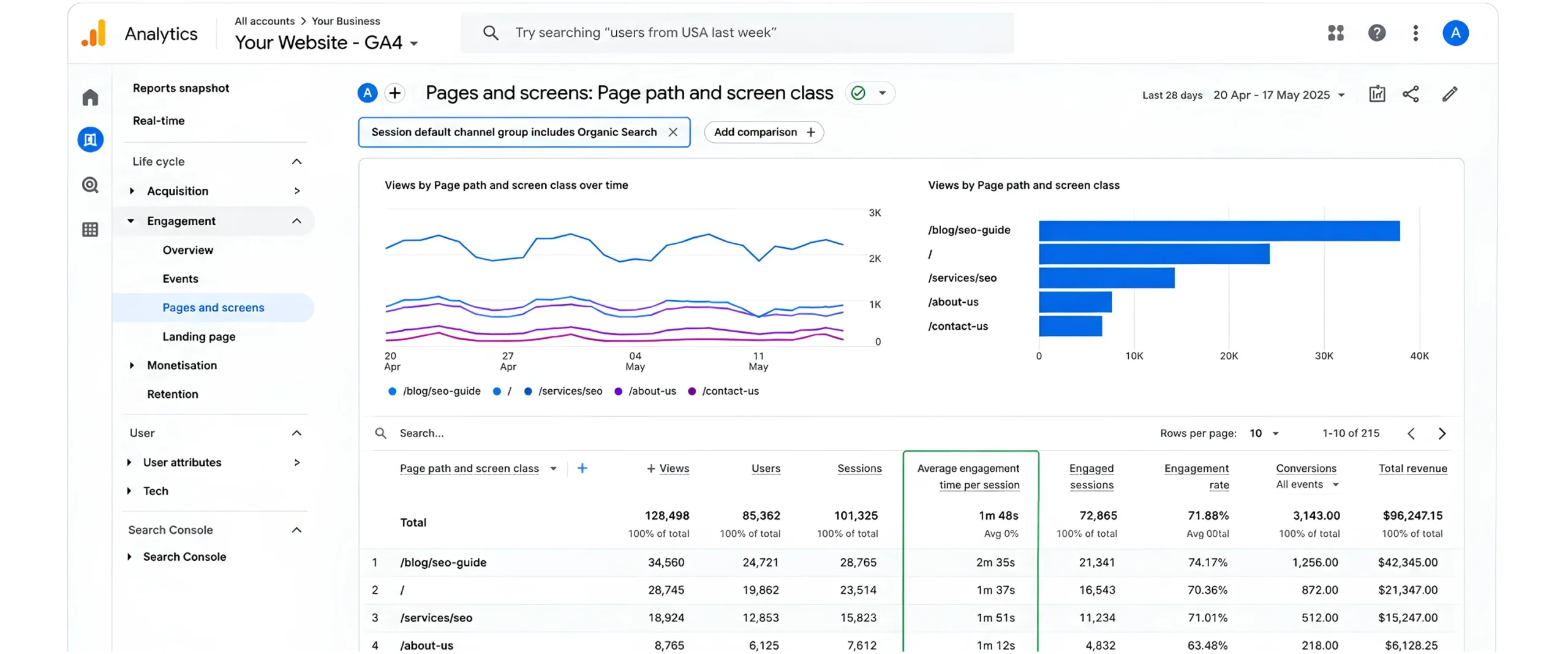
Google Analytics does not provide a direct dwell time metric, but it can be estimated using several metrics:
This analysis enables businesses to identify which pages are engaging users and which need improvement. A reliable SEO agency can help implement this setup to provide actionable AI search visibility insights.
Your business must measure dwell time, as it is associated with customer engagement, satisfaction, and brand authority. In most cases, high dwell time corresponds with higher conversions and quality leads. Low dwell time points out the deficiencies in your content strategy and user experience. Its measurement enables businesses to enhance their content strategy on an ongoing basis.
At Blacklisted, we provide digital marketing services that integrate web analytics insights into broader strategies. Optimising dwell time alongside other metrics helps create a holistic approach to improving search visibility and conversions.
The dwell time in SEO is an important metric to measure the effectiveness of your content. The higher duration usually means that there is better engagement with the site; it will help avoid pogo sticking, and also prove relevancy to search engines. With the help of optimised page layout, readability, and content value, an SEO agency like us can help make your visitors knowledgeable and satisfied with the page. The measurement of dwell time enables businesses to improve their SEO metrics, build brand authority, and get quality conversions. We can also help with that and the end-to-end performance of your online presence.
Connect with our team and see insights turn into actionable strategies for better SEO and user engagement.

We are your go-to source for everything digital. We cover marketing tips, design trends, new tech, and how to build your brand. Every post has useful information to keep you updated and ready to tackle the digital world. It’s not just articles; it’s a way to learn, grow, and connect with others navigating the same digital journey.