case study

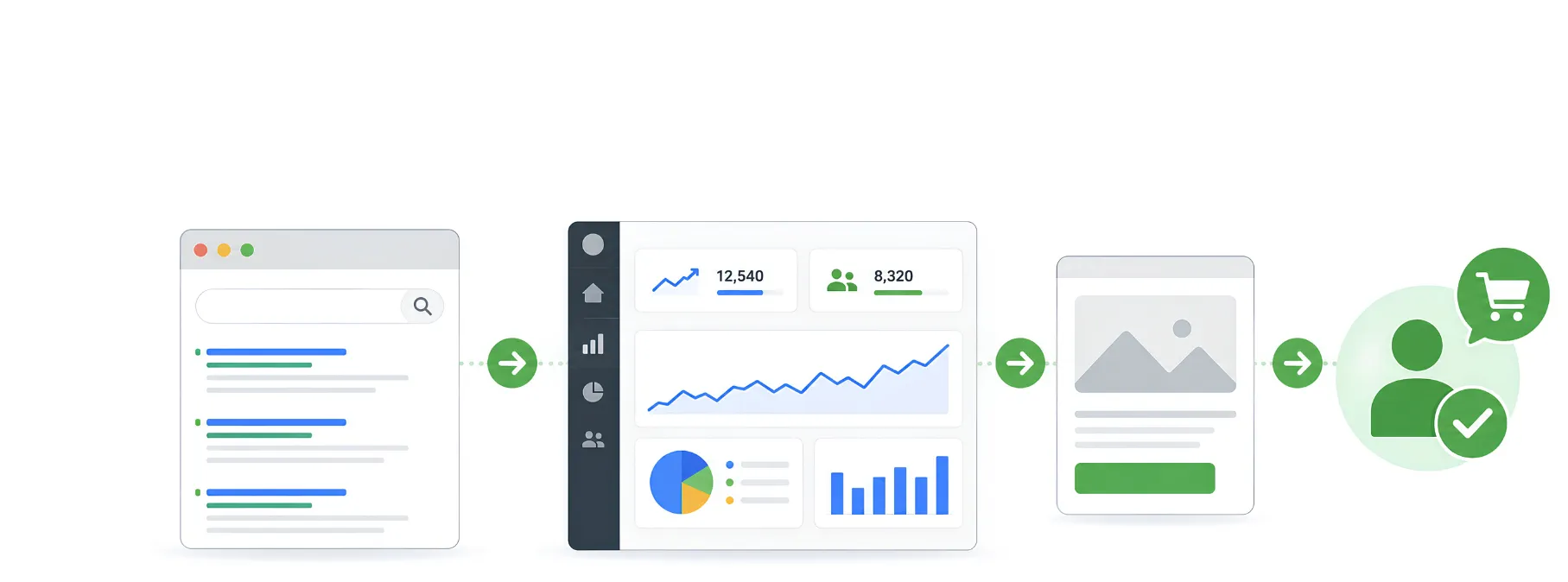
More website traffic does not always mean more business. The right strategy focuses on attracting qualified visitors, improving conversion opportunities, and turning clicks into customers. From SEO and paid campaigns to landing pages and user experience, every effort should support measurable growth and revenue.
Imagine two shops on the same street. One gets 50 visitors a day, but nobody buys. The other gets only 5 visitors, yet 3 make a purchase. Which business is more successful?
The same principle applies online: increasing website traffic only matters when you attract the right visitors and turn them into customers. The most effective approach combines SEO, high-intent content, paid marketing, social media, conversion-focused landing pages, and a better user experience.
This guide explains how to increase website traffic organically and through paid strategies, attract qualified visitors, improve conversions, and turn more clicks into leads and revenue. Keep reading to discover practical strategies that can help you grow traffic without chasing numbers that don’t contribute to your business.
Qualified website traffic refers to visitors who match your target audience and are more likely to need, consider, or purchase your product or service. Their location, needs, budget, and buying intent all influence how valuable they are to your business.
For example, someone searching for “best CRM software” from outside your target market, with no immediate need or budget, is very different from someone searching for “CRM software pricing for small business Mumbai.” The second visitor has a clearer need, stronger buying intent, and a greater likelihood of becoming a customer.
Here’s a simple way to separate different types of website visitors:
| Visitor Type | Behaviour | Business Value |
|---|---|---|
| Curious browser | Reads one page, leaves quickly | Low |
| Comparison shopper | Views pricing, checks reviews | Medium |
| Ready buyer | Clicks WhatsApp, fills a form, calls | High |
Once you know what a qualified visitor looks like, working out how to increase traffic to your website becomes far more targeted, because you’re chasing the right people instead of raw numbers.
Before investing in SEO, advertising, or content, decide what a valuable conversion looks like for your business. For an e-commerce website, that could be a completed purchase. For a service business, it may be a qualified lead who matches your ideal customer profile and eventually becomes a paying customer. Working with an SEO agency in India can also help service businesses build a strategy focused on generating qualified leads rather than just increasing traffic.
Track the entire customer journey instead of focusing only on the final conversion. Each stage shows how visitors move from discovering your business to becoming customers.
Track the whole journey, not just the last click:
| Funnel Stage | Example Action | Why It Matters |
|---|---|---|
| Attention | Organic visit, ad click | Shows reach |
| Engagement | Product or pricing page view | Shows consideration |
| Micro-conversion | WhatsApp click, brochure download | Shows buying intent |
| Lead conversion | Form submitted, call booked | Creates an opportunity |
| Revenue conversion | Order placed, deal closed | The number that matters most |
A cheap lead is not always a good one. If your $300 leads never pick up the phone while your $1,500 leads convert at 20%, the more expensive source is actually more profitable.
Traffic converts when visitors arrive with a problem your page solves. So the strongest approach to increasing traffic to your website is built on search intent, not generic keyword volume. Many businesses pour effort into broad educational topics like “what is digital marketing,” then wonder why enquiries stay flat. Those topics build awareness, but they rarely convert as well as commercially focused searches. Understanding keywords in SEO can help you identify the terms and search intent that are more likely to attract relevant visitors.
Try mapping your content to these intent types instead:
| Intent Type | Example Search | Best Page Type |
|---|---|---|
| Ready to buy | “buy office chairs Delhi” | Product or solution page |
| Comparing options | “Tally vs Zoho Books” | Honest comparison page |
| Local service need | “CA for startup in Gurgaon” | Location or service page |
| Price and feasibility | “website development cost India” | Pricing or cost guide |
| Trust validation | “best agency in Chandigarh reviews” | Case study or proof page |
Every important page should answer five questions clearly: what’s the offer, who is it for, what outcome does it produce, why should visitors trust you, and what should they do next.
Organic traffic doesn’t grow simply because you publish more content. It grows when your website becomes a useful, trustworthy result for the searches your potential customers are already making. In practice, the biggest gains often come from improving the pages you already have, creating content around genuine customer questions, and building stronger connections between informational and commercial pages, including how your content appears in Google Search AI.
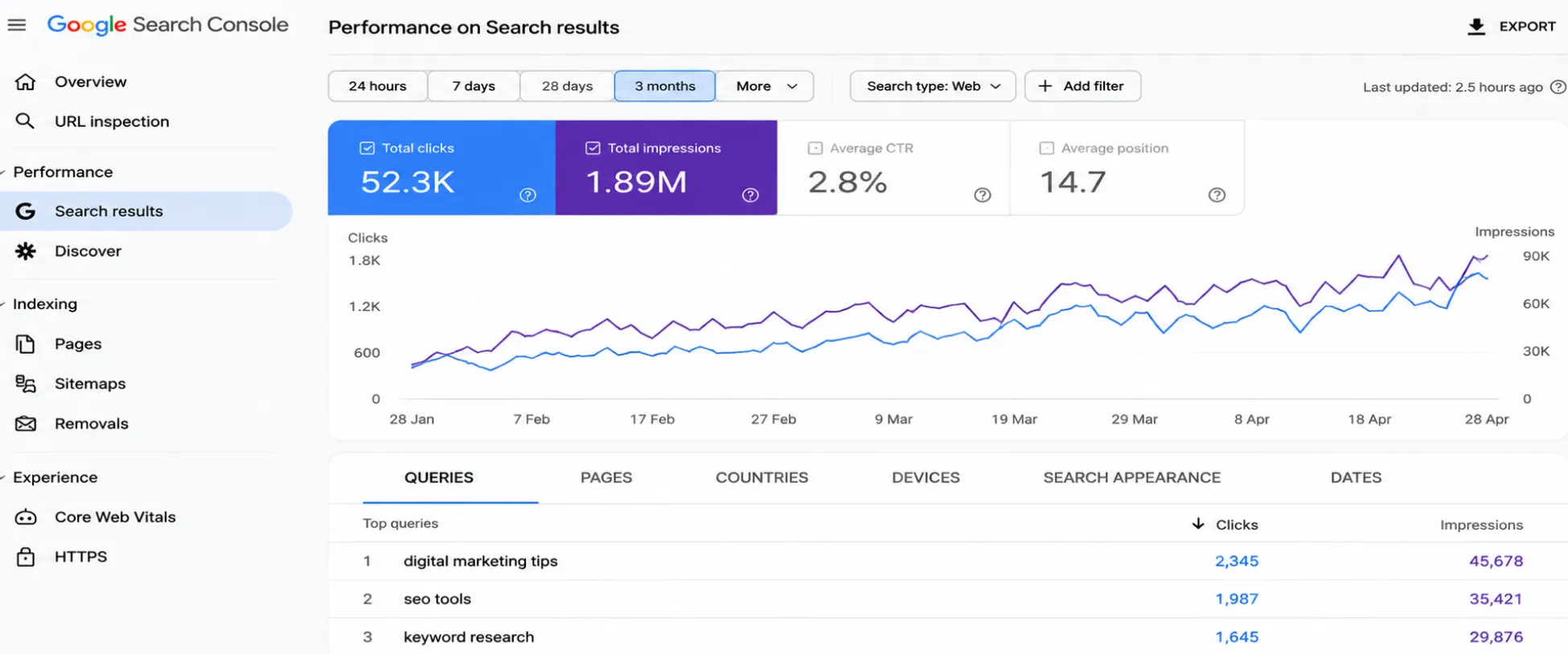
A good starting point is Google Search Console. Look beyond your total clicks and find pages that already receive impressions but have low click-through rates, or queries where your pages appear around positions 5–20. These pages have existing search visibility, which makes them strong candidates for optimization.
For example, if a page receives 8,000 impressions for several related searches but generates only 120 clicks, rewriting the title and description may improve its ability to attract searchers. If it ranks around positions 11–15, improving the depth, structure, internal links, and search-intent alignment may be more valuable than publishing another article targeting the same topic.
| SEO Focus | What to Do | What It Builds | What to Measure |
|---|---|---|---|
| Customer-Focused Content | Create guides, comparisons, FAQs, and resources based on real customer questions. | Relevance and topical authority | Impressions, clicks, rankings, and engagement |
| Content Refresh | Update pages that already have impressions, traffic, backlinks, or ranking potential. | Better relevance and search performance | CTR, rankings, organic clicks, and conversions |
| First-Hand Expertise | Add original examples, processes, case studies, expert insights, and real campaign learnings. | Trust and E-E-A-T signals | Engagement, mentions, backlinks, and assisted conversions |
| Website Authority | Earn relevant backlinks and mentions through useful resources, research, PR, and industry contributions. | Authority and credibility | Relevant referring domains, mentions, rankings, and organic traffic |
| Business Results | Connect organic landing pages with leads, qualified enquiries, customers, and revenue. | Measurable business growth | Qualified leads, conversion rate, customers, and revenue |
Sending traffic to a weak page is just a waste of your marketing budget. Before you drive more traffic to your website, fix the pages that are already getting visits.
Mobile is the journey, not an afterthought, for most audiences. Test your site on an average Android phone over regular data, not just your office desktop.
Be careful of:
The general structure of a good landing page is as follows: outcome-driven headline, target audience, evidence, offer and process, benefits, case study, FAQ, and one call-to-action button.
The poor headline “Leading Digital Solutions for Your Business” gives you no information about anything. The better headline “Performance Marketing for D2C Brands Ready to Scale Profitable Orders” automatically attracts the right buyers.
3. Cut the Friction From Your Forms
Ask only what your sales team genuinely needs for a useful first response:
Skip fields like turnover, full address, or ten qualifying questions before someone has even spoken to you.

Paid marketing helps you generate immediate demand, which is why many companies want to know how to get more traffic to their website quickly rather than relying only on organic growth. When combined with strong conversion analytics, an experienced paid marketing agency focuses on generating conversions and qualified leads, not simply low-cost clicks. If you’re comparing SEO vs paid marketing, the right approach depends on your goals, budget, competition, and how quickly you need results.
Design campaigns on themes relevant to people who are looking for the same solution, like “modular kitchen cost Delhi” or “skin clinic acne treatment Bangalore”. Direct them to a landing page specific to that ad only.
Meta platforms work well for visual products, retargeting, and local offers. LinkedIn suits high-ticket B2B services, enterprise software and account-based campaigns.
Many businesses bring in a social media management agency at this stage, since running organic content and paid social together consistently takes dedicated attention. The agency also handles retargeting messages tailored to how far along a visitor already is:
| Audience | Message That Works |
|---|---|
| Blog readers | Offer a guide or relevant next article. |
| Pricing-page visitors | Offer a demo or consultation. |
| Form starters who didn’t submit | Simplify the next step or offer WhatsApp. |
| Previous customers | Cross-sell or referral offer. |
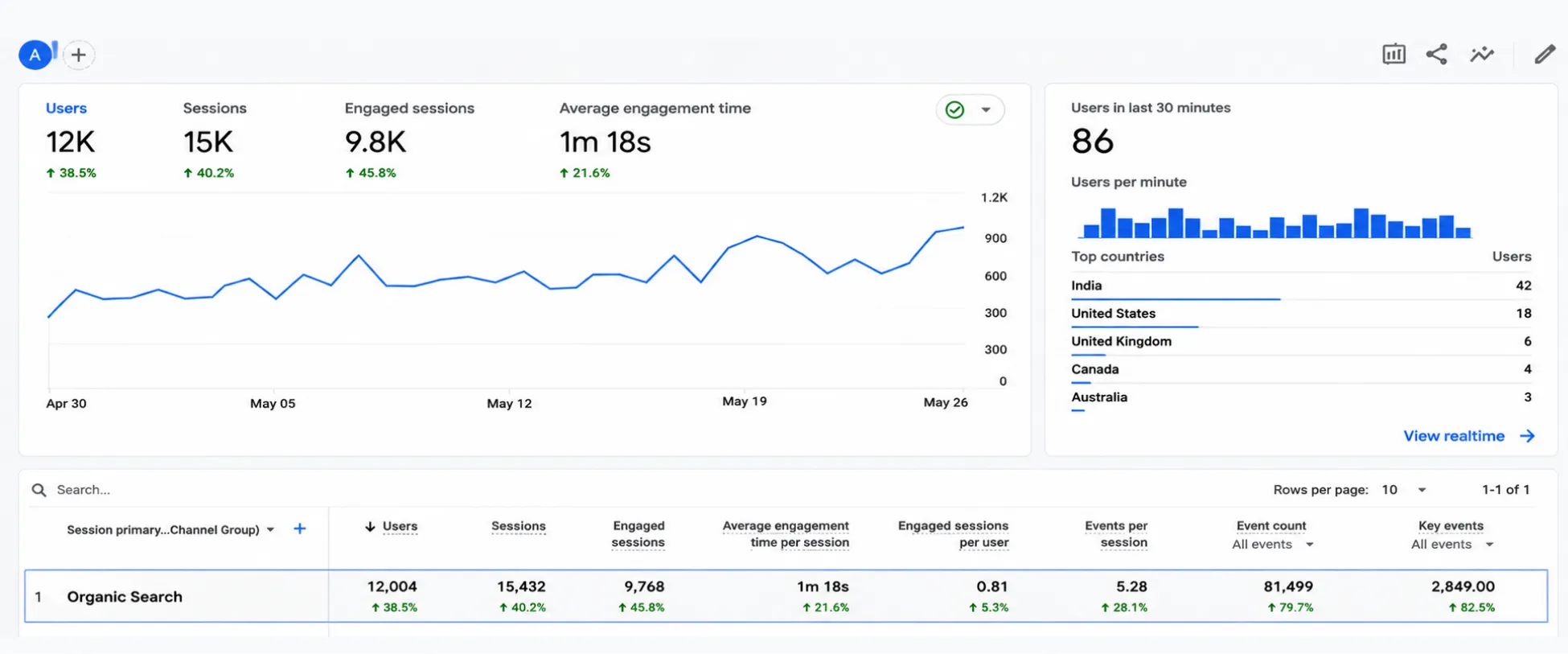
Organic traffic grows when your website consistently provides useful answers to the searches your target customers are already making. Understanding search engine basics, including how search engines crawl, index, and rank webpages, provides the foundation for building an effective organic search strategy.
Start by building topic clusters around your core services. Create supporting content such as cost guides, comparisons, how-to articles, FAQs, and industry-specific resources, then connect those pages with relevant internal links to your main service pages. This helps visitors discover related information while making the relationship between your content clearer to search engines.
Next, improve pages that already have search visibility. Check Google Search Console for pages receiving impressions but relatively few clicks, then improve their title tags, headings, introductions, and content to better match what people are searching for. Updating an existing page can often be more efficient than starting another article from scratch.
Your organic SEO strategy should also include:
SEO should not be treated as a one-time traffic campaign. A strong SEO strategy requires continuous monitoring and improvement based on how your website performs in search. Review your rankings, impressions, clicks, organic landing pages, conversions, and leads regularly. When you identify pages that are gaining visibility but not generating results, use that data to improve the content, targeting, internal linking, or conversion path.
An effective SEO strategy should also evolve as search behaviour changes. Continue refining your keyword targeting, updating declining content, strengthening topical authority, and creating useful resources around the questions your customers are actually searching for. This helps your website build sustainable organic visibility rather than relying on short-term ranking gains.
The goal is not simply to rank for more keywords. It is to build a search presence that attracts relevant visitors, demonstrates expertise, earns their trust, and moves them closer to becoming customers.
| Metric | What to Measure | Why It Matters |
|---|---|---|
| Website Traffic | Organic sessions, users, and landing-page visits | Shows whether your visibility and reach are growing |
| Engagement | Engaged sessions, key page views, and engagement rate | Shows whether visitors find the website useful |
| Leads | Forms, calls, WhatsApp clicks, and qualified enquiries | Shows whether traffic is creating real opportunities |
| Conversion Rate | Conversions divided by total visitors | Shows how efficiently your website turns visitors into leads |
| Revenue | Sales and revenue generated by each traffic source | Shows the actual business value of your marketing |
You can also track website traffic using GA4 and Google Search Console to monitor visitors, clicks, search queries, rankings, and conversions. This helps you identify which channels and pages are driving the most valuable traffic.
Knowing how to increase website traffic is only the first step. Sustainable growth comes from attracting the right audience, matching content to search intent, improving the user experience, and giving qualified visitors a clear path to enquire or buy.
The most effective strategy combines organic SEO, useful content, paid marketing, conversion-focused landing pages, and continuous measurement. Use Google Search Console and analytics to identify what brings visitors, which pages turn them into leads, and which channels ultimately contribute to revenue.
At Blacklisted, we approach website growth as more than a traffic-generation exercise. Our focus is on connecting visibility with meaningful business outcomes from attracting relevant searches to creating better conversion opportunities.
If your website is getting traffic but not enough enquiries or customers, the next step isn’t necessarily to chase more clicks. Improve the quality of the traffic, strengthen the pages receiving it, and measure what happens after the visit. That’s how website traffic becomes sustainable business growth.

We are your go-to source for everything digital. We cover marketing tips, design trends, new tech, and how to build your brand. Every post has useful information to keep you updated and ready to tackle the digital world. It’s not just articles; it’s a way to learn, grow, and connect with others navigating the same digital journey.