case study

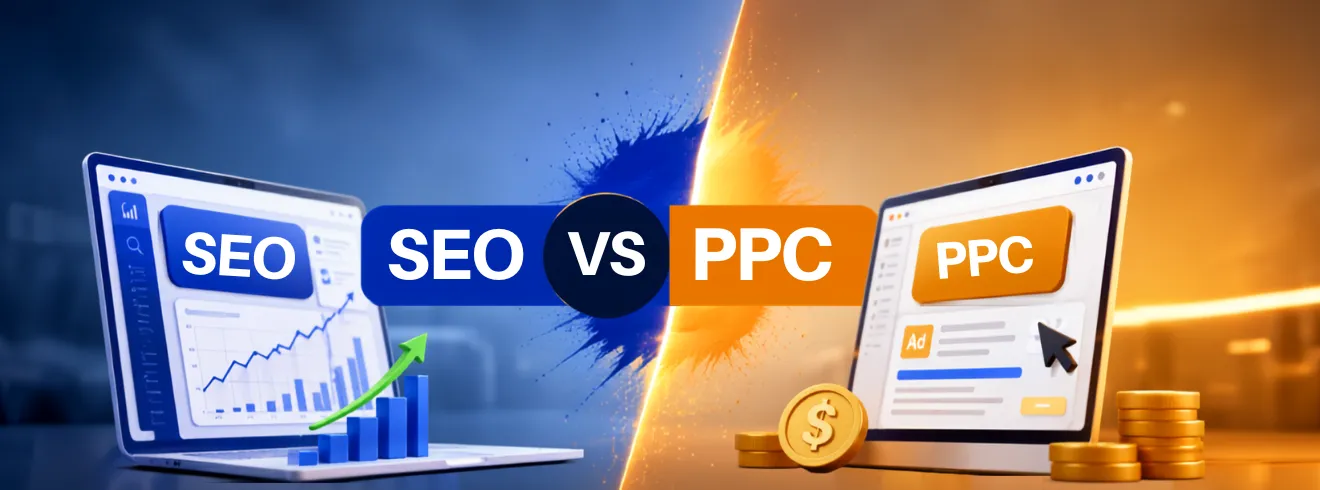
SEO is better for long-term organic traffic, visibility, and brand authority, while PPC is better for immediate traffic, targeted leads, and faster results. For many businesses, combining SEO and PPC provides the strongest balance of short-term conversions and long-term growth in 2026.
SEO vs PPC depends on your business goals, budget, competition, and how quickly you need results. SEO is generally better for long-term organic visibility and sustainable traffic, while PPC is better for immediate visibility, targeted leads, and faster results.
Choosing the right strategy depends on factors such as your business goals, budget, competition, target audience, and how quickly you need results. SEO focuses on earning organic visibility through content, technical optimisation, authority, and user experience, while PPC uses paid advertising to reach potential customers quickly for targeted searches.
In this guide, we’ll compare SEO vs PPC across costs, benefits, ranking processes, time to results, ROI, and ideal use cases. You’ll learn when SEO makes more sense, when PPC is the better choice, and why combining both strategies can support business growth in 2026.
SEO, or search engine optimisation, is the process of improving a website so search engines and users can discover, understand and trust it. Its main purpose is to earn unpaid visibility for searches that matter to your business.
Good SEO services usually include technical SEO, keyword research, on-page optimisation, content strategy, internal linking, local SEO, authority building and performance tracking. The aim is not only traffic. The aim is qualified traffic that can become leads, sales, calls, bookings or brand preference.
A serious SEO agency in India does not chase rankings in isolation. Rankings only matter when they support revenue, pipeline or trust.
SEO helps a business:
This is where SEO services need commercial thinking and where it must connect content with revenue. A blog may educate, a comparison page may influence, and a service page may convert. Each page should have a clear role in the buyer journey.
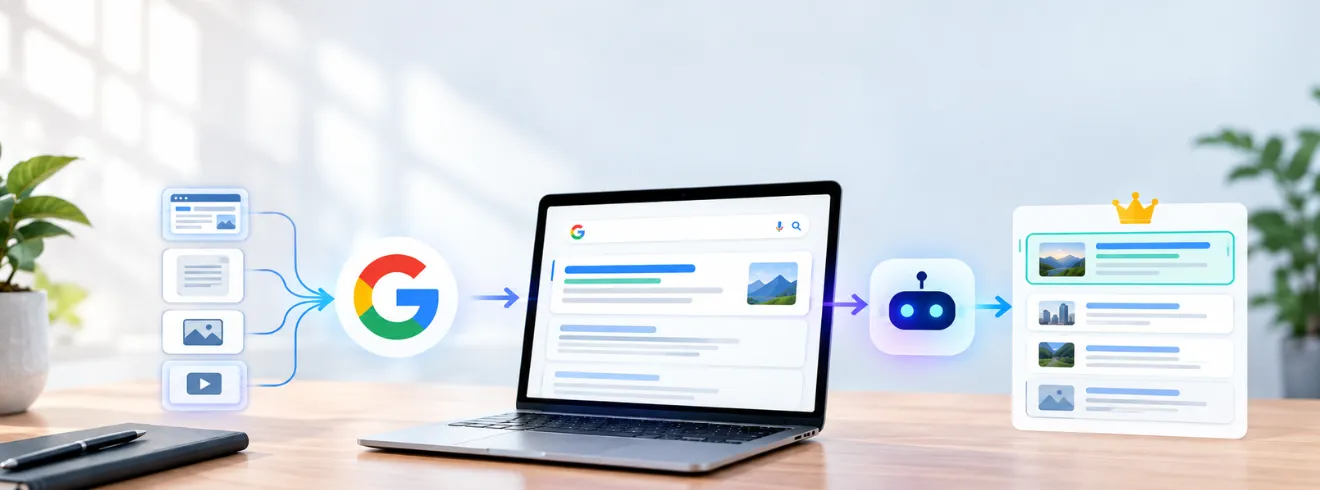
AI has made weak SEO easier to expose. Generic pages written only around keywords are no longer enough because AI search can summarise average information quickly. What still performs is clear, useful, well-structured content backed by expertise.
Google’s guidance on AI features explains that site owners should focus on unique, helpful content and strong page experience rather than special tricks for AI systems.
In summary, modern SEO now gives more importance to:
As a leading SEO agency in India, Blacklisted proposes to think beyond traditional SEO practice and just keywords to please search engines. The work now needs strategy, content depth, technical clarity, and brand authority, which is the foundation of a Hybrid AI SEO Strategy.
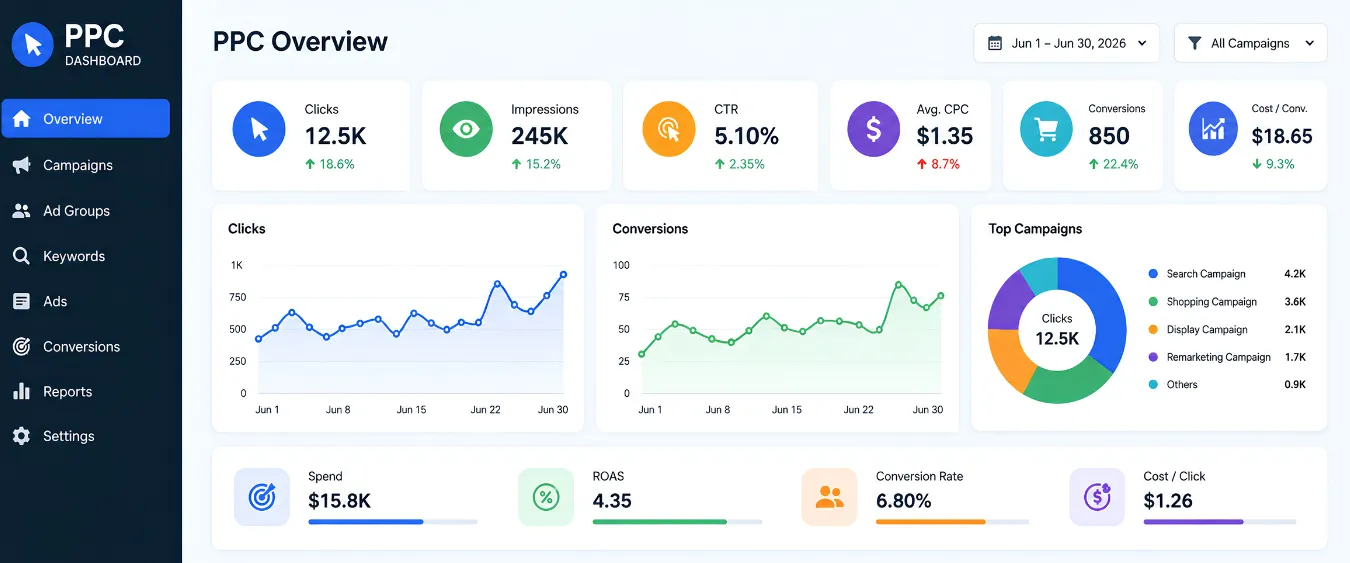
PPC stands for pay-per-click. It’s a model of digital advertising where a business pays whenever someone clicks on an ad. In search marketing, PPC ads shows up on search results pages for targeted keywords. These ads are typically located above or next to organic listings.
The most common example of PPC advertising is Google paid search, where the auction system decides ranking.
PPC does not mean a business simply pays and automatically gets the top position. Google still evaluates the relevance and quality of the ad before deciding where it appears. This is why working with a paid marketing agency can help businesses improve campaign performance and results.
The simplified process looks like this:
Google describes Quality Score as a diagnostic tool that helps advertisers understand ad relevance, expected click-through rate, and landing page experience.
PPC advertising is powerful because it can capture demand quickly. It is especially useful for high-intent searches such as “book a consultation”, “buy now”, “pricing”, “near me” or “best agency for X”.
The biggest mistake about paid search (PPC) is assuming that it is only about spending more. Don’t misunderstand us, budget does matter, but it is not the only criterion for success since factors like targeting, content, landing page quality, tracking, etc. all together decide whether clicks can become business.
Both channels are after visibility, but they earn it in different ways:
| Ranking Factor | SEO | PPC |
|---|---|---|
| How are rankings worked out? | Search engines rank pages based on hundreds of signals, such as content relevance, search intent, site authority, technical health, and user experience. | Ads compete in a real-time auction where Google considers your bid along with Ad Rank, Quality Score and expected performance before deciding placement. |
| Visibility | Shows up in the organic search results, without paying for each click. | It shows up in sponsored spots above or next to organic results after winning the ad auction. |
| Time to rank | Can take several weeks or months because authority and trust are built gradually. | Can appear within hours once the campaign is approved and starts running. |
| Cost structure | Individual clicks are free, but businesses invest in content, optimisation, tech improvements and authority building. | You pay only when someone clicks on your ad, so costs are directly related to the performance of the campaign and the competition. |
| What influences position | Helpful content, keyword relevance, backlinks, topical authority, Core Web Vitals, internal linking and user experience all affect rankings. | Where your ad appears depends on your bid strategy, Quality Score, ad relevance, landing page experience, expected CTR and competition. |
| How stable are rankings? | Well-optimised pages can stay in the rankings for months or years with regular updates, although algorithm changes and competition can impact them. | You can only see rankings when your campaigns are active and have budgets. When the spending stops, visibility usually declines right away. |
| User perception | Organic listings are often trusted more because they are earned rather than purchased. | Sponsored listings give instant visibility, but some users deliberately skip ads and look at the organic results. |
Takeaway:
The largest misconception in the SEO vs. PPC argument is that PPC just purchases the highest spot, while SEO earns it. Actually, both channels do have ranking systems.
SEO rankings are based on relevance, authority, and user value over time, while PPC rankings are based on a combination of bidding strategy, ad quality, and landing page experience.
More money does not necessarily lead to the best ad position, nor does more content necessarily lead to better organic rankings. To understand how SEO builds sustainable visibility, you can explore our effective SEO strategy
The cost of SEO vs PPC depends on your business goals, competition, industry, and how quickly you need results. SEO usually requires ongoing investment in content, technical optimisation, authority building, and website improvements, while PPC requires a budget for ad clicks, campaign management, and landing page optimisation.
| Factor | SEO | PPC |
|---|---|---|
| Initial Cost | Investment in content, technical optimisation, and website improvements. | Requires an advertising budget, campaign setup, and landing page optimisation. |
| Ongoing Cost | SEO management, content updates, technical work, and authority building. | Ad spend, campaign management, testing, and optimisation. |
| Time to Results | Usually takes longer as organic visibility and authority develop. | Can generate traffic and leads shortly after campaigns go live. |
| Traffic Cost | No direct cost for each organic click. | Advertisers generally pay when users click their ads. |
| Long-Term ROI | Can improve as rankings and organic traffic grow over time. | Depends heavily on continued advertising spend and campaign performance. |
| Best For | Sustainable traffic, authority, and long-term business growth. | Immediate visibility, lead generation, and campaign testing. |
SEO is more powerful where trust, research, and long-term visibility matter. It works well for education, healthcare, law, SaaS, manufacturing, professional services and premium brands where buyers compare before contacting.
Strong SEO services help these businesses be present at every stage of the decision journey. A good SEO agency will be able to create service pages, guides, location pages, comparison content, case studies and FAQs to help with both discovery and conversion.
SEO is also better when businesses want to reduce their dependence on paid media. As organic assets mature, they can begin to generate free enquiries without paying for every click.
PPC is a better option if time is of the essence. A new product, seasonal offer, event, new location, real estate launch, or urgent lead generation campaign can benefit from immediate visibility.
Paid search advertising works especially well when people are already searching with a buy intent. It also helps new websites to generate leads while SEO is still being built.
The warning is simple: Paid visibility is rented visibility. When the money dries up, the traffic drops.
So, which is better: SEO or PPC? The answer depends on how quickly you need results, your budget, and whether your priority is short-term leads or long-term organic growth.
| If your business | Better fit |
|---|---|
| Needs enquiries within days or immediate leads | PPC |
| Wants long-term visibility and traffic | SEO |
| Has a limited monthly budget | SEO |
| Is launching a new product | PPC |
| Is testing keywords and offers | PPC |
| Wants to build brand authority | SEO |
| Wants both short-term and long-term growth | SEO + PPC |
The decision is not about declaring one winner. It is about knowing which channel should solve which business problem.
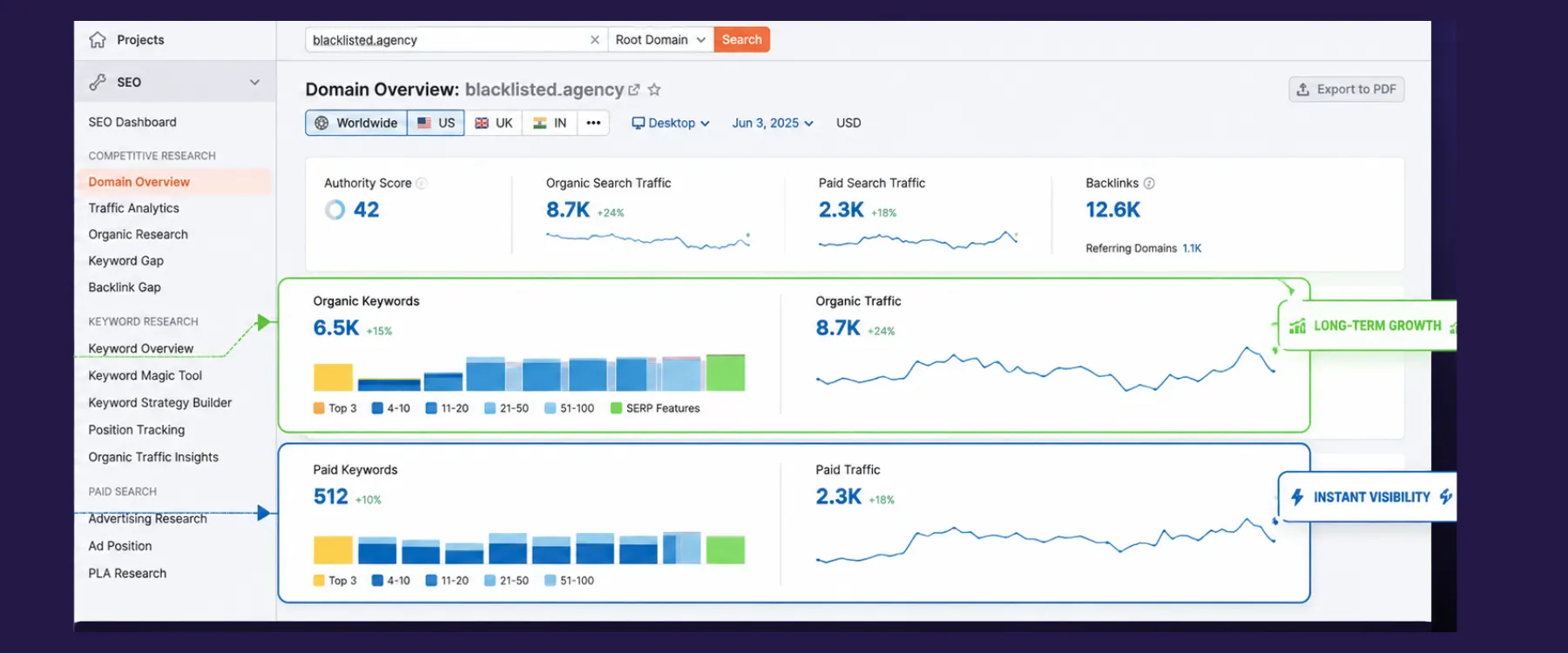
The strongest search strategies use PPC for speed and SEO for strength.
Paid advertising can test keywords, offers, cities, landing pages, and audience intent quickly. Organic strategy can then use those findings to build durable search assets.
Example: A new dental clinic in Chandigarh wants appointments immediately.
Running Google paid search campaigns can generate enquiries within days while the clinic builds local SEO through location pages, patient FAQs and Google Business Profile optimisation. After six to twelve months, organic enquiries begin increasing, allowing the clinic to rely less on paid advertising and reduce its cost per acquisition.
A useful growth loop looks like this:
This is how digital marketing services should work in 2026. Search, content, paid media and analytics should feed one another, not compete for credit.
When brands come to Blacklisted for the best strategy between SEO and PPC, we do not recommend one simply because it is trending. We always begin with the business objective.
At Blacklisted, we take time to answer key questions such as: Does the brand need quick enquiries, stronger authority, better local visibility, lower acquisition costs, or more qualified leads? The right strategy depends on what the business actually needs to achieve.
Our digital marketing services include SEO audits, content strategy, technical fixes, Google paid search campaigns, landing page planning, analytics setup, and conversion optimisation. At Blacklisted, the right mix of SEO and PPC depends on the website, the market, the budget, and the business model.
If a website is technically weak, sending paid traffic to it can be wasteful. On the other hand, if the offer is still untested, relying only on organic growth may slow results. That’s why Blacklisted focuses on careful research, planning, and strategy before recommending the best path forward.
Not sure whether SEO, PPC, or a mix of both is right for your business? Get in touch with Blacklisted for a quick consultation and find the strategy that best fits your goals.
SEO vs PPC is not about choosing one channel for every business. SEO is better suited to businesses looking for long-term organic visibility, authority, and sustainable growth, while PPC can deliver faster traffic, targeted leads, and immediate campaign data.
For businesses that want both short-term results and long-term growth, combining SEO and PPC can be the most effective approach. PPC can generate immediate demand and reveal valuable keyword and conversion insights, while SEO builds organic visibility that can continue generating traffic over time.
At Blacklisted, we create data-driven digital marketing strategies based on your goals, competition, budget, and growth stage. Whether you need stronger organic rankings, profitable paid campaigns, or a combination of both, the right strategy is the one that turns search visibility into measurable business growth.

We are your go-to source for everything digital. We cover marketing tips, design trends, new tech, and how to build your brand. Every post has useful information to keep you updated and ready to tackle the digital world. It’s not just articles; it’s a way to learn, grow, and connect with others navigating the same digital journey.