case study


Keywords are crucial for SEO, driving relevant traffic and improving search rankings. Using the right keywords, such as primary, secondary, and long-tail, helps target user intent. Key metrics like search volume, conversion rate, and keyword difficulty guide the SEO strategy. Implementing keywords naturally enhances content, improving visibility and long-term results.
A keyword in SEO is a word or phrase people enter into search engines to find information, products, or services. Keywords help search engines understand your content and match it with relevant search queries.
In simple terms, keywords connect what users search for with the content you publish. Using relevant keywords naturally can improve search visibility, attract qualified organic traffic, and align your content with search intent.
Understanding keyword types, search volume, keyword difficulty, and search intent helps you choose better keywords and create content that can rank. Read on to learn how to find, choose, and use the right keywords to strengthen your SEO strategy and drive more organic traffic.
A keyword in SEO is the search term you use to connect your content with a specific query on Google or another search engine. It can be a single word, a phrase, or a longer query, depending on what the user is searching for.
For example, if someone searches for “best SEO agency in India,” that entire phrase can be treated as a keyword. If your page is relevant to that query and provides a useful answer, search engines can consider it when deciding which results to show.
Keywords can appear in different forms, including questions, product names, services, topics, and problem-based searches. Their role is not simply to be repeated throughout a page. They help you understand what your content should cover and whether your page matches the user’s search intent.
The better your keyword matches the topic and the user’s needs, the more useful your page can be for both searchers and search engines.

Keywords are one of the most important ranking factors in SEO because they help search engines understand what your content is about and who should see it. When used correctly, keywords improve your visibility on search engine results pages (SERPs), increase organic traffic, and ensure your content matches user intent.
Without proper keyword usage, even high-quality content may fail to rank because search engines cannot clearly categorize its relevance.

When evaluating a keyword in SEO, marketers look at several metrics to understand its potential and competitiveness. A creative agency can use these metrics to make data-driven SEO decisions:
Understanding the different types of keywords in SEO helps you choose terms based on search intent, competition, and the stage of the user’s journey.
Seed keywords are the starting point of every successful SEO strategy. They are broad terms that define your niche and help you discover hundreds of related keyword opportunities. SEO professionals use seed keywords in tools like Google Keyword Planner, Ahrefs, or Semrush to find search volume, keyword difficulty, and user intent. For example, if your business offers SEO services, SEO is a seed keyword that can generate ideas such as technical SEO, local SEO, SEO audit, and SEO agency.
Choosing the right seed keywords lays the foundation for your entire content strategy. They help you identify topics your audience is searching for and uncover long-tail keywords that are easier to rank for. Instead of targeting only broad, competitive terms, you can build a cluster of related content that improves your website’s topical authority and increases your chances of ranking higher in search results.
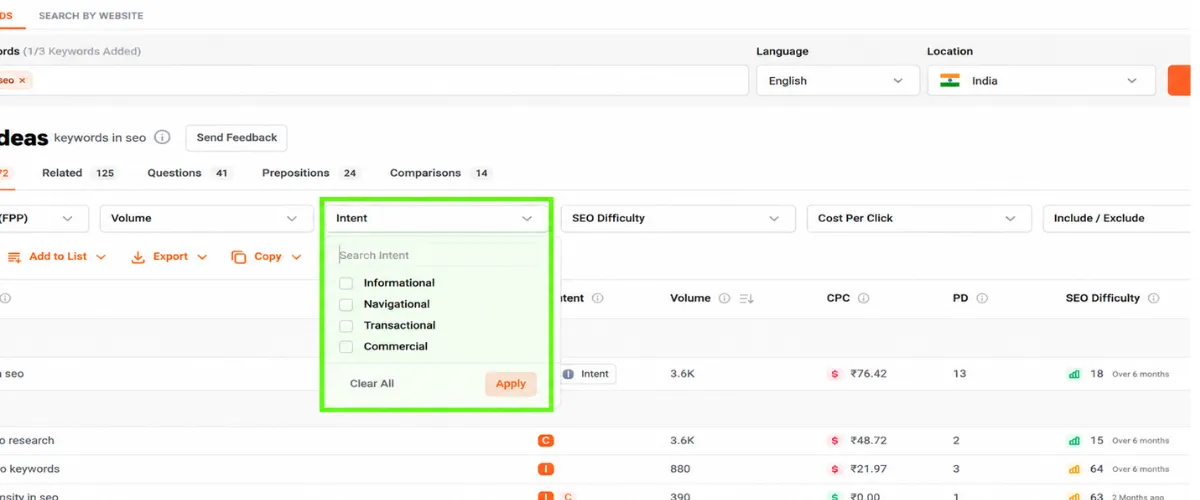
Keywords by search intent are divided into four categories that reflect the intent or purpose behind a search query.
| Keyword Intent | What It Means | Example |
|---|---|---|
| Informational | Used when someone wants to learn about a topic, understand a concept, or find an answer to a question. | “what is SEO” |
| Navigational | Used when someone wants to find a specific website, brand, page, or online destination. | “Facebook login” |
| Commercial | Used when someone is researching, comparing, or evaluating products or services before making a decision. | “best protein powder brand” |
| Transactional | Used when someone is ready to buy, sign up, book, download, or take another specific action. | “buy protein powder” |
Long-tail keywords are detailed search phrases that usually contain three or more words, such as best SEO agency for startups or affordable AC repair service near me. Although these keywords generally have lower search volume, they reflect specific user intent and attract visitors who know exactly what they are looking for.
Long-tail keywords are especially beneficial for SEO because they are less competitive than broad search terms, making them easier for new websites to rank for. They also tend to deliver higher conversion rates since the search intent is more precise. Building content around long-tail keywords helps businesses attract qualified traffic while gradually improving their overall domain authority.
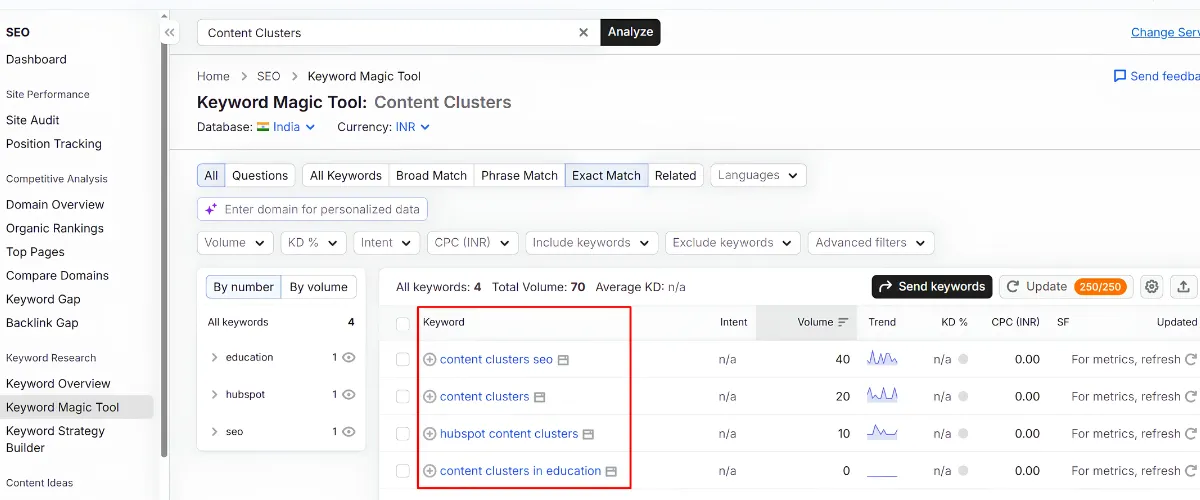
Short-tail keywords are broad search terms consisting of one or two words, such as SEO, marketing, or running shoes. These keywords usually have very high search volume but are also highly competitive because many websites target them.
While ranking for short-tail keywords can drive significant traffic, they are often difficult for newer websites to compete for. A balanced SEO strategy combines short-tail keywords for long-term growth with long-tail keywords that deliver quicker ranking opportunities and more targeted visitors.
A primary keyword is the main search term that a webpage is optimized to rank for. It represents the core topic of your content and should naturally appear in the page title, URL, H1 heading, meta description, and throughout the content. For example, if you’re writing an article about SEO basics, What is a Keyword could be your primary keyword.
Selecting the right primary keyword helps search engines understand the main focus of your page, improving its relevance for related searches. However, it should be used naturally within high-quality content rather than repeated excessively. Google’s algorithms now prioritize content quality and user experience over keyword density.
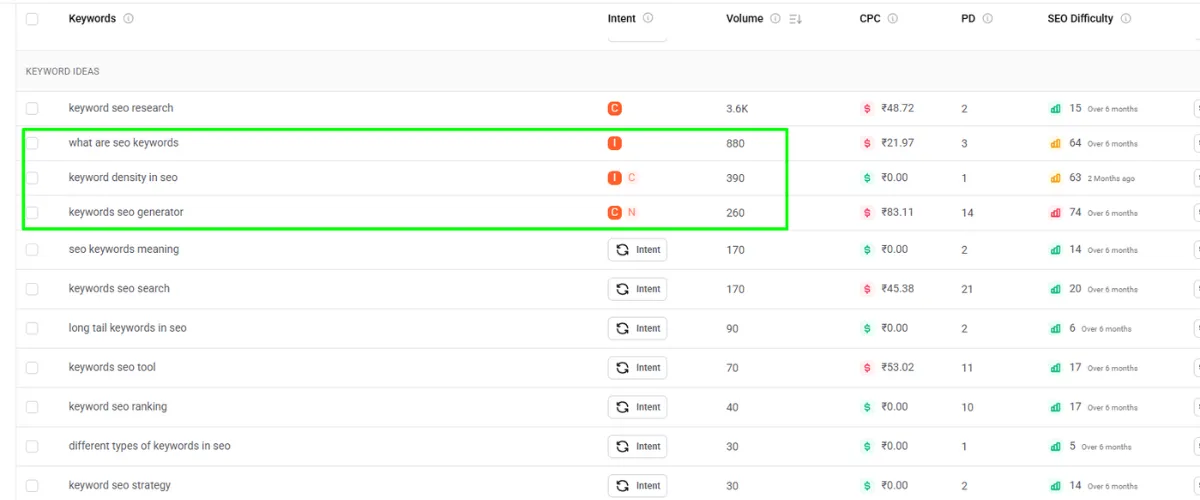
Secondary keywords are related search terms that support your primary keyword and help search engines understand the overall context of your content. Instead of focusing on just one keyword, they allow your page to rank for multiple relevant searches. For example, if your primary keyword is digital marketing, your secondary keywords could include digital marketing services, digital marketing strategies, digital marketing agency, digital marketing for small businesses, and digital marketing trends.
Using secondary keywords naturally in your headings, subheadings, and body content improves your page’s topical relevance without keyword stuffing. This SEO practice helps search engines better understand your content, increases your chances of ranking for a wider range of related queries, and enhances your visibility in Google’s AI Overviews, featured snippets, and organic search results.
Branded keywords are search terms that include the name of a specific company, brand, product, or service. These keywords are typically used by people who are already familiar with a brand and are looking for its website, services, or products. For example, searches like Blacklisted Agency creative agency, Nike running shoes, or Adobe Photoshop are branded keywords because they mention a recognizable brand.
From an SEO perspective, branded keywords help businesses capture high-intent traffic and strengthen their online presence. Optimizing your website for branded searches ensures users can easily find your official pages instead of competitors. For example, if someone searches for Blacklisted Agency creative agency, having optimized service pages, blogs, and landing pages increases the chances of ranking at the top of search results while building trust, improving click-through rates, and driving more qualified leads.
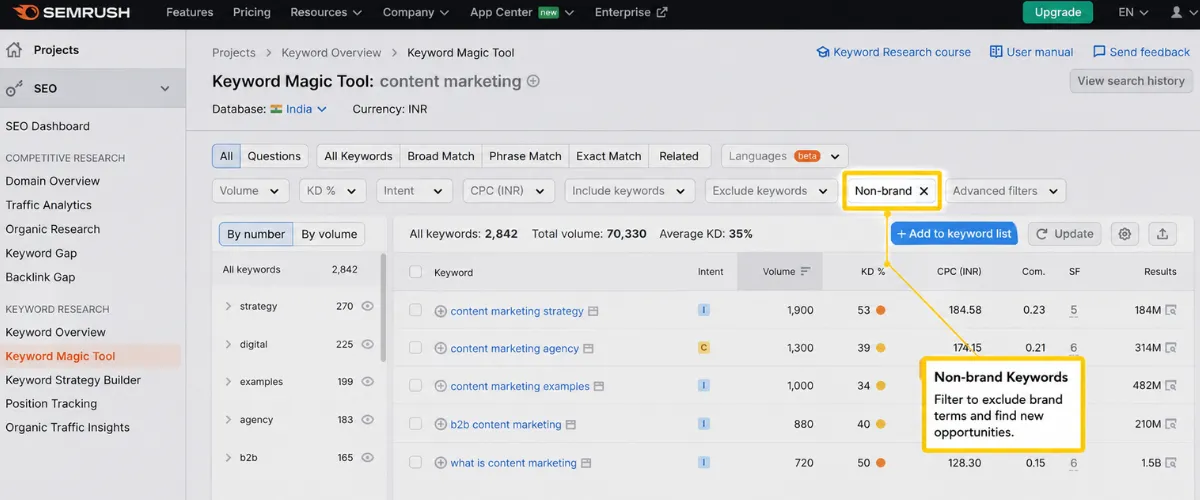
For B2B businesses, choosing keywords based on buyer intent is especially important. A well-planned B2B SEO strategy helps businesses target high-value search terms across the entire buying journey.
| Concept | What It Means | Example |
|---|---|---|
| Keyword Clustering | Groups closely related keywords based on topic, meaning, or search intent. | SEO strategy, SEO plan, SEO strategy for business |
| Keyword Mapping | Assigns selected keywords to the most relevant pages on your website. | SEO agency → SEO service page |
| Search Intent | Identifies what the user wants to accomplish with a search. | “What is SEO?” → Informational |
| Content Opportunity | Highlights related queries that can be covered by new or existing content. | SEO tools → Supporting blog content |

To improve visibility, place your keywords in the most important SEO areas:
Ensure keywords are used naturally within your content:
Focus on solving user queries:
Strengthen topical relevance by:
User experience matters for rankings:
Keep keyword usage balanced and natural:
Ensure your content matches what users are searching for:
Choosing the right SEO tools makes keyword research faster and more effective. These tools help you discover relevant keywords, analyse search demand and competition, understand search intent, and identify new content opportunities. Here are some of the most useful SEO tools for keyword research:
| Keyword Research Tool | Best For | How It Helps |
|---|---|---|
| Google Keyword Planner | Keyword discovery | Finds keyword ideas, search demand, and related terms for SEO and paid campaigns. |
| Google Search Console | Existing keyword data | Shows queries your pages already appear for, including impressions, clicks, CTR, and average position. |
| Ahrefs | Competitor & keyword research | Helps identify keyword opportunities, ranking difficulty, competitors, and content gaps. |
| Semrush | Keyword & competitor analysis | Finds related keywords, search intent, keyword difficulty, and content opportunities. |
| Google Trends | Search trends | Helps compare keyword popularity and identify topics gaining or losing search interest. |
Understanding keywords in SEO gives you a strong foundation for creating content that matches what people are searching for. From choosing the right primary and secondary keywords to analysing search intent and keyword metrics, a strategic approach can improve visibility and attract relevant organic traffic.
At Blacklisted, a Creative Agency in India, we use data-driven SEO strategies to help businesses target the right keywords, create relevant content, and build stronger search visibility. Ready to turn the right keywords into better rankings and qualified traffic? Start building a smarter SEO strategy with Blacklisted today.

We are your go-to source for everything digital. We cover marketing tips, design trends, new tech, and how to build your brand. Every post has useful information to keep you updated and ready to tackle the digital world. It’s not just articles; it’s a way to learn, grow, and connect with others navigating the same digital journey.