case study

Headlines are more than catchy lines. Strong headlines are written with a purpose to attract attention, match reader intent, and improve clicks. They work best when the wording is clear, useful, and adapted for blogs, websites, ads, emails, and social media.
Learning how to write headlines is important because your headline often decides whether people click, scroll, read, or ignore your content. A strong headline gives readers a clear reason to care before they spend time on your page. It also helps search engines, social platforms, and users understand what your content offers.
Let’s break down everything that needs to be known to write compelling headlines that attract better engagement.
A headline should be as per the user search intent and compelling enough to attract attention, explain value, and encourage the right audience to take the next step.
That step could be anything from reading a blog, opening an email, watching a video, clicking an ad, or exploring a service page that could lead to conversion.
A general tip is that good headline writing is not about sounding clever or unique. It is actually about making the reader think, “Yes, this is for me.”
Headlines matter because people like to make quick decisions online. If a headline is not compelling enough, people could easily skip the whole write-up, no matter how valuable or structured it is.
A good headline can help you:
For brands, headlines also shape perception. If the headline is clear, relevant, and confident, the brand feels the same to the target audience.
That is why our approach to digital marketing services always treats headlines as part of the larger content journey, not just a decorative line at the top.
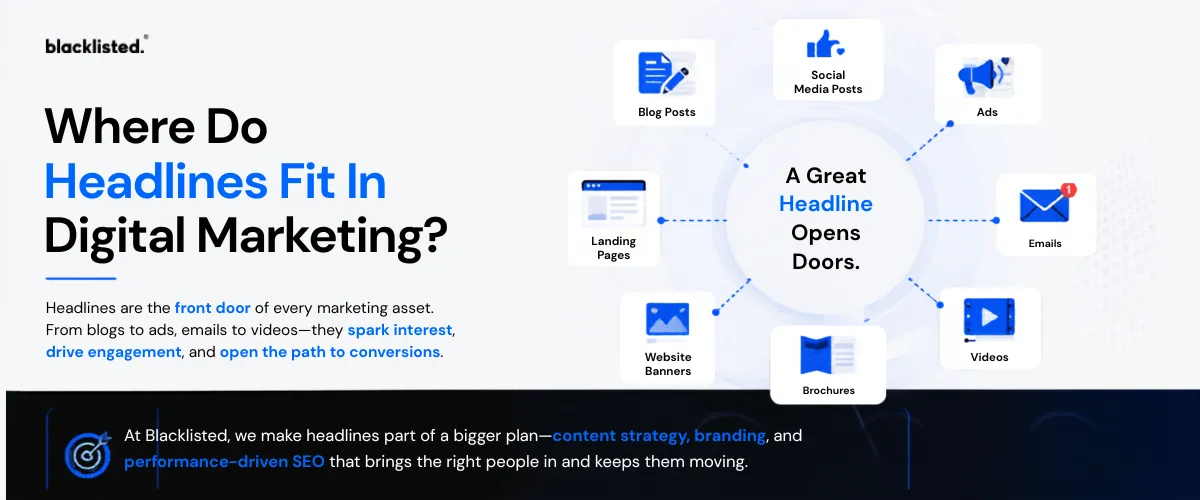
Headlines sit at the front door of almost every marketing asset.
They affect blogs, landing pages, social media posts, ads, emails, videos, brochures, and website banners. That means headlines are not just a writing task. They are a growth task.
At Blacklisted, we see headlines as part of content strategy, branding, and performance-driven SEO agency services focused on improving visibility, engagement, and conversions
A strong headline brings the right person in. The content, design, and offer then keep them moving.
An eye-catching headline is clear, specific, useful, and emotionally relevant. It needs to connect the instant a reader lays eyes upon it.
Pro tip: Strong headlines often use an emotional connection with the user’s intent; next come numbers, benefits for the reader, primary keywords, and clear value without trapping the reader into clickbait.
If your headline is confusing, people will not work hard to understand it. They will move on.
A clear headline tells readers:
For example:
Weak headline: ‘Better Content Ideas’
Better headline: ‘How To Create Content Ideas That Your Audience Actually Reads’
The second headline definitely works better because it is specific, clear, and gives the reader a benefit.
Readers click when they see value. We can place value in terms of a:
A headline should make the benefit visible before the reader opens the page.
For example:
‘10 Website Headline Examples That Help Brands Explain Their Value Faster’
This headline works because it promises practical inspiration.
We don’t mean adding emotional drama in the headline. It should have relevance as per the reader’s emotional intent.
A headline can create curiosity, relief, urgency, confidence, or concern. Emotional triggers and powerful words can help headlines become more compelling when they match the audience’s needs.
For example:
‘Why Your Blog Headlines Get Impressions But Not Clicks?’
This works because it speaks to a real frustration that many have faced.
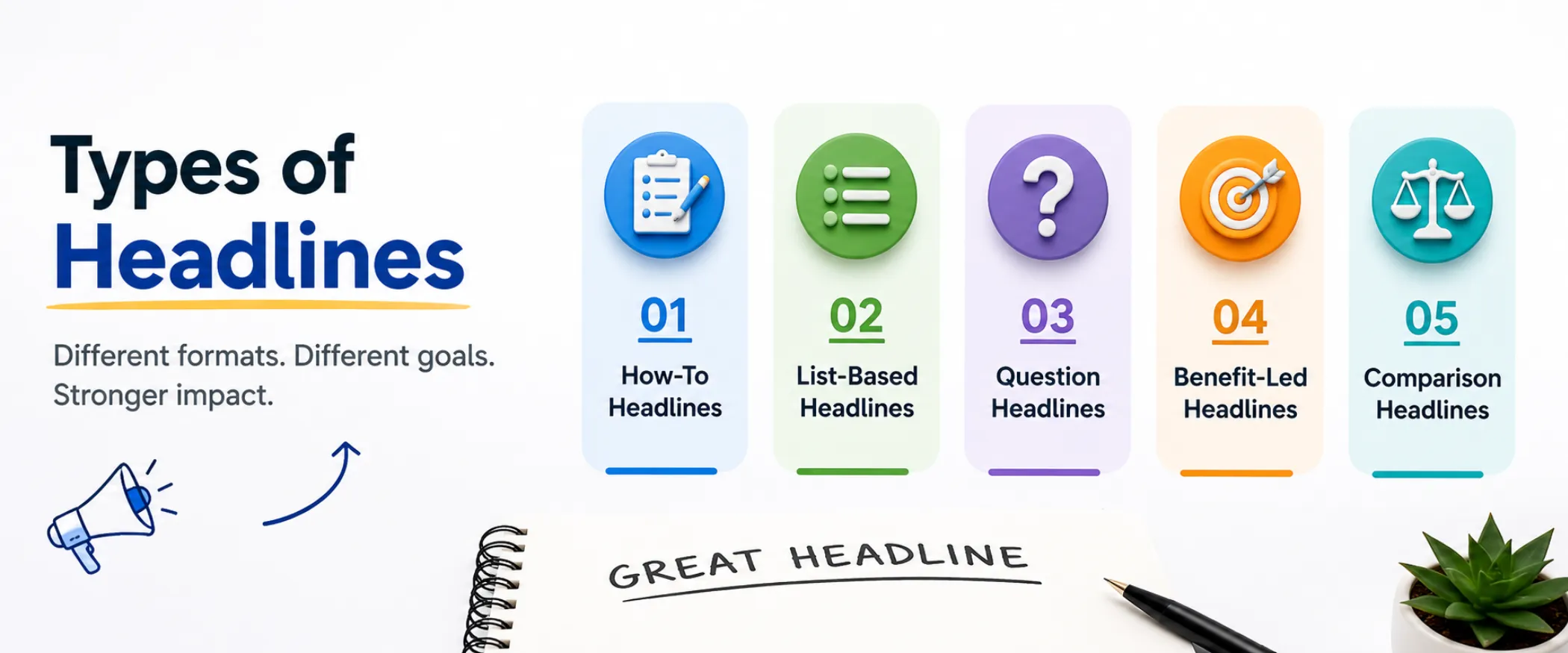
Different headlines work for different goals. The best format depends on the platform, audience, and search intent.
Here are the most useful types of headlines:
Examples:
This format is perfect when people want guidance. It also works well for voice search because the structure sounds natural.
List headlines are easy to understand. They tell readers the content will be organised and skimmable.
Examples:
Numbers help readers know what to expect. They catch attention because they organise information quickly for the brain.
Question headlines work when the question reflects what users are already thinking.
Examples:
However, question headlines must answer the question properly. If the answer is too obvious, the headline loses power.
Benefit-led headlines focus on what the reader gets.
Examples:
This type is useful for service pages, landing pages, and educational blogs.
Comparison headlines help readers make decisions.
Examples:
These are useful when users are in the consideration stage.
Here are simple yet effective tips to write compelling headlines:
Before you write a headline, ask: Who is this for? A founder, student, parent, marketer, designer, or buyer may respond to different words.
Compelling headlines should reflect audience interests, challenges, trust factors, and the funnel stage.
Although the topic is similar. The audience changes the angle of the heading.
Search intent tells you what the reader wants.
They may want to:
A strong headline idea should match that intent. For example:
We recommend reviewing Google results to understand user intent and competing content before finalising headlines.
SEO headlines should include the main keyword where it fits naturally. But keywords should not make the headline stiff.
For example:
The second headline reads better because it keeps the keyword but respects the reader.
This is the same balance we follow in our digital marketing services, where SEO supports the message instead of choking it.
The first headline is rarely the best. You can write at least 5 to 10 options.
Try different formats. It could be a:
For example, one topic can become:
Our tip: Write multiple headlines and A/B testing styles instead of only changing word order.
Clickbait may bring clicks once. But it does not build trust in the long run. A headline should create curiosity, but it must still deliver what it promises.
For example:
The second one is honest and valuable. It can effectively create interest and earn readers’ trust.
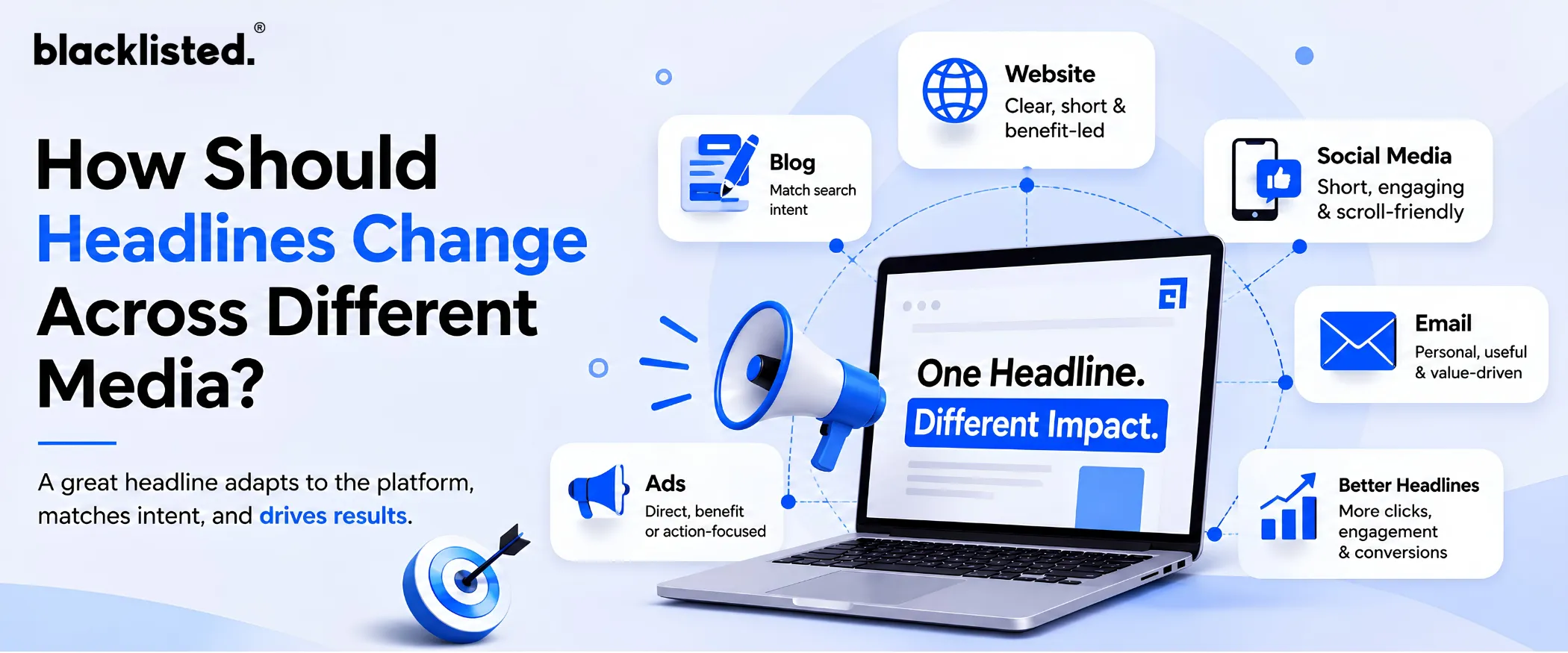
Headlines should change based on where they appear. A website headline, blog title, ad headline, and social media headline do not work the same way.
Each platform has its own reading behaviour:
Website headlines should explain value quickly. People landing on a website want to know where they are and why they should stay.
A good website headline should be:
Weak:
Better:
Why it works: Better headings are more concrete and explain value, not just identity.
Blog headlines should match search intent. They need to help users and search engines understand the topic.
Weak:
Better:
Why it works: They are specific, numbered, and benefit-led and answer a real search query.
Social media headlines need speed. People scroll fast, so the headline must create instant interest. A strong content creation in social media marketing strategy can also help brands create headlines that connect better with their audience and improve engagement.
We recommend writing for the audience, keeping social media headlines short, using personal words, adding numbers, asking questions, including keywords, offering value, and A/B testing headlines.
Short headlines work well on social media because they are easy to process. The body copy can carry the explanation.
Weak
Better
Why it works: These headlines feel direct, scroll-friendly, and focus on behaviour.
Ad headlines must be direct. They should focus on pain, benefit, or action.
Weak
Better
Why it works: It explains the benefit clearly and connects the service to business growth.
More examples of better headlines for Google ads:
Note that ad headlines should not try to do too much. One message per headline is enough.
Email subject lines are as crucial as must as the email body. It should also feel personal and useful.
Avoid using spammy words in emails! Email headlines should make the reader feel there is something useful inside and compel them to read it properly.
Before publishing, run your headline through a simple checklist. Ask these questions:
Good headline writing is not a guessing game. It improves when you test, compare, and learn from performance data. Click data helps reduce bias because a headline you personally like may not be the one users choose.
Learning how to write headlines is really about learning how people decide what deserves attention.
A strong headline is clear, useful, specific, and honest. It reflects the reader’s intent while giving them a reason to click, read, or act.
Use every headline idea as a starting point, not the final answer. Test formats, study your audience, review performance, and keep refining.
When headlines work with strategy, content becomes easier to find, easier to understand, and far easier to engage with.
At Blacklisted Agency, we believe a great headline should do more than attract clicks; it should attract the right audience. That’s why every headline is backed by audience research, search intent, and a clear understanding of what readers are genuinely looking for. Instead of relying on clickbait or short-term trends, we focus on crafting headlines that spark curiosity, foster trust, and encourage genuine engagement. This approach helps brands improve visibility across search engines and AI-powered search platforms while creating content that people actually want to read, share, and act on.

We are your go-to source for everything digital. We cover marketing tips, design trends, new tech, and how to build your brand. Every post has useful information to keep you updated and ready to tackle the digital world. It’s not just articles; it’s a way to learn, grow, and connect with others navigating the same digital journey.