case study


Traditional marketing builds brand awareness through offline channels such as television, newspapers and billboards, while digital marketing uses SEO, social media, websites and online advertising to reach targeted audiences. Understanding their costs, benefits and differences helps businesses choose the right marketing mix, attract customers and grow effectively.
Traditional Marketing vs Digital Marketing compares two approaches businesses use to promote products and services. Traditional marketing uses offline channels such as television, newspapers, radio and billboards, while digital marketing uses online platforms, including search engines, websites, social media and email, to reach targeted audiences and measure campaign performance.
The main difference is that traditional marketing focuses on offline reach and broad brand awareness, whereas digital marketing offers targeted audience engagement, measurable results and greater campaign flexibility.
A billboard can introduce a brand to thousands of people, while a Google search advertisement can connect a business with someone actively looking for its services. Both approaches serve different purposes, and choosing the right one depends on your audience, marketing objectives and available budget.
Understanding these differences helps businesses make informed investment decisions, improve customer acquisition and build a consistent marketing strategy.
Traditional marketing refers to promoting products and services through offline advertising channels. It focuses on reaching audiences through physical media and conventional communication methods, often targeting people based on location, publication readership or broad audience demographics.
Common examples of traditional marketing include:
For example, a real estate developer can advertise a residential project through billboards in a particular city to increase local awareness.
Traditional marketing remains useful when businesses want physical visibility, regional exposure and repeated brand recognition.
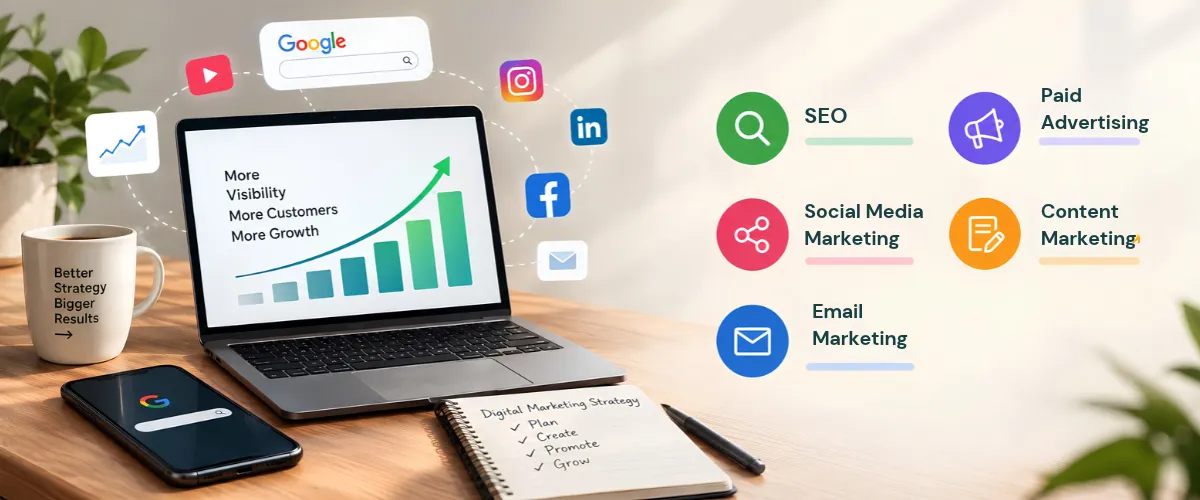
Digital marketing involves promoting products and services through online channels to attract customers, build relationships and generate business opportunities.
Unlike traditional marketing, digital campaigns can use customer interests, demographics, search behaviour and online interactions to reach relevant audiences.
The major types of digital marketing include:
For example, a local service business can use SEO, Google Business Profile optimisation and social media advertising to reach people searching for its services.
Using multiple online channels effectively requires a clear direction and measurable objectives. A well-defined digital marketing strategy helps businesses coordinate SEO, paid advertising, social media and content marketing to reach relevant audiences and generate meaningful results.
Blacklisted combines creative strategy, SEO, social media marketing and performance-focused campaigns as a digital marketing agency to help businesses strengthen their online presence, reach relevant audiences and achieve measurable business growth.
The main differences between traditional marketing and digital marketing involve communication channels, audience targeting, customer interaction, campaign costs and performance measurement.
| Comparison Factor | Traditional Marketing | Digital Marketing |
|---|---|---|
| Marketing channels | Television, radio, print and billboards | Search engines, websites, social media and email |
| Audience targeting | Location and broad audience profiles | Interests, demographics, location and search intent |
| Reach | Local, regional or mass-market | Local to global |
| Communication | Primarily one-way | Two-way interaction |
| Budget | Often requires higher upfront spending | Flexible starting budgets |
| Measurement | Surveys, estimated reach and promotional codes | Clicks, leads, conversions and revenue |
| Optimisation | Changes can take time and cost more | Campaigns can be adjusted quickly |
| Customer engagement | Often limited direct interaction | Comments, messages, clicks and other interactions |
| Best suited for | Broad awareness and physical visibility | Targeted engagement and measurable actions |
Traditional marketing is effective for building awareness across broad audiences, whereas digital marketing provides more opportunities to target specific customer groups and track campaign performance.
Neither approach guarantees success. Results depend on the quality of the campaign, audience relevance, execution and marketing objectives.
Social media has changed how businesses communicate with their audiences compared with traditional media. While newspapers, television and radio offer broad exposure, social platforms allow brands to interact with customers, share updates and build online communities. Explore the differences between social media vs traditional media to understand how businesses can use both channels effectively.
Understanding practical examples makes the difference between traditional and digital marketing easier to recognise.
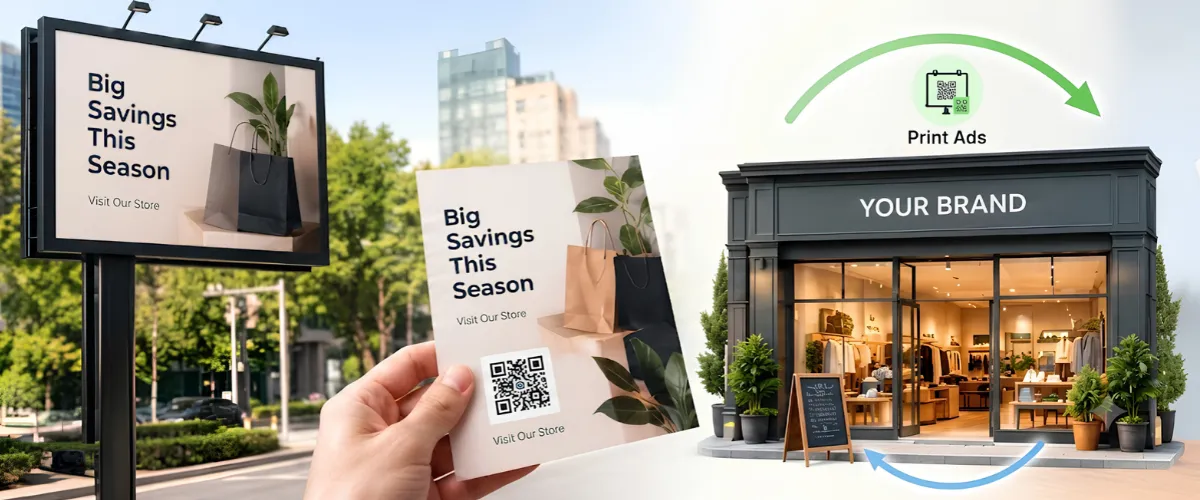
1. Newspaper advertisements: A jewellery store publishes a festive collection advertisement in a regional newspaper to reach local readers.
2. Outdoor advertising: A property developer places billboards near a new residential project to increase awareness among nearby residents.
3. Flyers and brochures: A restaurant distributes promotional flyers to offices and residential communities before opening a new outlet.
4. Radio commercials: A local retailer advertises seasonal discounts through radio campaigns to reach listeners across its service area.
1. Search engine optimisation: A dental clinic optimises its website and local search presence to attract people looking for dental services.
2. Social media campaigns: A clothing brand uses Instagram Reels and promotional campaigns to showcase new collections and engage potential customers.
3. Paid search advertising: A software company runs Google Ads for relevant product searches to generate qualified enquiries.
4. Content marketing: A business publishes informative blog articles to answer customer questions and attract organic search traffic.
These examples demonstrate how businesses can use different marketing channels to reach customers at different stages of their buying journey.
The cost of traditional marketing and digital marketing depends on the advertising channel, target audience, campaign duration and business objectives. Traditional marketing often involves placement and production costs, while digital marketing offers flexible budgets and different pricing models. A social media management agency like Blacklisted helps businesses plan and manage social media campaigns, maintain consistent brand communication and reach relevant audiences through targeted strategies.
| Marketing Channel | Traditional Marketing Cost Structure | Digital Marketing Cost Structure |
|---|---|---|
| Newspaper advertising | Cost per insertion, based on newspaper, ad size and edition | Google Ads: cost per click or impression |
| Television advertising | Cost per spot, airtime and channel | YouTube Ads: cost per view or impression |
| Radio advertising | Cost per spot, station and time slot | Social media ads: cost per click, impression or campaign |
| Outdoor advertising | Cost per billboard, location and display duration | Local digital campaigns: budget based on audience and campaign duration |
| Flyers and brochures | Printing and distribution cost per copy | Email marketing: platform subscription and campaign costs |
| Brand promotion | Event sponsorship, production and promotional expenses | SEO and content marketing: ongoing strategy and service costs |
Actual costs vary depending on location, audience size, advertising format, campaign duration and service provider. Businesses should compare campaign objectives and expected results before choosing a marketing channel.
Digital marketing is often a practical choice for small businesses because it offers flexible budgets, targeted advertising and measurable campaign performance. Traditional marketing can also be effective for businesses that depend on local customers, physical visibility and community engagement. The right approach depends on the target audience, business objectives and available marketing budget.
For businesses exploring ways to grow with limited resources, choosing the right business model is equally important. Explore these small business ideas to discover opportunities that can benefit from the right mix of traditional and digital marketing.
| Business Requirement | Recommended Approach | Why It Works |
|---|---|---|
| Limited marketing budget | Digital marketing | Allows businesses to start with smaller campaigns |
| Local brand awareness | Both approaches | Combines local advertising with online visibility |
| Website traffic and leads | Digital marketing | SEO and paid campaigns attract relevant audiences |
| Physical store promotion | Traditional and digital marketing | Reaches nearby customers through multiple channels |
| Long-term online visibility | Digital marketing | SEO and content marketing can generate ongoing organic traffic |
| Large-scale brand awareness | Both approaches | Combines broad offline exposure with targeted online campaigns |
For example, a new restaurant can distribute local promotional flyers while using Instagram marketing, Google Business Profile optimisation and local SEO to attract nearby customers.
Small businesses should prioritise channels that reach their actual customers rather than investing in every available marketing platform.
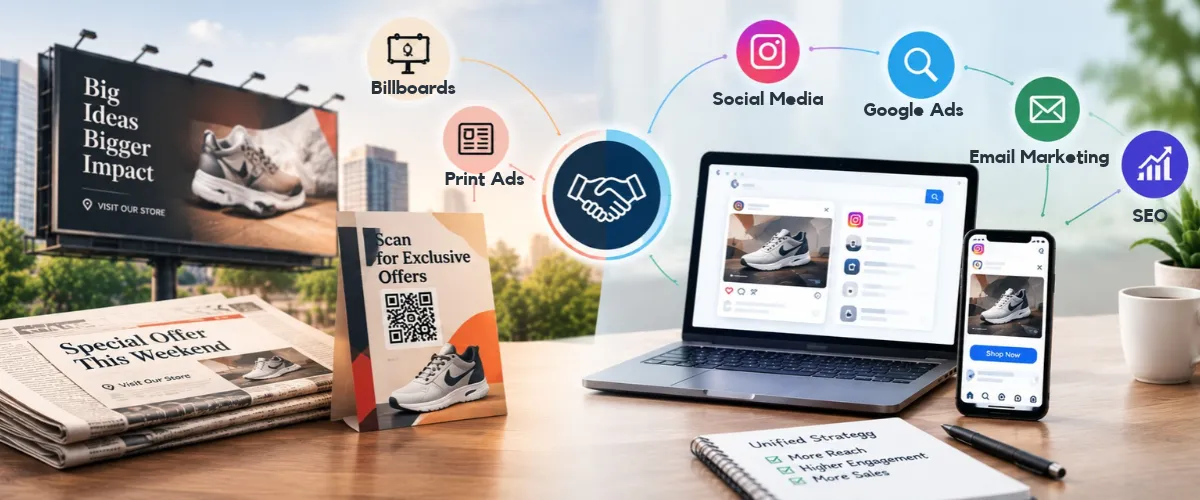
Yes. Traditional marketing and digital marketing can work together to create a more consistent customer experience across offline and online channels. Businesses can use traditional advertising to build awareness and digital platforms to encourage engagement, generate enquiries and measure campaign performance.
Here are some practical ways to combine both approaches:
For example, a retail brand can advertise a festive sale through newspaper inserts and billboards while running Instagram campaigns and Google Ads to bring more customers to its store or website. By combining traditional marketing with SEO, paid advertising and social media marketing, businesses can strengthen brand recognition, reach different audience groups and create more opportunities for customer engagement.
Traditional Marketing vs Digital Marketing is not simply a choice between offline and online promotion. Traditional marketing helps businesses build broad brand awareness, while digital marketing offers targeted reach, measurable performance and opportunities for long-term growth. Combining both approaches can help businesses reach the right audience, strengthen brand recognition and generate more customers.
Blacklisted helps businesses build stronger market visibility through creative strategy, SEO, social media marketing and paid advertising. As a creative agency, Blacklisted combines creative thinking with performance-driven marketing to help brands develop a consistent identity, improve online presence and achieve sustainable business growth.

We are your go-to source for everything digital. We cover marketing tips, design trends, new tech, and how to build your brand. Every post has useful information to keep you updated and ready to tackle the digital world. It’s not just articles; it’s a way to learn, grow, and connect with others navigating the same digital journey.