case study


LinkedIn articles allow businesses and professionals to share detailed insights, industry knowledge, and expert opinions directly with their network. Unlike regular LinkedIn posts, articles provide more space to explain ideas, educate audiences, and establish credibility. A successful LinkedIn content strategy combines articles with consistent posting, audience engagement, and valuable insights rather than focusing only on promotion.
LinkedIn articles are long-form content pieces published on LinkedIn that help professionals and businesses share expertise, industry insights, guides, and professional opinions. Unlike regular LinkedIn posts, which are designed for shorter updates and quick engagement, LinkedIn articles give businesses more space to explain complex topics, answer customer questions, and demonstrate their knowledge.
For businesses, LinkedIn articles can support a strong LinkedIn marketing strategy by educating potential customers, showcasing industry expertise, and building credibility over time. They can cover topics such as industry trends, common customer challenges, strategic advice, case studies, and practical guides.
However, publishing an article alone does not build authority. Learning how to write a LinkedIn article effectively means choosing a topic your audience cares about, providing useful and experience-based insights, structuring the content clearly, and giving readers a reason to trust your perspective.
LinkedIn articles are longer-form content published on LinkedIn that give professionals and businesses more space to explore a topic in depth. Unlike regular LinkedIn updates, articles can be used to share:
For example, a software company could publish an article about common cybersecurity challenges for businesses, while a branding agency could explain how to develop a strong brand identity. A manufacturer might use an article to discuss important developments or trends in its industry.
The goal is not simply to promote a product or service. A useful LinkedIn article should provide insights, answer relevant questions, or share expertise that readers can learn from.
LinkedIn posts and articles are both useful, but they are designed for different content needs. Posts are better suited to short updates, quick insights, questions, and conversations, while articles provide more space to explore a topic in depth.
A strong LinkedIn marketing strategy can use both formats together. Posts can help attract attention and encourage interaction, while well-developed articles can demonstrate expertise and provide more detailed information for people who want to learn about a specific topic.
| Feature | LinkedIn Posts | LinkedIn Articles |
|---|---|---|
| Content Length | Short updates and quick insights | Detailed, long-form content |
| Main Purpose | Drive engagement and conversations | Share expertise and in-depth knowledge |
| Best Used For | Announcements, opinions, updates, tips, questions | Guides, analysis, educational content, expert insights |
| Audience Interaction | Designed for quick reactions and discussions | Encourages deeper reading and discussion |
| Content Depth | Focuses on one idea or takeaway | Allows multiple points, examples, and explanations |
| Publishing Frequency | Can be published frequently | Better suited to well-researched, substantial topics |
| Authority Building | Shows regular activity and perspective | Provides more room to demonstrate expertise |
| Search Potential | Primarily designed for feed-based discovery | Public articles may also be discovered through search |
| Content Repurposing | Can be created from individual ideas | Can be broken into multiple posts, videos, or other content |
| Best Funnel Role | Awareness and engagement | Education, consideration, and authority building |
| CTA Opportunities | Questions, discussions, reactions, or links | More context for relevant resources, conversations, or next steps |
The two formats work best when they support each other. For example, a business could publish a detailed article about an industry challenge and then create several LinkedIn posts highlighting individual insights from that article. This approach allows one strong piece of content to support a broader LinkedIn content strategy.
LinkedIn articles give companies an opportunity to share deeper insights, educate their audience, and demonstrate genuine industry knowledge. They can also support E-E-A-T (Experience, Expertise, Authoritativeness, and Trustworthiness) by showing real experience, providing knowledgeable insights, and building credibility with readers. Learn more about E-E-A-T in SEO to understand how these principles can strengthen content credibility and search visibility.
People trust brands that demonstrate knowledge, not just brands that advertise their services.
A good research-based LinkedIn article allows businesses to show how they operate, share lessons from experience, and provide useful insights that help readers make sound judgments.
Thus, instead of a web development company publishing articles only about their completed projects, they could write one about the errors business owners commonly make when redesigning their websites.
Most purchasing processes begin with research. People research information before they reach out to a particular business.
LinkedIn articles enable companies to address these initial questions. The health care company can share information about industry trends. The financial firm can make complicated subjects easier to understand. The marketing firm can share marketing strategies that businesses can implement.
In this way, brands become an integral part of the customer’s purchasing journey.
Thought leadership is not simply voicing one’s opinion. It comes from combining experience, knowledge, and perspectives.
Here are a few things that you can write about in LinkedIn articles:
Over time, consistent publishing helps create recognition around a brand’s expertise.
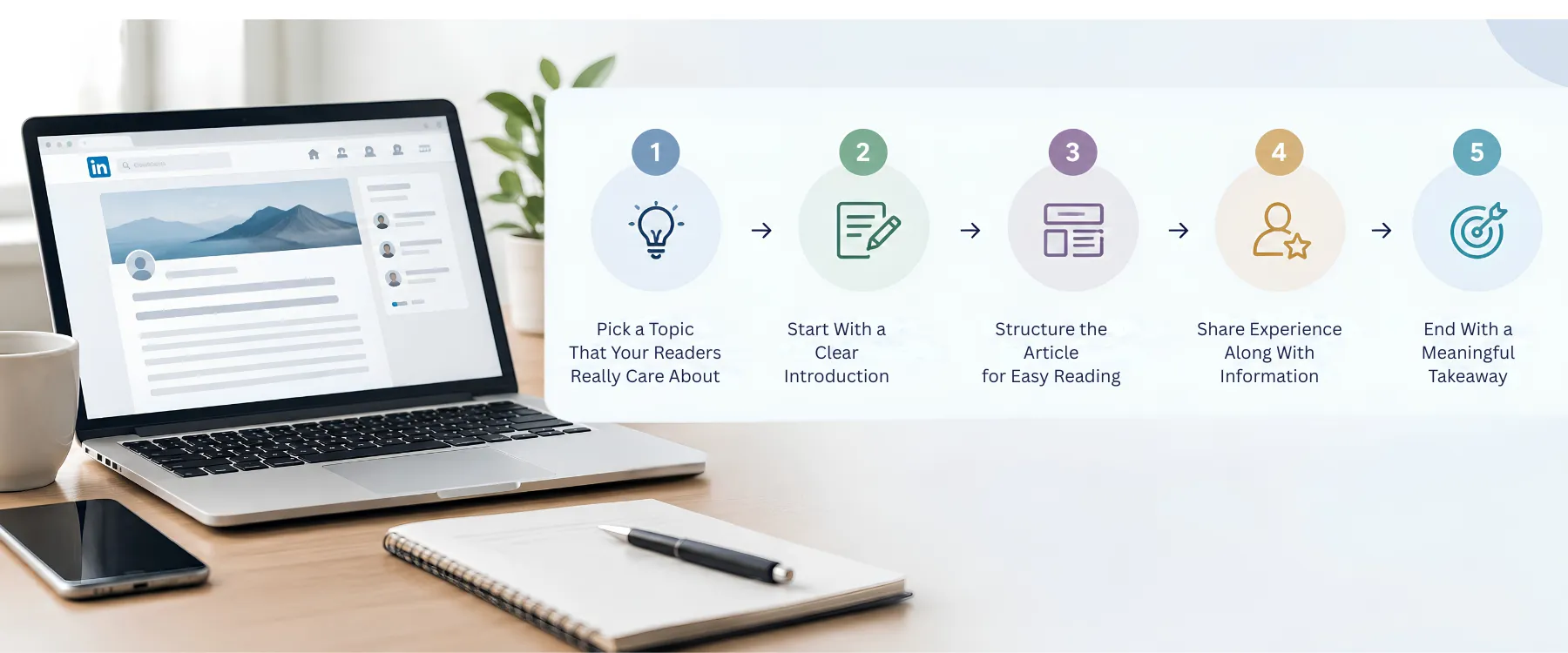
Learning how to write a LinkedIn article depends on knowing how to hook a reader. An engaging article doesn’t necessarily have to be difficult or fancy. Rather, it should have clear objectives and relevant information.
Most of the time, the best topics come from practical questions, difficulties, or issues in a particular industry.
When you want to write a LinkedIn article, first ask yourself:
The opening determines whether someone continues reading.
Avoid starting with broad statements that do not immediately communicate value. Instead:
For example, instead of saying, “Marketing is constantly changing,” explain what specific challenge businesses are facing and why it needs attention.
Long-form content does not mean long blocks of text.
A well-structured LinkedIn article should include:
Good formatting helps busy professionals understand the key points quickly.
Many businesses can explain what something is. Fewer can explain what they have learned from experience. Adding practical examples makes content more valuable.
Instead of only explaining why branding matters, a business can discuss common mistakes it has seen, lessons from projects, or changes in customer behaviour.
A good conclusion should leave readers with something useful.
This could be:
The goal is to continue the conversation, not simply end the article.
LinkedIn articles give companies an opportunity to share deeper insights, educate their audience, and demonstrate genuine industry knowledge. They can also support E-E-A-T (Experience, Expertise, Authoritativeness, and Trustworthiness) by showing real experience, providing knowledgeable insights, and building credibility with readers. Learn more about E-E-A-T in SEO to understand how these principles can strengthen content credibility and search visibility.
| Section | Purpose | Example |
|---|---|---|
| Headline | Capture attention and communicate value | “5 Website Mistakes That Affect Customer Trust” |
| Introduction | Present the problem or opportunity | Explain why the topic matters |
| Main Content | Share insights and solutions | Examples, research, recommendations |
| Key Takeaways | Highlight important points | Short summary of lessons |
| CTA | Encourage further action | Start a conversation or explore resources |
This framework can support different types of LinkedIn content strategy, from educational guides to industry opinions.
For businesses looking to make their content more visible in Google’s AI-powered search results, understanding how AI-generated search summaries work is equally important. Explore our Google AI Overview Guide to learn how to create content that is structured, useful, and easier for AI systems to understand and surface.

Publishing articles occasionally is useful, but combining them with other content formats creates better results. A Content Cluster Strategy can connect LinkedIn articles with related posts, videos, and discussions, helping businesses build topical authority and keep their content organised.
One detailed article can become:
This allows businesses to maximise the value of each idea.
Authority is built over time.
A business does not need to publish every day, but it should maintain a consistent schedule. Regular publishing helps audiences recognise the brand’s expertise and perspective.
Publishing is only one part of LinkedIn success.
Businesses should also:
Content performs better when it becomes part of a wider conversation. A structured Social Media Management Service can help businesses plan content, manage publishing, engage with audiences, and maintain consistency across social platforms.
Publishing LinkedIn articles can help businesses demonstrate expertise and build credibility, but the wrong approach can limit their reach and engagement. A strong LinkedIn content strategy focuses on useful information, audience needs, clear presentation, and consistent publishing rather than simply producing more content.
Here are some common LinkedIn article writing mistakes businesses should avoid:
One of the most common mistakes is treating a LinkedIn article like a sales pitch. Constantly promoting products, services, or company achievements can make the content feel less useful to readers.
Instead, focus on solving a problem or answering a relevant question. Mention your product or service only when it naturally supports the information being discussed.
Better approach: Educate first, demonstrate expertise, and introduce your solution where it genuinely adds value.
A topic may be relevant to a business but still fail to attract its intended readers. Effective LinkedIn article writing starts with understanding what your audience wants to learn, what problems they face, and what questions they are searching for answers to.
Before choosing a topic, consider:
Audience-focused topics are more likely to generate meaningful engagement and support a stronger LinkedIn marketing strategy.
Even valuable information can be difficult to consume when an article is poorly structured. Large blocks of text, unclear headings, lengthy paragraphs, and excessive jargon can cause readers to leave before reaching the main point.
Make your LinkedIn articles easier to scan by using:
Good formatting improves the reading experience and makes complex information easier to understand.
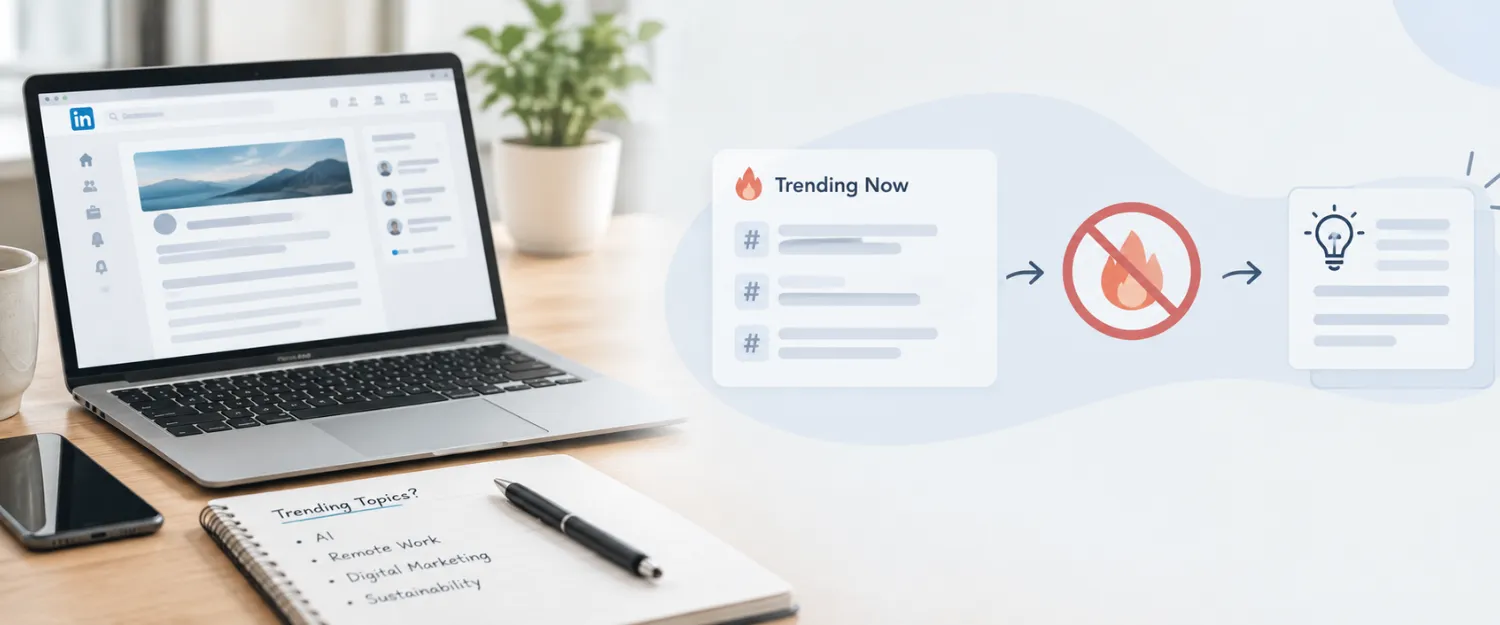
Trending subjects can attract attention, but they should not be the only source of LinkedIn content ideas. A trend may generate short-term interest without providing lasting value to your audience.
A balanced LinkedIn content strategy should combine:
This combination helps businesses create content that can remain useful beyond a single news cycle.
A single article is unlikely to establish a business as a trusted authority overnight. Building recognition on LinkedIn requires consistent, useful content and genuine interaction with the professional community.
After publishing an article, businesses can extend its reach by:
Consistency matters more than simply increasing publishing volume.
Including relevant keywords can help make content more aligned with search intent, but excessive keyword repetition can make an article unnatural and difficult to read.
Rather than repeatedly using phrases such as “how to write a LinkedIn article” or “LinkedIn content strategy,” use related terms naturally while answering the reader’s question thoroughly.
The priority should be useful, original, people-first content. Keywords should support the topic rather than control the writing.
An article should give readers a clear takeaway rather than simply stopping after the final point. A useful conclusion can summarize the main lesson, suggest a practical next step, or invite readers to share their perspective.
The CTA should also match the purpose of the article. For an educational article, a question or discussion prompt may work better than an aggressive sales message.

For B2B businesses, purchasing decisions often involve research, multiple stakeholders, and a high level of trust. LinkedIn articles can support this process by giving potential customers useful information about industry challenges, solutions, and the expertise behind a business.
A well-written article can help B2B companies:
For example, a B2B software company could publish an article explaining how businesses can evaluate cybersecurity solutions. A marketing agency could share practical advice on developing a B2B content strategy. These articles demonstrate expertise while helping potential customers make more informed decisions.
When integrated into a broader LinkedIn marketing strategy, articles become more than standalone content. They can support brand positioning, audience education, lead generation, and ongoing relationship building throughout the B2B buying journey.
Want to strengthen your B2B visibility through search? Explore our B2B SEO Strategy to build a stronger organic growth approach.
LinkedIn articles are a valuable way for businesses to share expertise, educate their audience, and build authority through long-form professional content. When supported by a consistent LinkedIn content strategy, they can help businesses strengthen credibility, start meaningful conversations, and stay visible to the right professional audience.
The key is to focus on useful, experience-based content rather than treating every article as a sales pitch. Businesses should choose topics that address real audience questions, provide practical insights, and demonstrate genuine industry knowledge.
For a creative agency like Blacklisted, LinkedIn articles can also become part of a broader content and brand-building strategy. By combining expertise, creativity, and audience-focused storytelling, businesses can turn LinkedIn content into a consistent channel for building trust and professional authority.
Ultimately, learning how to write a LinkedIn article is not just about publishing long-form content. It is about creating something valuable enough to educate readers, demonstrate expertise, and give them a reason to remember your brand.

We are your go-to source for everything digital. We cover marketing tips, design trends, new tech, and how to build your brand. Every post has useful information to keep you updated and ready to tackle the digital world. It’s not just articles; it’s a way to learn, grow, and connect with others navigating the same digital journey.