case study

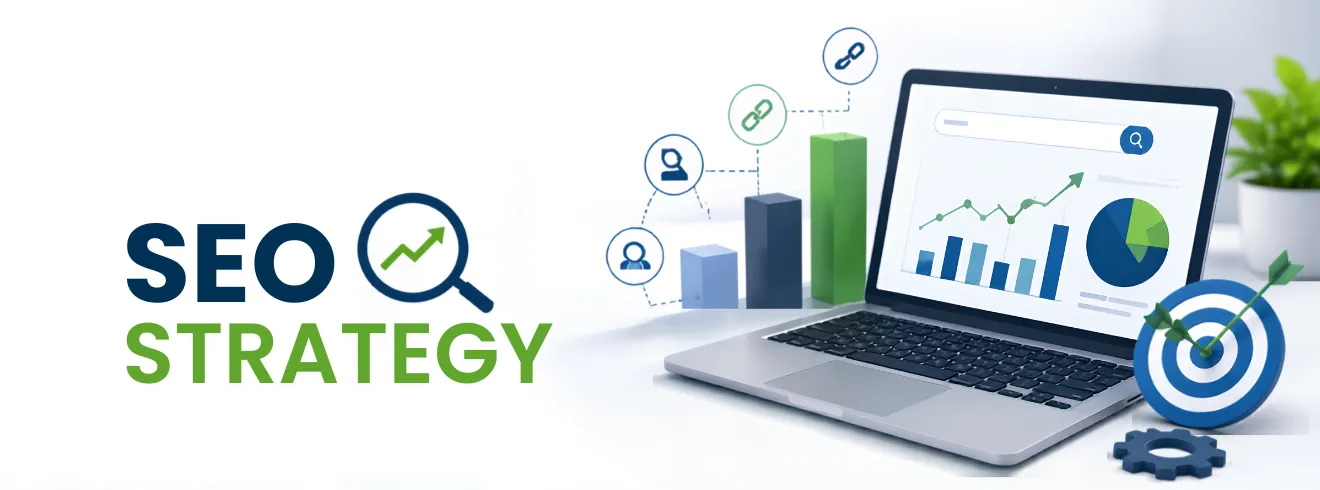
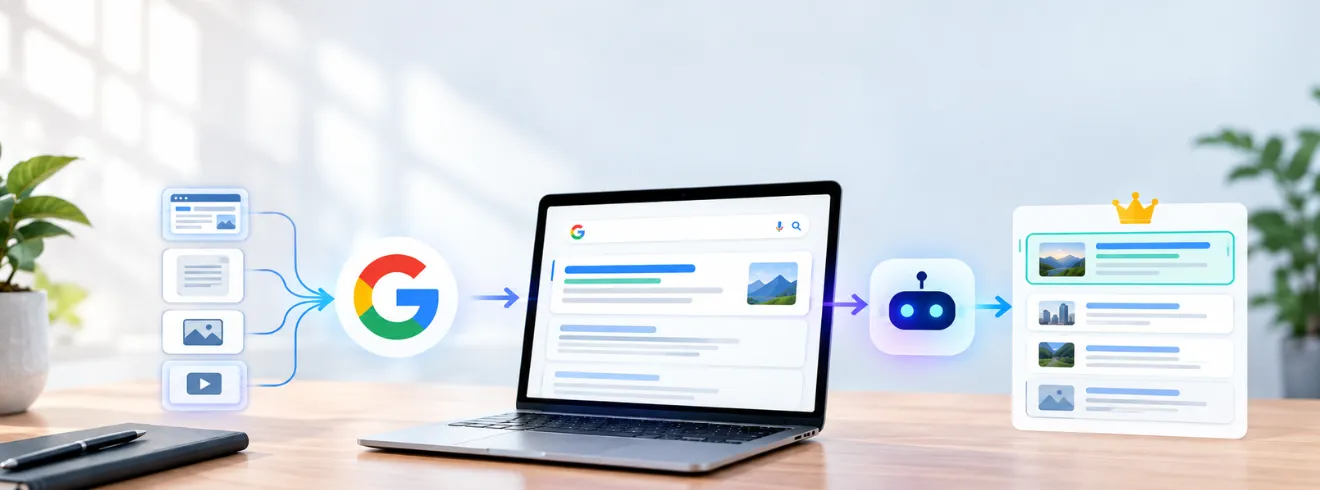
An effective SEO strategy combines keyword research, search intent, helpful content, on-page and technical SEO, internal linking, authority building, and continuous performance tracking. In 2026, businesses should also consider evolving search experiences such as Google AI Overviews, ChatGPT, and Gemini while focusing on useful, trustworthy content and real user needs.
An SEO strategy is a step-by-step plan for improving a website’s search visibility, attracting qualified organic traffic, and turning visitors into customers. It combines keyword research, search intent, helpful content, on-page SEO, technical SEO, internal linking, and authority building to help your website rank for relevant searches. A well-defined SEO plan turns these priorities into specific actions, while an SEO roadmap organizes those actions by priority and timeline.
But SEO has changed. Simply adding keywords to a page is no longer enough to compete in Google Search. A successful SEO strategy in 2026 needs to align with search intent, demonstrate genuine expertise, provide useful and trustworthy content, and adapt to AI-powered search experiences such as Google AI Overviews.
In this guide, you’ll learn what an SEO strategy is, how to create an SEO plan, how to build an SEO roadmap, and how to do SEO for a website. You’ll also discover practical SEO strategies for improving rankings, increasing organic traffic, building topical authority, and adapting your content for evolving search experiences such as Google AI Overviews. By the end, you’ll have a clearer framework for turning search visibility into measurable business growth.
An SEO strategy is a structured approach that connects your website’s search opportunities with specific actions designed to improve visibility and business results. Rather than optimizing individual pages in isolation, it creates a clear direction for how your website should target topics, satisfy search intent, build authority, and improve its overall search performance.
A strong strategy typically considers keyword opportunities, audience needs, content gaps, website structure, technical performance, internal linking, backlinks, and conversion goals. These elements work together to help search engines understand your website while making it more useful for the people visiting it.
The exact approach can vary depending on your business type, industry, competition, and goals. For example, an e-commerce website may prioritize product and category optimization, while a B2B company may focus more heavily on informational content, topic clusters, and lead generation.
Ultimately, an effective SEO strategy provides a clear roadmap for prioritizing SEO activities, measuring their impact, and adapting your approach as search behavior and search technology evolve.
An SEO strategy defines the overall approach a business will use to improve search visibility, attract relevant organic traffic, and achieve its business goals. An SEO plan turns that strategy into specific tasks, while an SEO roadmap organizes those tasks by priority and timeline.
| SEO Term | What It Means | Example |
|---|---|---|
| SEO Strategy | The overall approach for improving organic search performance | Target commercial keywords, build topical authority, and improve technical SEO |
| SEO Plan | The specific SEO actions required to achieve the strategy | Conduct keyword research, optimize pages, publish content, and build internal links |
| SEO Roadmap | A prioritized timeline showing when SEO activities should be completed | Fix technical issues first, optimize existing pages next, then expand content and authority |
| How to Do SEO for a Website | The practical process of implementing SEO improvements | Research keywords, optimize pages, improve site structure, create content, and monitor results |
Think of the SEO strategy as the direction, the SEO plan as the action list, and the SEO roadmap as the timeline. Keeping these elements connected makes it easier to prioritize SEO work and measure progress.
For example, if your goal is to increase organic traffic, your strategy might focus on improving topical authority. Your SEO plan could include creating supporting content, optimizing existing pages, and strengthening internal links. Your SEO roadmap would then determine which activities should be completed first and when they should be reviewed.
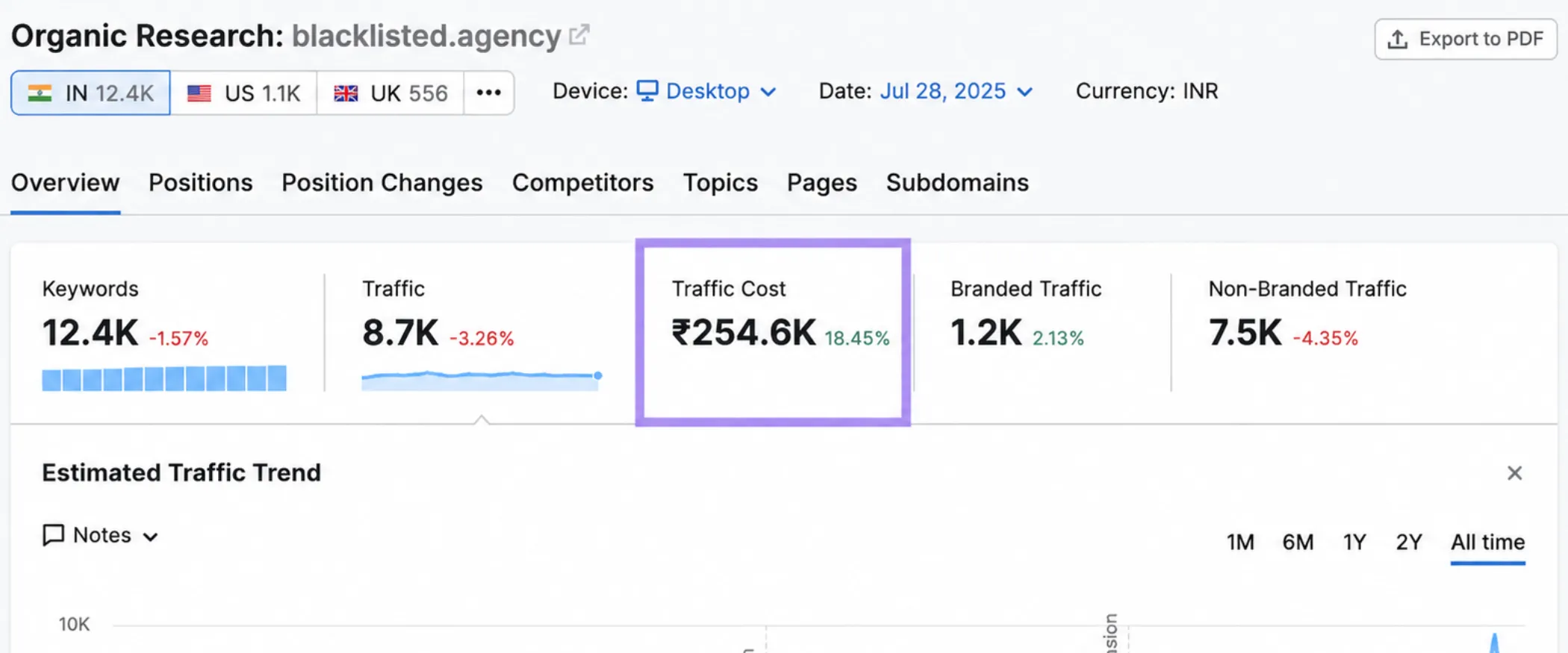
Having a clear SEO strategy helps your website attract the right audience, improve search visibility, and generate sustainable organic growth. Instead of targeting keywords randomly, it gives you a structured approach to content, technical optimization, and authority building based on your business goals.
A well-planned SEO strategy helps you:
Ultimately, an effective SEO strategy connects keyword research, quality content, technical SEO, user experience, and performance measurement into one focused plan. This makes SEO more consistent, measurable, and aligned with long-term business growth.
| Step | Area | Action | Purpose |
|---|---|---|---|
| 1 | Keyword Research | Find relevant keywords based on search intent, competition, and business goals | Target valuable searches |
| 2 | Search Intent | Match content with what users want to find, learn, compare, or buy | Improve relevance |
| 3 | On-Page SEO | Optimize titles, headings, URLs, meta descriptions, images, and content | Strengthen page relevance |
| 4 | Technical SEO | Improve crawling, indexing, site speed, mobile usability, and technical performance | Make the site easier to crawl and use |
| 5 | Content Strategy | Create helpful content around target keywords, topics, and audience needs | Build organic visibility |
| 6 | Internal Linking | Connect relevant pages using descriptive internal links | Improve navigation and topical authority |
| 7 | Link Building | Earn relevant, authoritative backlinks from trustworthy websites | Strengthen website authority |
| 8 | Local SEO | Optimize local listings, location pages, and relevant local signals | Reach local customers |
| 9 | Performance Tracking | Monitor rankings, organic traffic, clicks, conversions, and engagement | Measure and improve results |
Creating an SEO strategy starts with understanding your business goals, audience, competitors, and the searches that can bring qualified visitors to your website. A strong strategy isn’t about ranking for every keyword—it’s about targeting the right searches and creating the best possible experience for users.
Follow these steps to build an effective SEO strategy that can improve rankings, organic traffic, and conversions.
Start by deciding what you want SEO to achieve. Your goals could include increasing organic traffic, generating more qualified leads, improving product visibility, or ranking for high-value commercial keywords.
Clear goals help you choose the right keywords, content, and performance metrics.
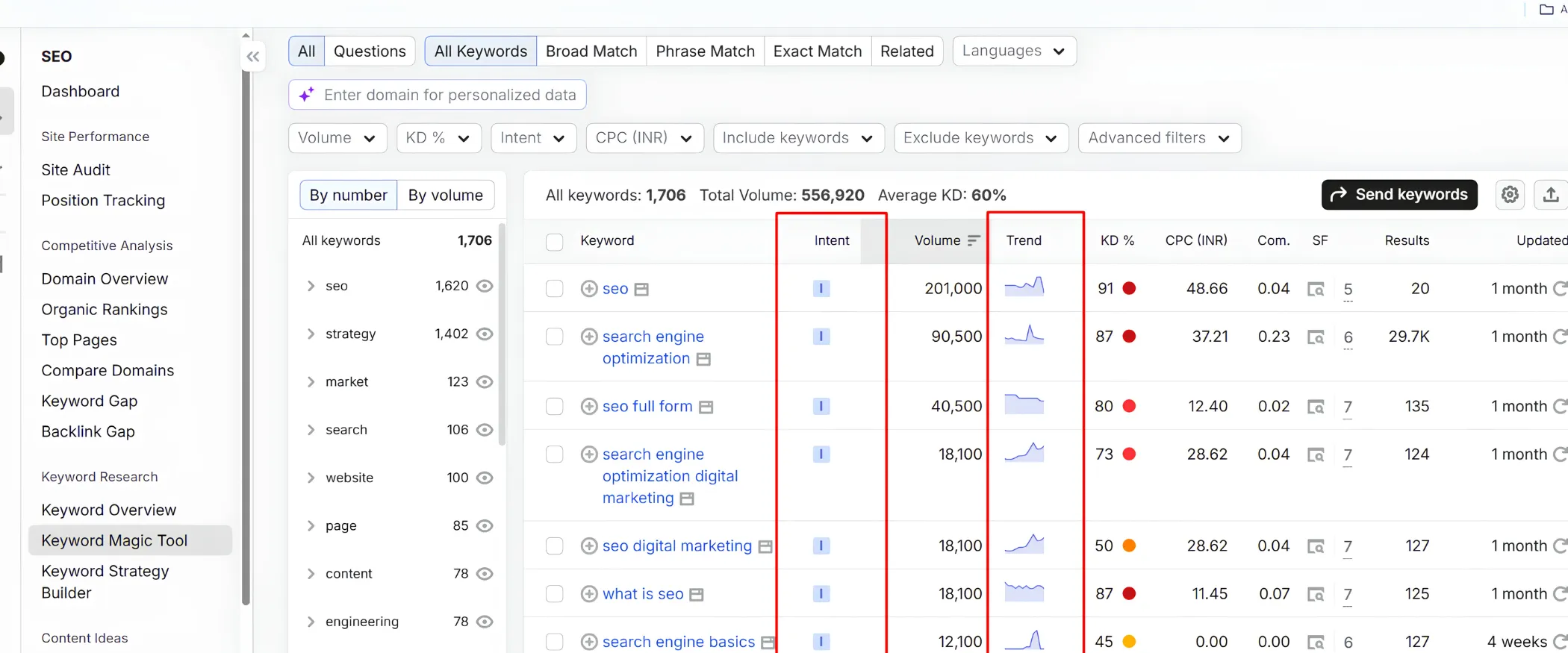
Identify who your customers are, what problems they need to solve, and how they search for solutions online. Understanding your audience helps you create content that matches their needs instead of simply targeting high-volume keywords.
Find keywords that are relevant to your products, services, and target audience. Consider search volume, competition, search intent, and commercial value when selecting the right keyword in SEO for your strategy.
Build an SEO keyword strategy that includes primary keywords, secondary keywords, long-tail keywords, and related topic variations. This helps your content target relevant searches while maintaining a natural, user-focused approach.
Study the websites already ranking for your target keywords. Look at their content, page structure, backlinks, keyword coverage, and SERP features to understand what Google is prioritizing for those searches. If you’re wondering what is SERP, it refers to the Search Engine Results Page and the different result types that appear for a search query, including featured snippets, People Also Ask, and Google AI Overviews.
Use these insights to identify gaps and opportunities to create something more useful, specific, or comprehensive than the existing results.
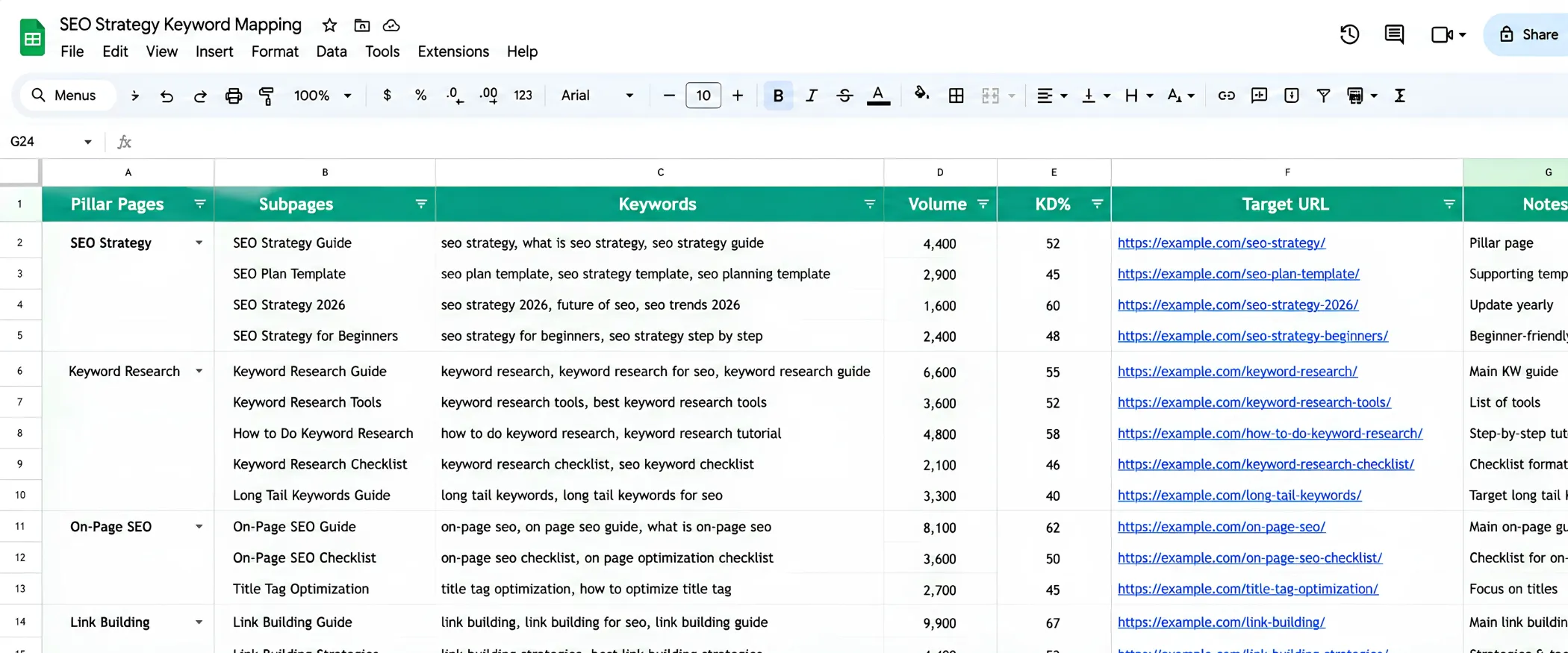
Assign your target keywords to existing or new pages based on search intent. Avoid targeting the same primary keyword across multiple pages when those pages serve the same purpose, as this can create unnecessary keyword overlap.
A clear keyword map helps every important page have a defined SEO purpose.
Develop content that directly answers the questions and needs behind your target searches. Your SEO content strategy should prioritize useful information, clear structure, original insights, and genuine value rather than keyword repetition.
Use relevant secondary keywords and related terms naturally throughout the content.
Optimize important elements such as:
These improvements help search engines understand your pages while making them easier for users to navigate.
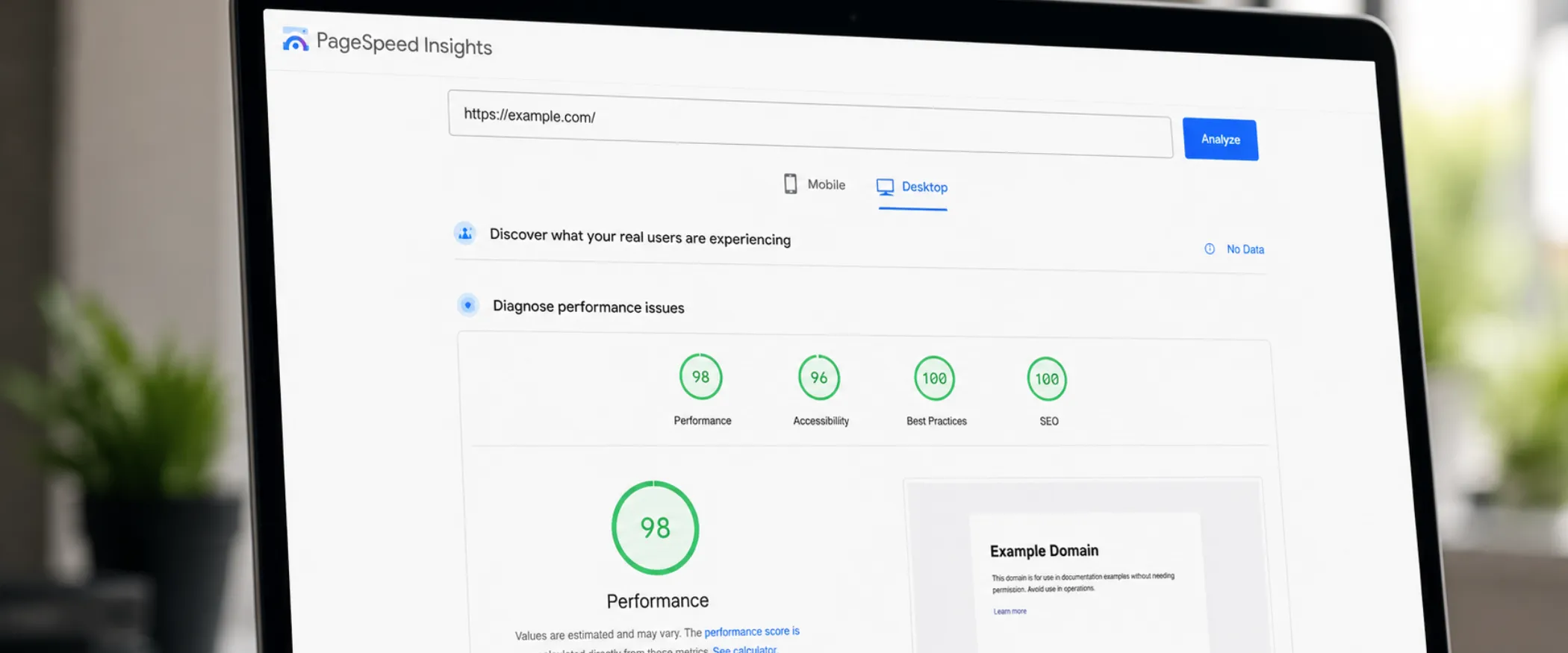
Make sure search engines can efficiently crawl and index your website. Check important areas such as site speed, mobile usability, XML sitemaps, robots.txt, canonical tags, redirects, broken links, and Core Web Vitals.
A technically sound website gives your content a stronger foundation for organic search performance.
Connect related pages with relevant internal links to help users discover more useful content and establish relationships between topics.
Then focus on earning high-quality backlinks from relevant and trustworthy websites. Quality and relevance matter more than simply collecting a large number of links.
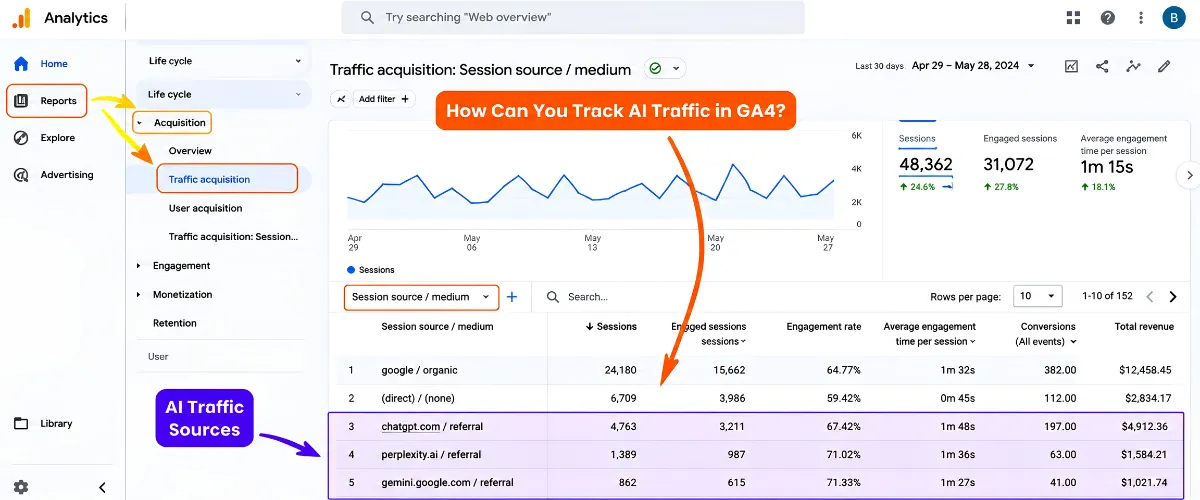
An SEO strategy should be measured continuously. Monitor website traffic, organic clicks, impressions, rankings, CTR, organic traffic, engagement, conversions, and leads.
Use performance data to identify pages that are growing, declining, or not receiving enough visibility. Track website traffic trends to understand which pages and keywords are driving results, then update your content and strategy accordingly.
Remember: SEO is an ongoing process, not a one-time campaign. The strongest SEO strategies continuously research, optimize, measure, and improve based on what users and search engines respond to.
| Strategy | What to Do | Why It Matters |
|---|---|---|
| People-First Content | Create original, useful content that directly solves your audience’s needs. | Builds relevance, trust, and long-term organic visibility. |
| Search Intent Optimization | Match each page with the reason behind the user’s search. | Improves relevance and helps satisfy searchers. |
| Topical Authority | Build connected content around your core topics using topic clusters. | Shows depth and expertise across related searches. |
| On-Page SEO | Optimize titles, headings, URLs, content, images, and internal links. | Helps search engines understand page relevance. |
| Technical SEO | Improve crawling, indexing, mobile usability, speed, and site architecture. | Creates a strong technical foundation for search visibility. |
| Internal Linking | Connect relevant pages with descriptive, contextual internal links. | Improves navigation and helps establish topic relationships. |
| Quality Link Building | Earn relevant backlinks from credible and authoritative websites. | Can strengthen authority and improve discoverability. |
| Local SEO | Optimize location pages, Business Profile information, and local signals. | Helps businesses reach customers searching locally. |
| AI Search Optimization | Create clear, useful, original content that follows strong SEO fundamentals. | Supports visibility across evolving Google AI search experiences. |
| Performance Tracking | Track rankings, website traffic, clicks, conversions, and content performance. | Shows what works and where your SEO strategy needs improvement. |
A modern SEO strategy should also consider AI-powered search and discovery. Understanding the differences between ChatGPT vs Gemini, along with Google AI Overviews, can help businesses create content that remains useful and visible across evolving search experiences.
There is no one-size-fits-all SEO strategy for businesses. Your approach should reflect your business model, target audience, sales cycle, competition, and search behavior. The right strategy for a B2B company may look very different from one designed for an e-commerce store or a local business.
A B2B SEO strategy should focus on reaching decision-makers throughout a longer buying journey. Target informational, commercial, and problem-focused keywords, then create detailed content such as industry guides, comparison pages, case studies, and solution-focused landing pages.
The goal is to build topical authority while attracting qualified prospects who are actively researching business solutions.
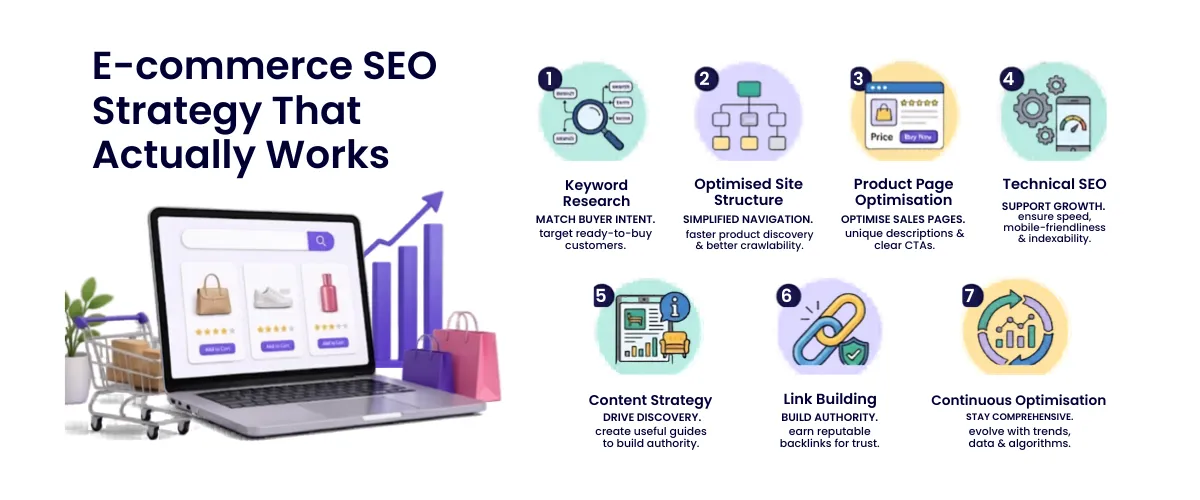
An e-commerce SEO strategy focuses on helping product and category pages appear for searches with strong buying intent. Optimize product titles, descriptions, category pages, images, internal links, structured data, and faceted navigation where appropriate.
Supporting your product pages with useful buying guides and informational content can also help capture customers earlier in the buying journey.
A local SEO strategy is essential for businesses that serve customers in specific locations. Optimize your Google Business Profile, location pages, local content, business information, and relevant local citations.
Focus on searches that combine your service with a location, such as “SEO company in Chandigarh,” when those searches are relevant to your business.
A small business should prioritize keywords and topics that have a clear connection to its products, services, and target market. Start with high-value service pages, location-based searches where relevant, useful supporting content, and a strong internal linking structure.
Instead of trying to compete for broad, highly competitive terms immediately, focus on specific long-tail and commercially relevant searches that can generate qualified traffic.
To measure the success of an SEO strategy, track visibility, organic traffic, rankings, clicks, CTR, conversions, and the quality of traffic generated from search. Target comparison, alternative, feature, use-case, and problem-based searches alongside broader informational topics.
This approach can attract users at different stages of the buying journey and support both organic traffic and product discovery.
The key is to adapt your SEO strategy to how your customers search and make decisions. A focused approach helps you invest your content, technical SEO, and authority-building efforts where they are most likely to generate meaningful results.
| SEO Metric | What to Track | Why It Matters |
|---|---|---|
| Organic Traffic | Track website traffic from organic search and its trends over time. | Shows whether your SEO strategy is attracting more search visitors. |
| Keyword Rankings | Monitor rankings for primary, secondary, and commercial keywords. | Measures your visibility for valuable searches. |
| Organic Clicks | Measure how many users click your pages from search results. | Shows whether search visibility is generating visits. |
| Impressions | Track how often your pages appear in search results. | Helps measure search visibility and growth opportunities. |
| Click-Through Rate | Compare clicks with impressions for pages and search queries. | Indicates how effectively your search listings attract clicks. |
| Conversions & Leads | Track form submissions, calls, purchases, sign-ups, and other valuable actions. | Connects SEO performance to actual business results. |
| Backlinks | Monitor relevant referring domains and quality backlinks earned. | Helps evaluate your website’s authority and link-building progress. |
A successful SEO strategy is an ongoing process rather than a one-time optimization task. From understanding your audience and targeting the right keywords to strengthening technical SEO, building authority, and measuring results, every part of the strategy should work toward improving visibility and generating qualified business outcomes.
As search continues to evolve, adapting to new experiences such as Google AI Overviews and AI-powered discovery is becoming increasingly important. With a focused, data-driven approach, Blacklisted Agency helps businesses build stronger search visibility, attract the right audience, and turn organic traffic into meaningful growth.

We are your go-to source for everything digital. We cover marketing tips, design trends, new tech, and how to build your brand. Every post has useful information to keep you updated and ready to tackle the digital world. It’s not just articles; it’s a way to learn, grow, and connect with others navigating the same digital journey.